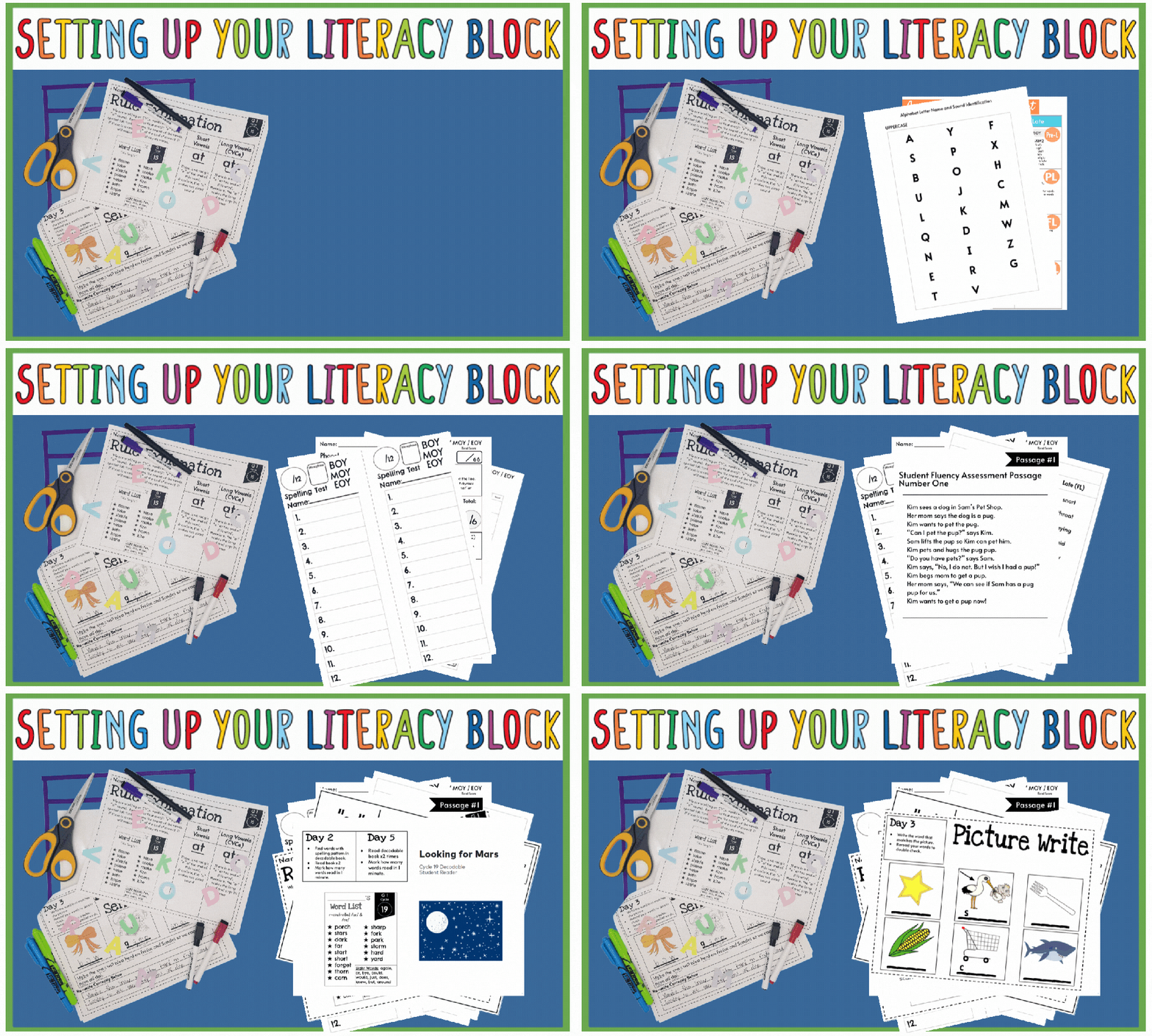
Are you stuck trying to up your game when it comes to reading rotations? THAT was me a few years ago. I struggled knowing how to best form groups. I struggled knowing WHAT to teach in my small group lessons. If this sounds like you, you have come to the right place! I am going to teach you how to master reading assessments so you know how to form reading groups easily, PLUS help you know what to teach in your small group lesson. Although I have more experience in kindergarten through 2nd grade classes, other grade levels can gain insights to help them in their classrooms as well.
Forming groups first starts with your assessment. You need to assess students in order to know what level each student is. This will help you see which students are close to or near the same level so you can form those groups. The assessment that I use follows the EL Skills Block reading program. Although this follows a program, this assessment is helpful for ANY teacher.

The most important assessments to perform in a 1st or 2nd grade classroom are the following:
- Decoding
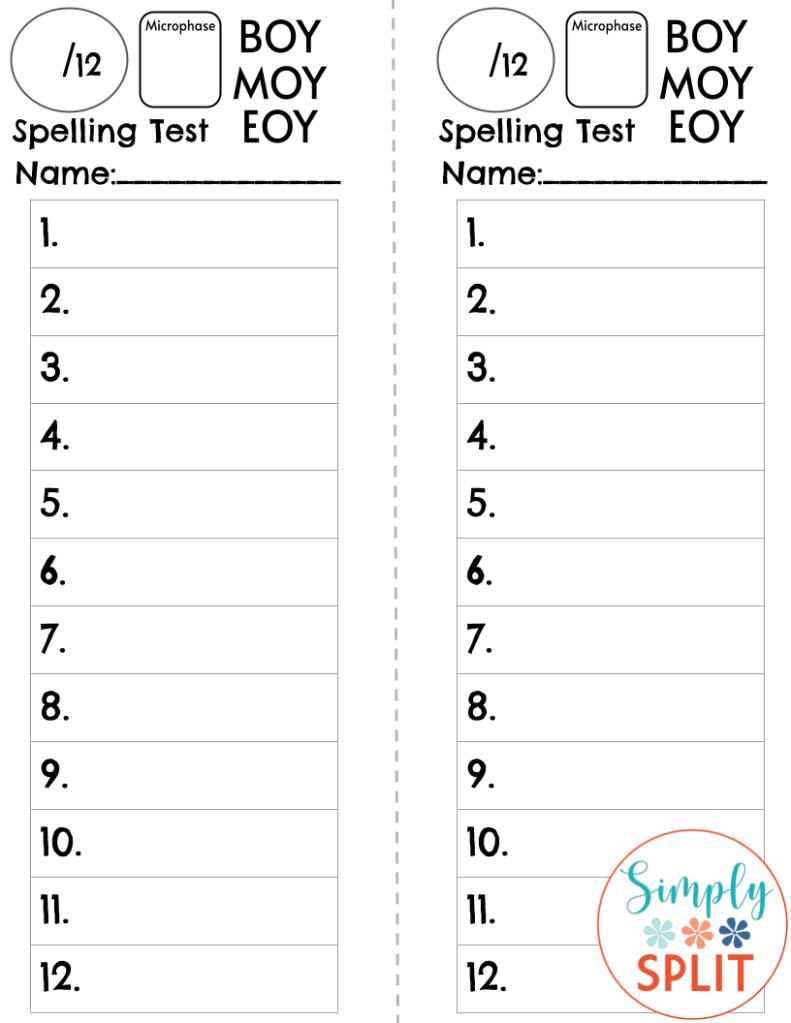
- Spelling
If a student struggles in both of these areas, I would suggest doing a phonological screener and letter name & sound identification.
Finding time to assess each student can be SO hard if you have no help to do so. I will give a few suggestions to help you complete these assessments quickly and systematically.

One suggestion is to give this assessment whole group. The main drawback with doing this, is that some students may need an easier or harder spelling assessment. Make your best judgement about what spelling test level to give to your class as a whole. Once you grade the spelling test, you can see which students need to be tested on a higher spelling test and which ones need a lower spelling test. Make a pile of those that need a different spelling test and try to test them together in a small group. One thing I do to help facilitate this is that I usually do not have small groups come to the teacher center when I’m assessing and use that time to assess students instead.

Also, during reading rotations, I usually don’t have students come to the teacher as a center and I use this time to assess as well. Decoding should not take very long. I can usually finish a student in 1-2 minutes. If you have already given the spelling test, you can easily estimate what decoding list you may want to start with. Keep in mind if a student reads 8 or 9 words accurately AND automatically, you should have them read the next higher decoding word list. If a student reads 5 words or fewer without accuracy AND automaticity, they will need to read the next lower decoding word list. I will usually count to 3 in between each word. If they don’t read it quicker than that, it is NOT considered automatic. If a student is struggling, don’t make them suffer through that word list, stop them as soon as possible and move on to a lower decoding word list.

Other assessments that may be helpful are:
- Phonological screener
- Letter names assessment
- Letter sounds assessment
- Fluency assessment
- Comprehension assessment


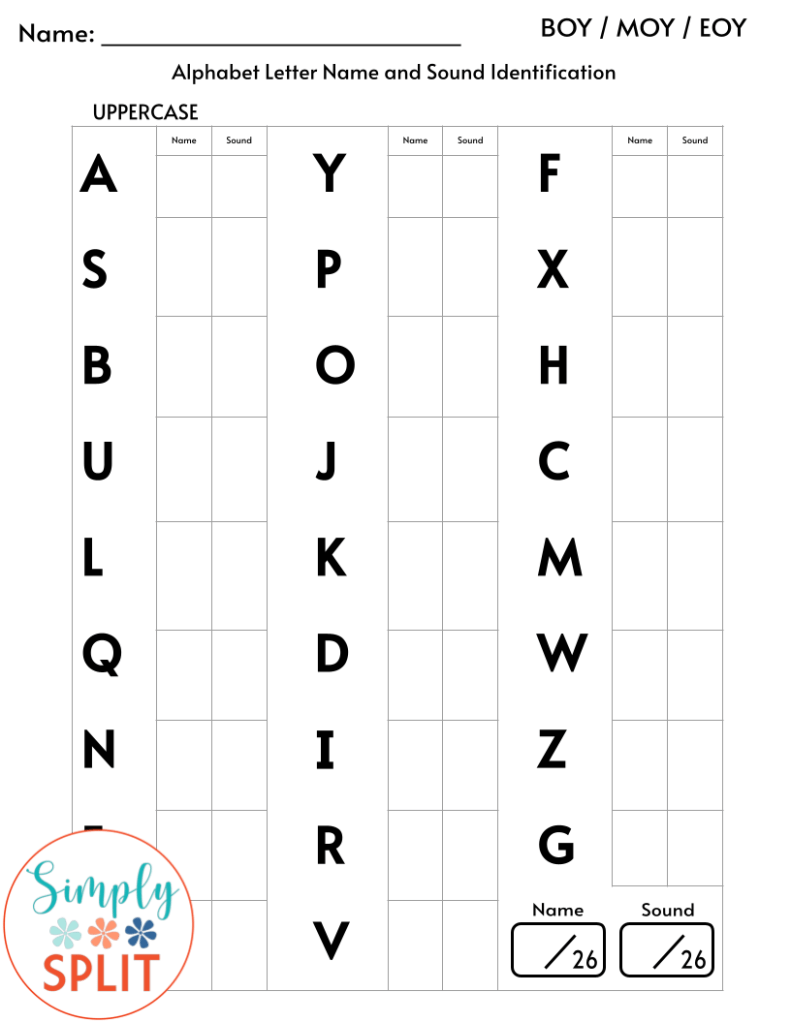

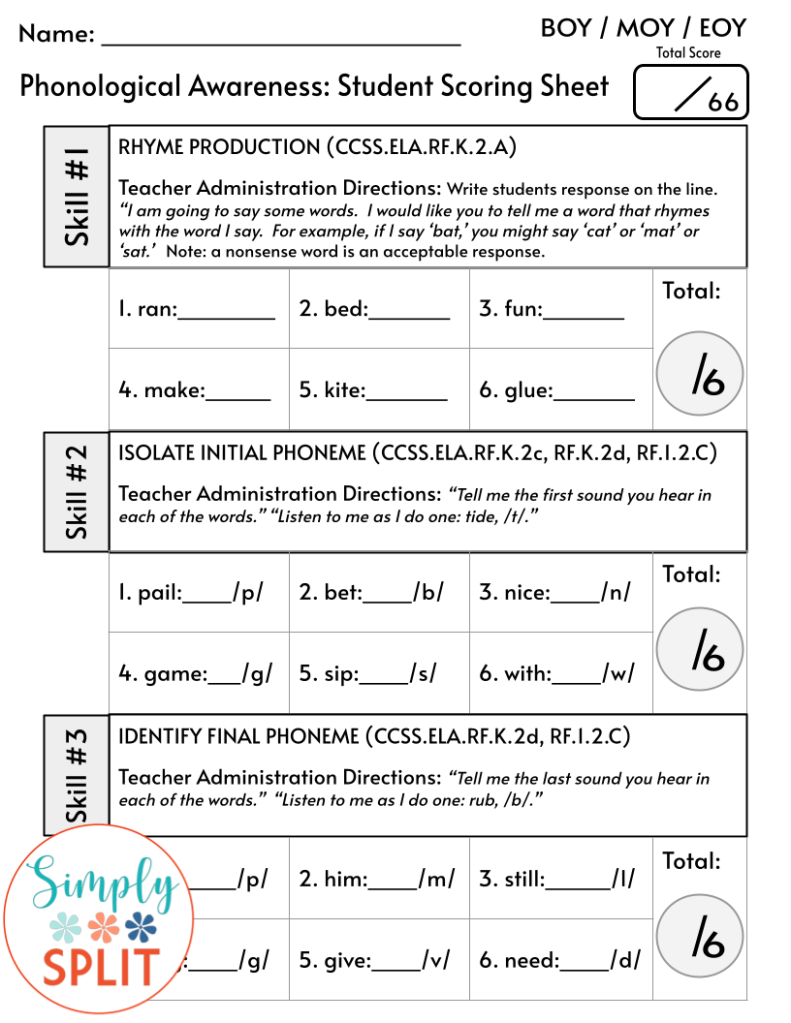
These assessments will give you a lot more information and help you see the whole picture for each child. Note that these assessments are much more time consuming and may not be necessary for EVERY child. I would suggest starting with the spelling and decoding assessments and see what students need additional assessments.
You can download for FREE a explanation of ALL of these assessments plus the explanation of HOW to group your students for easy referencing. I suggest keeping a copy of this in your assessment folder. Click below to download. You can see a preview of it below as well.
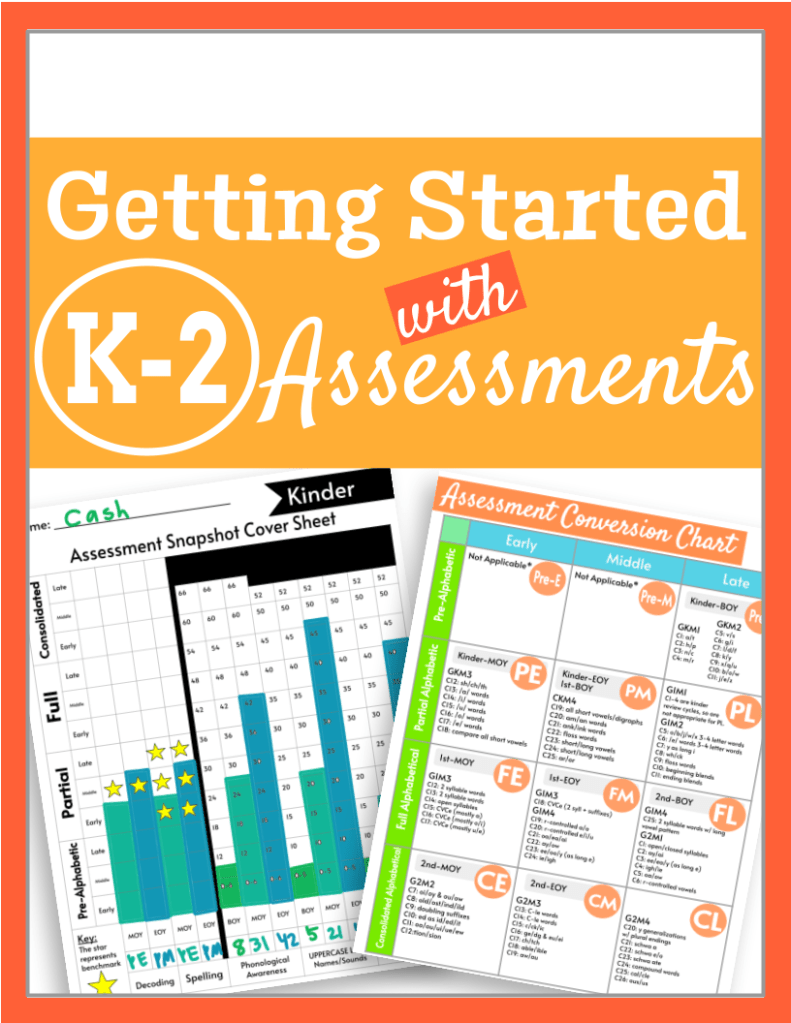
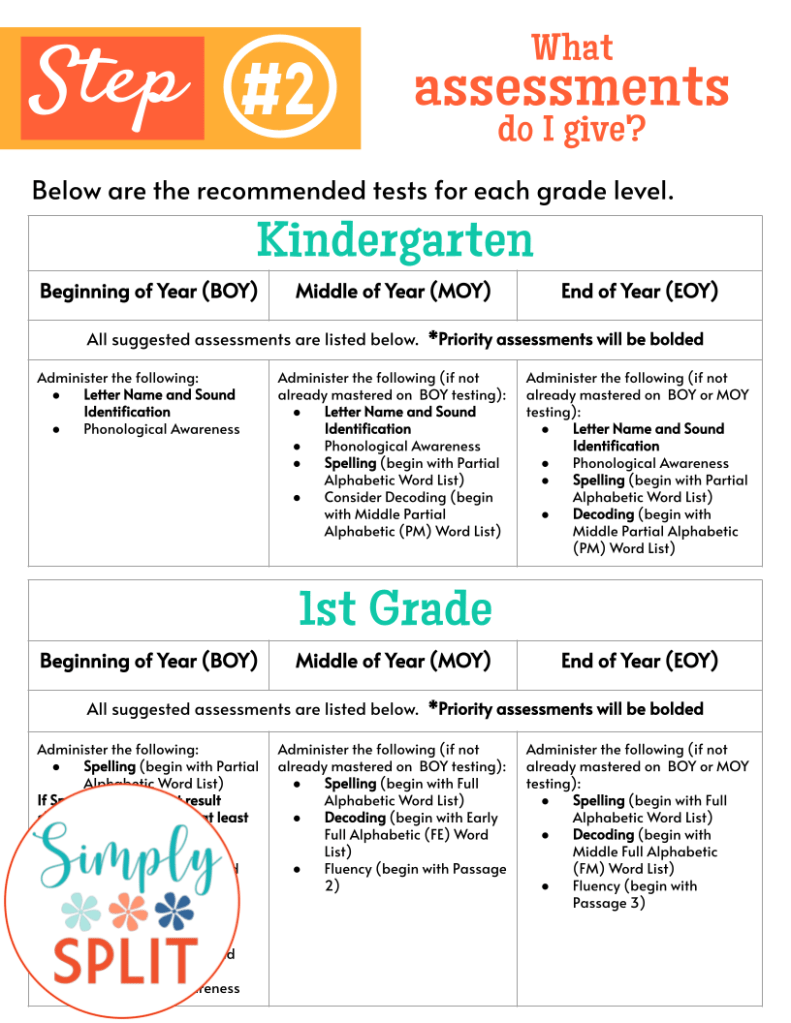


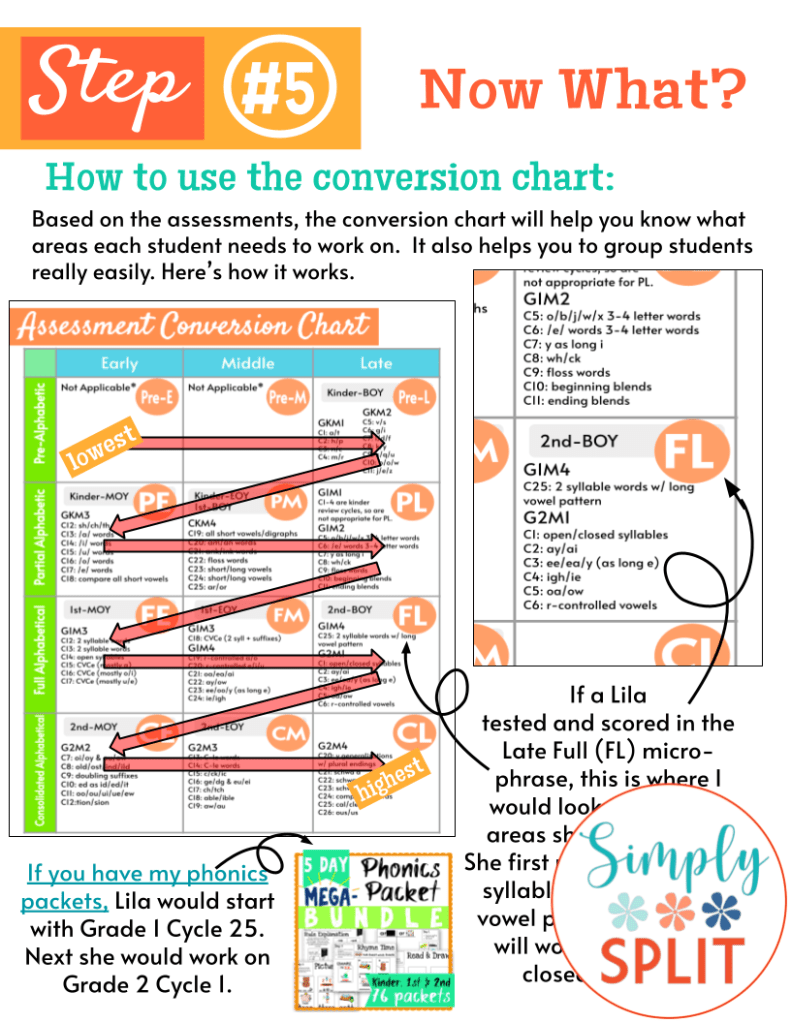

Once students have been assessed AND you have determined their EL Skills Block microphase, grouping students becomes a breeze by using the assessment conversion chart!
The chart progresses like the image below shows.

Using the blank assessment conversion chart template, you’ll write down each student’s name in the microphase that they land in. The process looks like the video displayed below.
Next, you’ll group them. For the most part, students in the same microphase will be in the same group. However, you may need to split some microphases or combine them depending on the size of each group. You can look at the decoding assessment microphase to help you do this. It may look something like this when you finish grouping.


By looking at the assessment conversion chart you can see what phonics skills should be taught within each microphase. Therefore, if you’re group is mostly in the Full Early (FE) microphase, they will be working on 2 syllable words. You can see how each of the groups should be leveled in the pictures below.


If you’re interested, click below to purchase the full assessment bundle including data tracking.


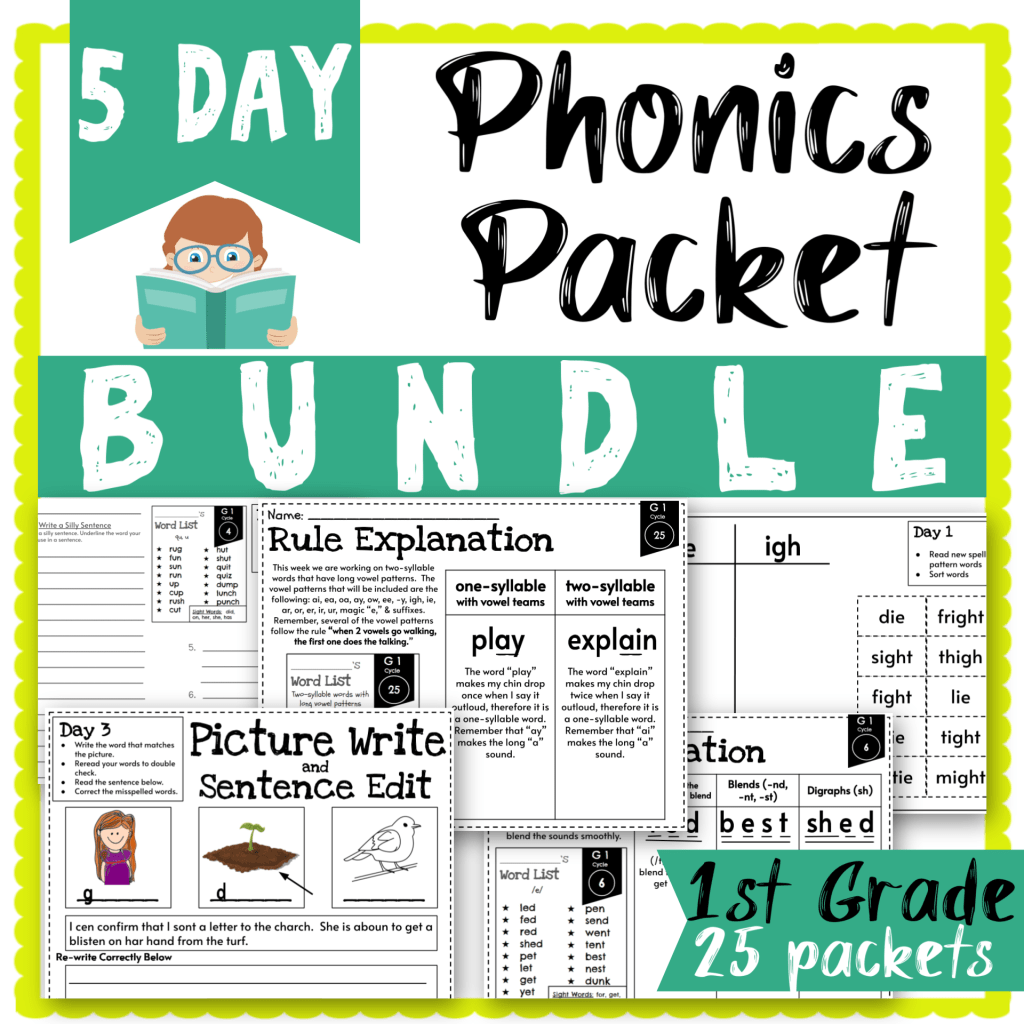
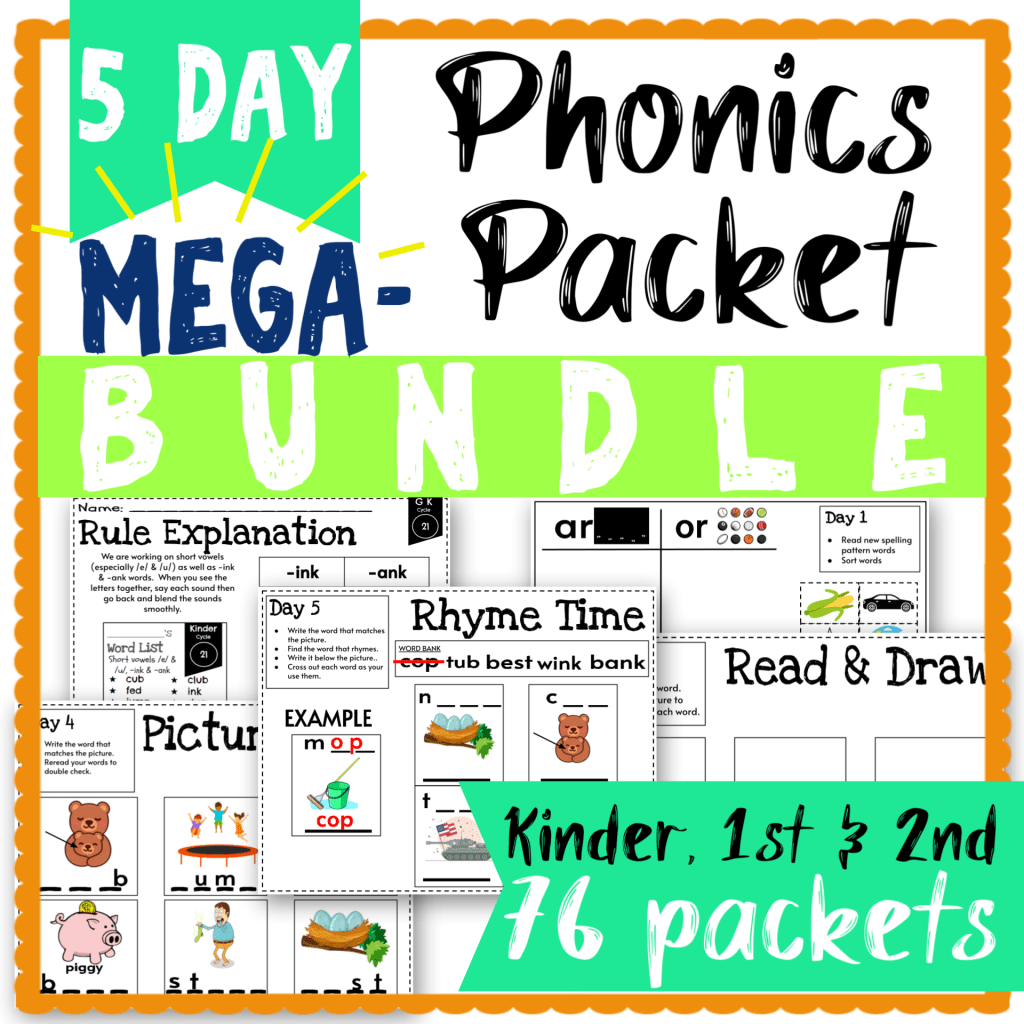
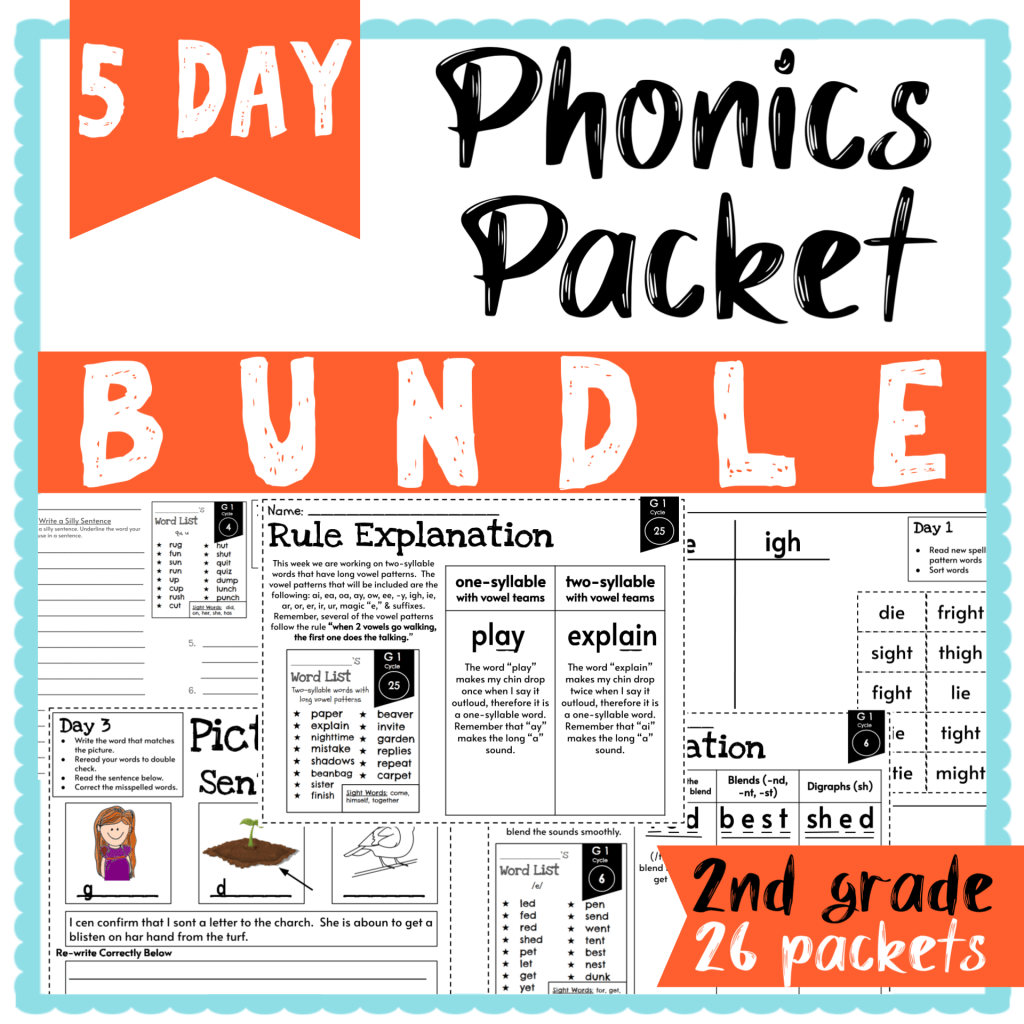
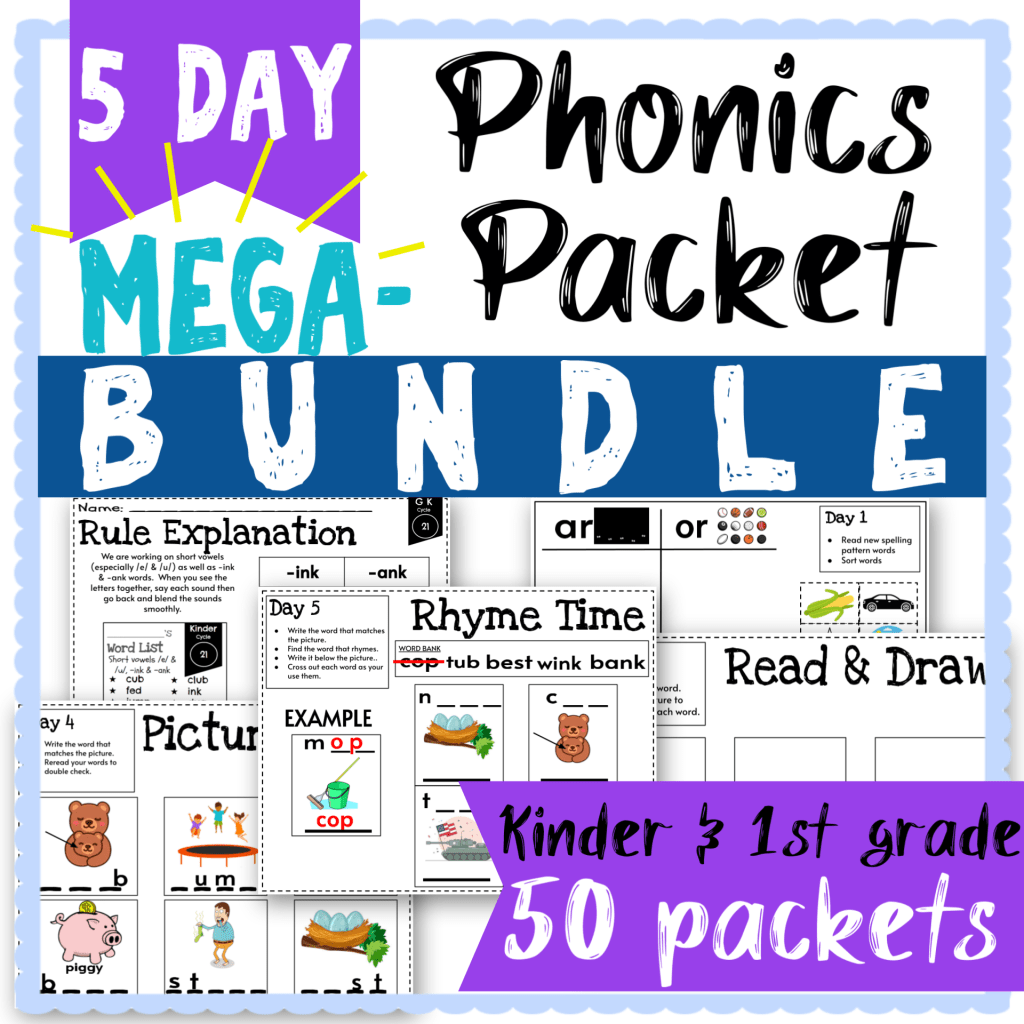
Okay now you have your reading groups made, but how in the world do you plan work for them? How can you make the work align with what they NEED and still make it easy for you to prep? This may seem difficult, but these packets will make it much easy for you. All you need to do is find and print the coordinating packet and assign to each group. How easy is that? Here’s a FREEBIE sample of what the packets look like for 1st grade.
Below is a preview of what the other packets look like. If you’re interested in purchasing the bundle of these packets, please click below. They are sold by grade level, or you can bundle and save by purchasing the multi-grade bundle.




Where is the free assessment?
Hi Mel! There are free instructions to the assessment for those that implement the full program it aligns with, but the assessment and data tracking are not free. If you’d like to purchase the assessment, click on the link below: https://www.teacherspayteachers.com/Product/K-2-YEAR-LONG-Reading-Assessment-Data-Tracking-EL-Skills-Block-Aligned-6747088