

Fluency is such an important part of reading but often can be frustrating to teach or help young readers learn. If you find your child or student frustrated when reading or practicing to read fluently, it may be time to try a different approach. Before we talk about HOW to increase fluency, let’s first talk about WHAT fluency is.

Often when we think about fluency, we only think about reading speed and forget about the other aspects of fluency. If you solely focus on speed, then students will likely get in the habit of not comprehending what they are reading or may even begin to HATE reading, which is a hard mindset to change. As parents or educators, we do NOT want to fall into this trap and in turn cause children to dislike reading. Therefore, it is important to focus on all the aspects of fluency.
The three aspects of fluency are:
- Accuracy
- Making little to no errors while reading
- Reading Speed
- The rate at which a student reads. Often measured in WPM (words per minute)
- Prosody
- Reading aloud with proper intonation, phrasing and expression

Okay so you might be wondering why this is important? Well, teaching all of the aspects of fluency will overall help to increase fluency. Therefore, you will want a good variety of fluency activities that focus on each of the three aspects of fluency.

Learning to decode is so important for young readers. Teaching phonics skills explicitly will help prepare students to decode accurately. My favorite activity to practice decoding is what I like to call “decode mode.” If you use the EL Skills Block Program, they refer to this activity as “syllable sleuth.”
In this activity, students become little detectives as they analyze the word. The steps are the following:
- Look for the vowels and place a dot under each of the vowels.
- Underline spelling patterns that you know and recognize.
- If there is a “magic e” draw an arrow to the vowel it affects.
- Find where the syllable break is and draw a line or swoosh to separate the syllables.
- You will need to make sure most if not all syllable types are taught prior to practicing this activity.
- Lastly, read each syllable separately then blend them all together.
This activity can be done with 1 syllable words as well, simply forego steps 4 and 5. This is such an effective technique. My lower students will sometimes need help, but they are always so surprised and impressed that they can read longer words.
This activity is very low prep and very effective. You can make your own words and have students copy in a notebook or whiteboard which costs you nothing. If you are looking for something already made that’s print and go, check out these phonics packets. They include a syllable sleuth/decode mode activity in most weekly packets along with other activities focused on the same phonics skill. Click on the picture or here for the link.


Planning repeated readings in the classroom can be very effective in increasing fluency. Students can gain confidence in the words they are reading because they have already read through it once. This helps them to be able to read more quickly. Students may dread repeated readings so it’s important to talk about why you are having them repeatedly read the same material over and over again. I suggest perhaps doing a mini lesson on repeated readings and discuss the importance of them towards the beginning of the year or prior to implementing repeated readings. A few ways to make it more engaging are:
- Timed readings
- This is a tricky one. Students can dread timed readings IF it is done too frequently and not properly explained. Students should know that they should NOT be competing with other students to read more quickly. Instead, teach a growth mindset and to compete with THEMSELVES. This way students can have motivation on their own to continually grow.
- Fluency voice cards (FREEBIE ALERT)
- This is a great way to increase engagement. Students pick a fluency voice card and read the passage in whatever voice is listed on the card. This way repeated readings won’t feel too redundant. Each time the passage is read, it will be a little bit different. You can grab this freebie by clicking below and subscribing. The FREEBIE will then be sent to your email.



Echo reading is an easy strategy to implement. You can do this with a short passage or a book. It can even be done with other subject material. The teacher/adult will first model reading the excerpt with the words displayed for the child/class to see. A document camera is good for this or a big book. The teacher/adult should point to the words as he/she reads them for the students to follow along. After modeling how to read, students will then “echo” and all will read together as the teacher/adult points to the words a second time. This helps students with reading all aspects of fluency, accuracy, rate & prosody and is such an effective AND easy strategy.

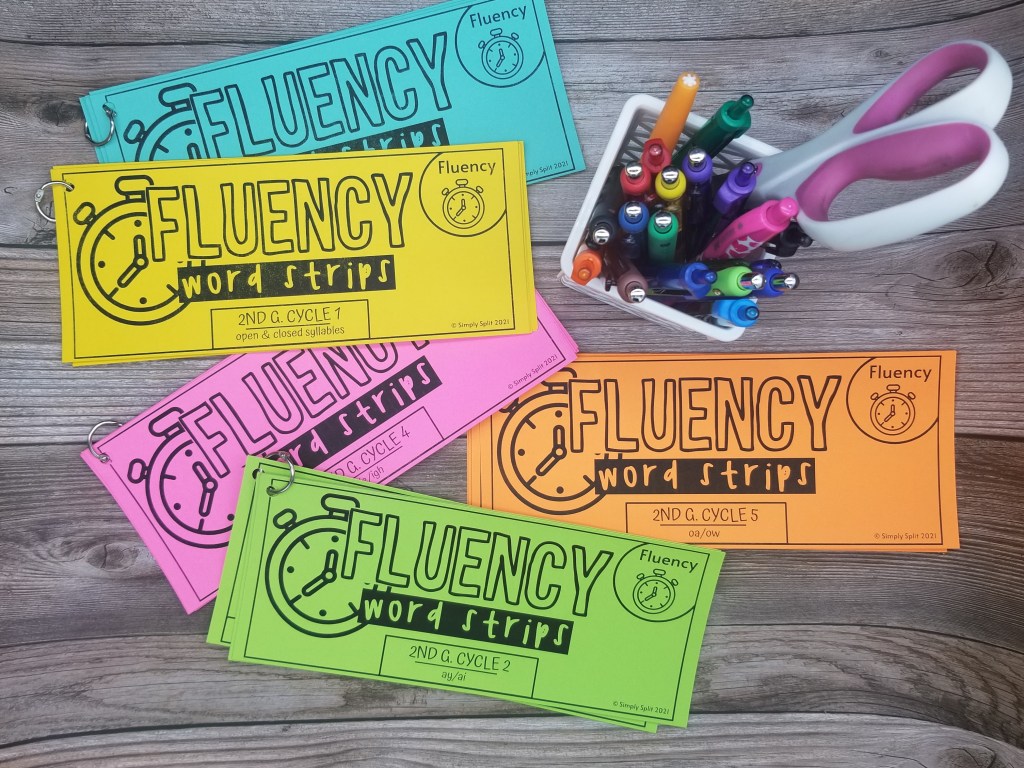
This is a fun and easy activity to implement. It will take some prep if you choose to make your own, or you can try out the fluency word strips I have made by clicking here. This is a pretty easy activity to make for students that need to practice letter names and sounds. All you need is a pocket chart, sentence strips and a pointer. Simply write down the letters you’d like each group to practice on the sentence strips and place them in the pocket chart. When students go to that center, they will have someone point to each letter on the sentence strip as the other says the name & sound. This is repeated until they become more and more fluent. Students tend to have a fun time with this activity and find motivation to get better and better.
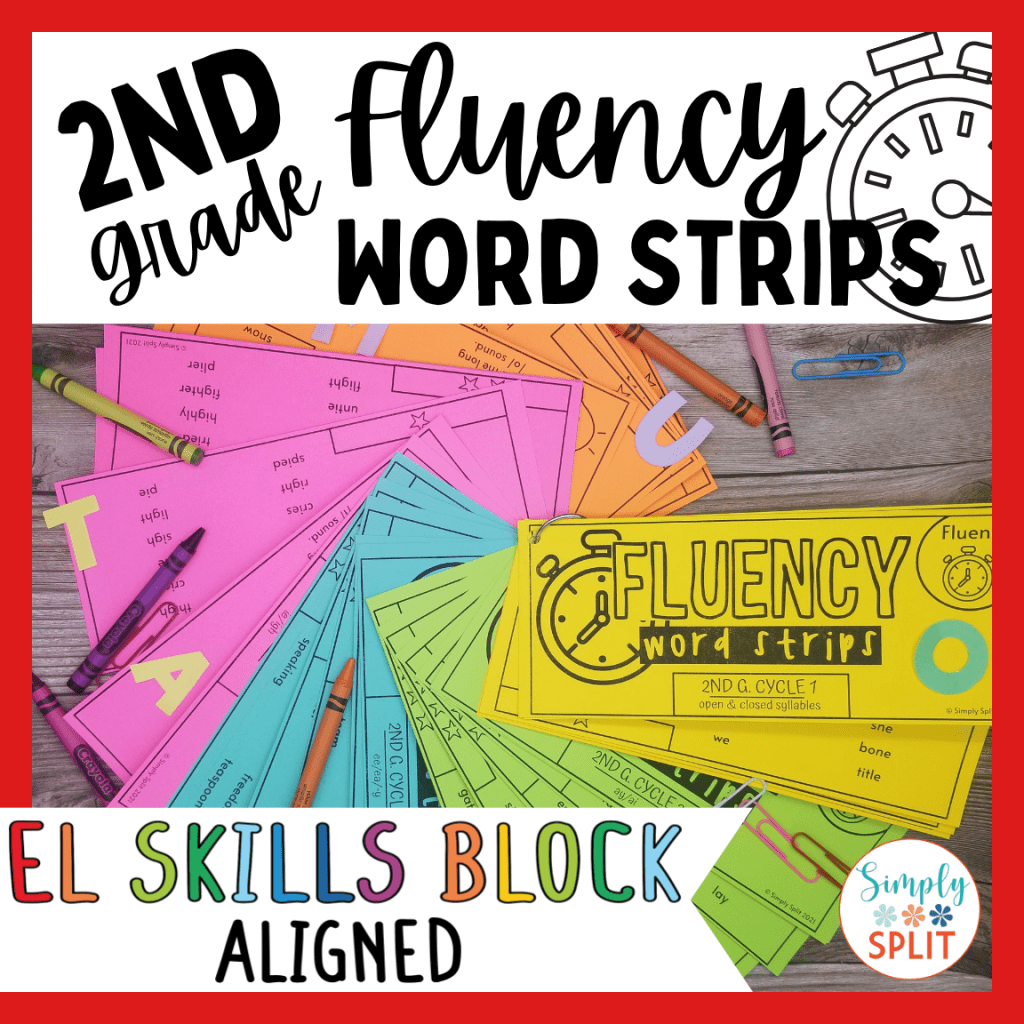
If you don’t like the idea of having to make your own, have no fear, I got you covered. There are 25-26 (depending on the grade level) different packets of fluency word strips that each focus on a different phonics skill. Within each packet, there are 4 levels. This makes it easy to differentiate. You can also encourage students to try and decode the harder lists by using the strategies from the decode mode activity (syllable sleuth) which is explained above.
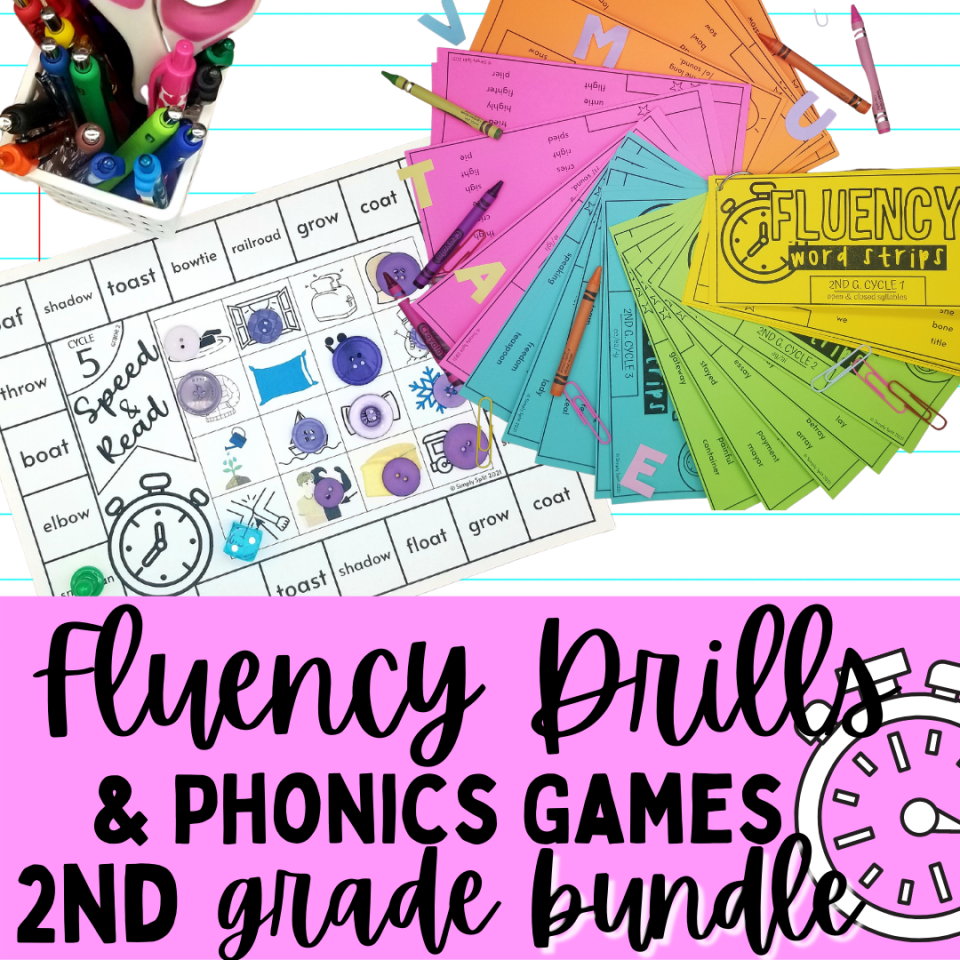
If you like the idea of your students completing all of the levels within each decoding packet, I would definitely suggest purchasing the bundle. In the bundle I have included a puzzle piece game board which aligns with the fluency word strips and can be used as an incentive to pass off each list within the packet. It’s pretty simple, once a student passes off one of the word lists within the fluency packet (reading fluently), they get a piece to the coordinating game board puzzle. Once they pass off all lists, they can put the puzzle together and play the game. The coordinating phonics game board focuses on the same phonics skill practiced in the fluency word strips. The game can be played independently or with a group. You’re students will love it and be motivated to pass off each list. Watch the video below to see the bundle in action or click here to view the bundle in my shop.

This two fold activity works as follows. First, students will be able to practice reading with expression and rate. I love this strategy because students have so much fun with readers theater. They won’t even realize that they are practicing fluency. You can do as much or as little with this activity as you want. Students can make props to help to add to the role, perform for the class or parents, or it can just be a simple reading practice in small groups.
You will need to find an appropriate leveled readers theater and provide a copy (or share) with students for each part. I suggest highlighting each role throughout the whole script for each part so it is easy for students to find their part. You can do this yourself, ask for parent volunteers, or if you feel your students are capable, have them highlight their part on their own. I would suggest modeling the reading to your group of students first, then you can have them practice reading through the script as a group. This will help students hear how to read with expression and also help students with reading any unfamiliar words that are in the script.
If you would like some suggested materials for younger grades to use for readers theater, check out these below:
- 25 Fun Phonics Plays for Beginning Readers
- Evan Moor Readers Theater, Grade 1
- Leveled Readers’ Theater, Grade 1

Try out some of these tips and let me know how they go! I’d love to hear how it influences your classroom. If you’re interested in any of the mentioned products from my shop, you can find the links below.

