EL Skills Block, Literacy Centers, Phonics

Frequently Asked Questions About EL Skills Block

Are you new to EL Skills Block?  Are you having difficulty understanding how Skills Block is organized and set up?  Well, you’ve come to the right place!  Just a few years ago, I was in your shoes, ready to pull my hair out because I was so frustrated and unsure how to make this new program work.  I was frustrated trying to figure out how to make my reading centers align with Skills Block and frustrated trying to navigate all the manuals Skills Block provided.  I have found some great ways to help make this program work for my classroom and am here to share all the secrets I discovered and hopefully, this can help you feel more comfortable as you implement the Skills Block program.  Below you’ll find some frequently asked questions that I hear many Skills Block users ask.

CURRICULUM

If you are a classroom teacher, you may not get a whole lot of say in what will be purchased for your classroom.  Luckily, however, there are ways to make Skills Block bearable with or without the manuals.  It is nice that all of Skill Block can be found FREE on EL Education’s website.  The downside is that it is not extremely user-friendly and can be hard to lesson plan from a digital manual.  I’ll explain the workarounds for Skills Block regardless of your skills situation and ability to purchase all the materials.


  1. K-2 Manuals for each teacher – It would be very ideal to purchase the k-2 manuals for every teacher.  You may not realize the importance to begin with, but when it comes to centers, it is so much easier to lesson plan small group lessons with ALL THE MANUALS.  This is because during small groups, you will differentiate your instruction based on students’ skills.  A 2nd grade teacher might have kindergarten level students in their classroom, therefore, during small groups, they may be teaching a kindergarten lesson to a group.  

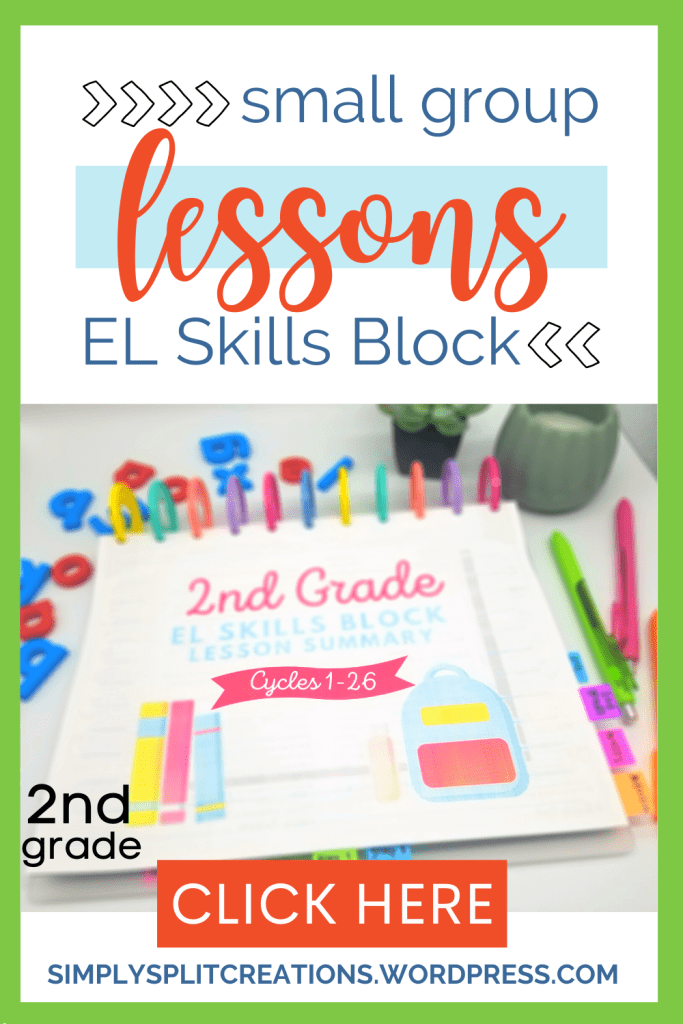
  2. Grade-level manuals for each teacher – The next best thing is to purchase just the grade level manuals for each grade level teacher, meaning the 2nd grade teacher only gets the 2nd grade manuals.  This will help the grade level be able to plan their whole group lessons more easily.  Small groups lessons will be somewhat of a struggle though without having a physical copy of all the lessons you may be teaching.  What I recommend doing is checking out these Skills Block lesson summary resources found in my shop.  I specifically made this resource to help simplify my small group planning time and found it to be so helpful.  You can buy these separately by grade level or buy the k-2 small group bundle that also includes EL’s phonics assessment along with data tracking documents.  With the use of the small group lesson plans, I was able to easily find the lesson that each group needed during small group time by keeping them all in one binder.  This makes it nice to not juggle between 20+ manuals.  It has all the information you need in a simplified format making it easy to follow along.  I have gotten to a point where I no longer plan small group lessons beforehand and I don’t prep any materials.  During small groups, I can now look at the title of the activity and adapt it to work with just whiteboards. The small group lesson plans are definitely an economical way to access EL’s materials AND will save you lots of lesson planning time.  Links can be found below.

  3. Don’t have funds to purchase any manuals?  –  Not a problem!  All of EL’s lessons can be found online.  I highly recommend downloading all the manuals and materials and organizing them into google drive.  This way you can access the lessons from anywhere and easily print materials without having to navigate through EL’s website constantly.  Also, like mentioned above, I definitely recommend getting the small group lesson plans especially if you aren’t purchasing any manuals.

K-2 Small Group Lessons Bundle + Reading Assessment Phonics Screener

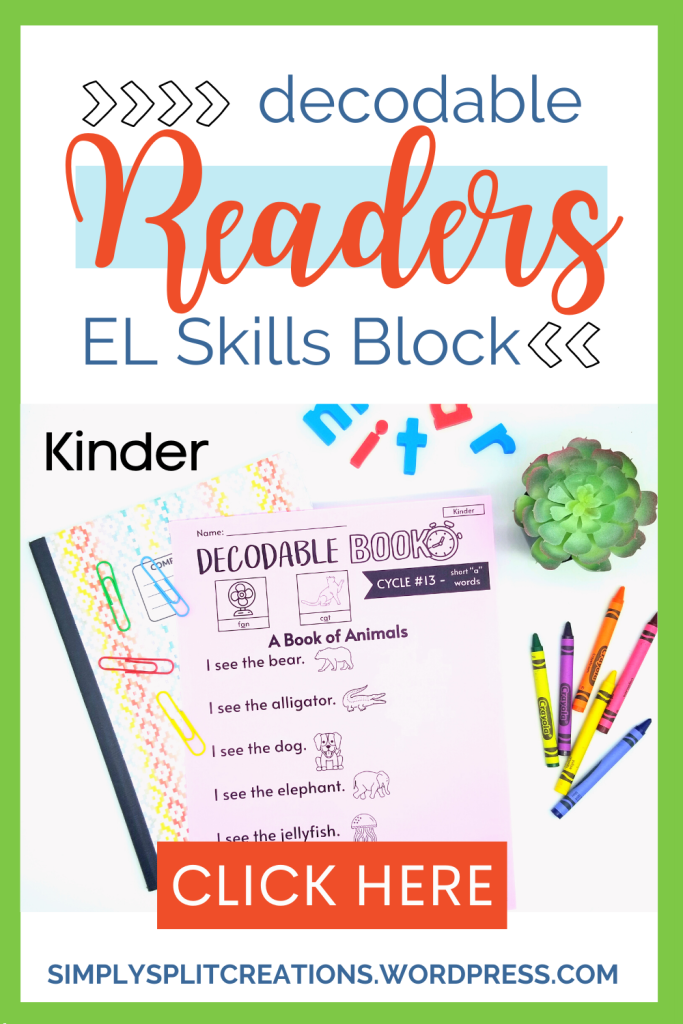
The consumable decodable books are a nice idea.  It’s cool that students can write in them and take them home to read more later.  However, in my experience, students don’t appreciate them or care about taking them home.  Plus, they are expensive and hard to store.  I recommend using the printable version that EL provides on its website.  These are easy to print and can still be written on and taken home, but are much cheaper.


If you are finding that you are using too much paper printing the decodables from EL’s website, I have a solution for you.  I re-formatted EL’s decodable books to fit onto one page to help save paper.  I have also included some practice words with the phonics skill for each cycle at the beginning of the decodable.  These are sold separately by grade level, plus there are some k-2 bundling options. Check them out below:

K-2 Decodables Bundle
K-2 Decodables Bundle + AIR Reading Response Sheets

TIP

If your school decides to purchase the consumable books after all, the easiest way I’ve found to store the books is in clear sterilite storage boxes.  The consumables fit perfectly in the sterilite storage boxes on its side (spine up).  To make it easy to find the books, place the first book of each cycle vertically.

All of EL’s manuals can be very overwhelming at first.  It can be tricky to figure out which manual a particular cycle or lesson is found in and it can be hard to navigate where the lessons actually are.  I recommend putting stickers on the spine of each manual.  I put 2 stickers on each spine.  One sticker is numbered in the order the books should be used.   For example, module 1 book 1 would be labeled #1, module 1 book 2 would be labeled #2, module 2 book 1 would be labeled #3 etc.  This can really help you keep all the manuals straight.  The other sticker I put on the spine says which cycles are included in that particular book.  For example, module 1 book 1 contains cycles 1 & 2, module 1 book 2 contains cycles 3-5 etc.  This is really helpful when it comes to planning small group lessons.


Next, I suggest using sticky tabs to tab each cycle and lesson in each book (also write the cycle number and lesson number on each tab). This will help you quickly find the lesson you need to teach and help you find the cycle words quickly. 


FYI:  If you’d like to have the cycle words all in one place or a premade cycle word list to send home to students, check out the EL cycle word lists I made.  They are sold separately by grade level, plus there is a k-2 bundle.  Check them out below:

TIP

Tab each lesson starting with the back of the book.  This will help you line up your tabs more easily (trust me!)

TIP

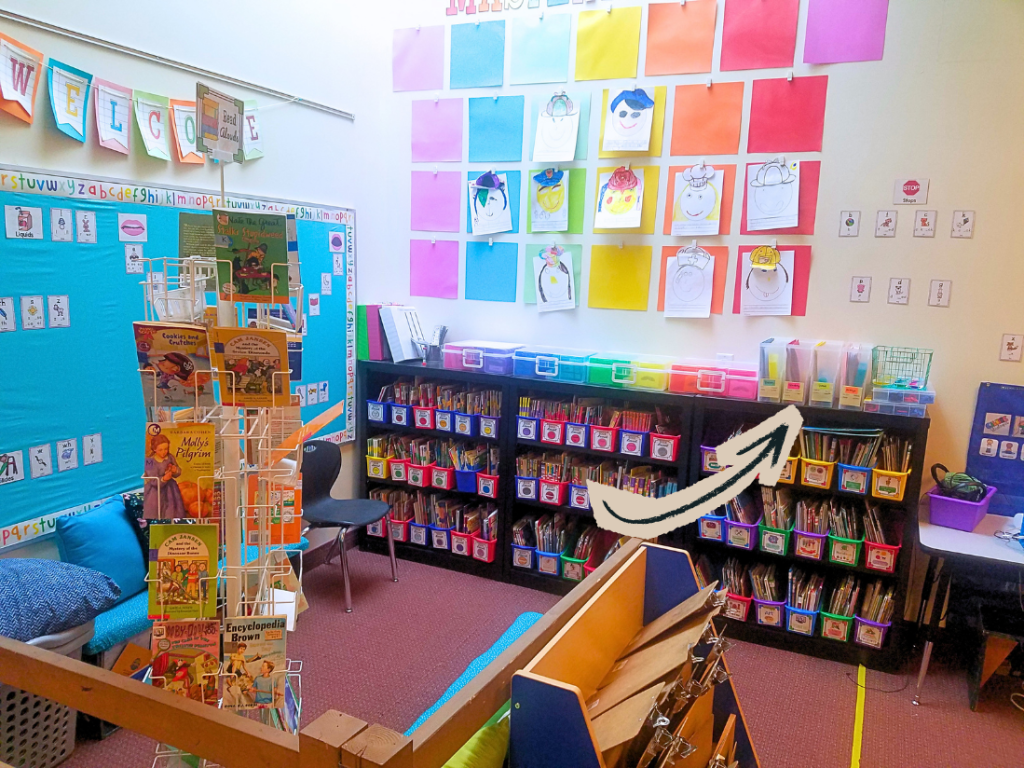
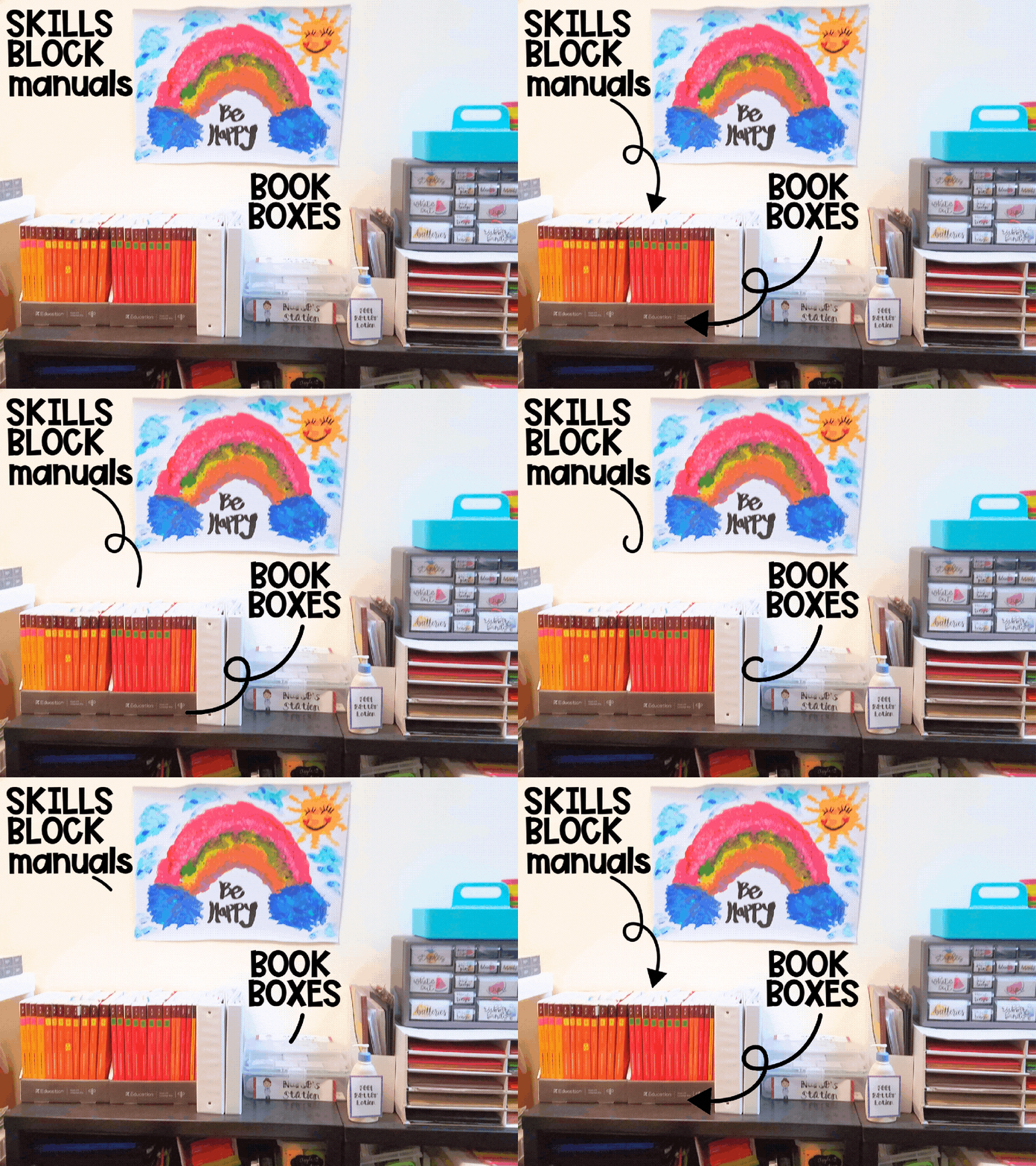
Keep the boxes the manuals come in.  This makes it really nice to store them on a bookshelf or table. (SEE PICTURE)

There are several manuals for each grade level.  There are about 8 per grade level.  There are a few cycles included within each manual.  There is also a resource manual that includes the assessment and other activities (read the section below titled “What’s in the resource manual” for more information).  

There is a summary of each cycle just before all the lessons within that cycle.  The cycle words and high-frequency words for that cycle are listed on the first page of the cycle summary (SEE PICTURE BELOW).

All of the materials provided by EL for the lessons will be found at the end of each lesson.  They can be printed from the PDF manual, copied from the hard copy manual, or downloaded individually from EL’s website.  It is helpful to have all of the documents from EL’s website downloaded and uploaded to google drive or whatever file storage system you use.  This helps to save at least a little bit of time in the long run. 

TIP

I would not recommend printing every lesson material provided by EL.  It can be a pain to prep.  Most activities included in each of EL’s lessons can actually be adapted to work with students using whiteboards.  If you are low on prep-time, definitely figure out which activities work well on whiteboards (without printing the materials) and which ones you actually need the printed materials for.  This will help you save a lot of time.

The resource manual is where you’ll find EL’s assessment.  The resource manual also includes an activity bank.  The activity bank is full of games and activities you can use perhaps during small groups or as an intervention to help with a particular skill.  Most of these activities require a good amount of prep.  

ASSESSMENT

The most important thing to note about the assessment is that it is the KEY to reading centers.  The assessment is what you need in order to form reading groups and it helps you know which cycle each group needs to work on.  Students may be taught a curriculum from another grade level.  For example, the assessment might show that a 2nd grader is below grade level and therefore should be taught a 1st grade lesson in small groups.  I have a whole blog post all about Skills Block’s assessment, which you can read by CLICKING HERE.


I also have created a more user-friendly version of EL’s assessment that includes data tracking documents which will help you measure student growth easily.  You can check that out by CLICKING HERE or clicking on the image below.

CENTERS

The first step is to complete the assessments which will help you systematically form reading groups.  The most important assessments to complete in order to figure out each student’s microphase are the decoding & spelling assessments.  Once you have each student’s microphase, group students within the same microphase together.  Then plan your actual center activities.

The centers that EL suggests to include are below:

  • Fluency
  • Word Work
  • Writing
  • Accountable Independent Reading (AIR)
  • Teacher-led small group lesson

I have seen different schools approach centers differently.  Some schools will make centers geared towards whatever cycle is being taught in whole-group and then use small group time to teach differentiated lessons based on each group’s microphase.  However, I find this approach not to work as well because students aren’t able to get adequate practice on their individual level.  I find it better to differentiate activities for each group based on the microphase and cycle each group is on.  This helps meet students’ needs and students are able to work independently more easily because they are actually doing work on their own level.  This can seem overwhelming to prep all the differentiated work, but I promise I have some simple suggestions to make your life easier.  You can see these suggestions under the “What activities can I use in my centers that align with Skills Block” section.

EL provides an activity bank which can technically be used for centers, however, in my opinion these activities are not feasible for a few reasons:

  • First off, the activities require quite a bit of prep which is not feasible especially if you are differentiating for each group’s specific cycle.
  • Secondly, the activities are not sorted by center type (fluency, word work, writing & AIR). This makes it hard to know which center is the best to put each activity in.
  • Lastly, the activities are not labeled by grade level or cycle number.  This requires you to match the skill with the correct cycle which is especially difficult to do for teachers new to Skills Block.

If you need some ideas for centers, keep on reading – I’ve worked hard to try and make Skills Block be a little easier for you.

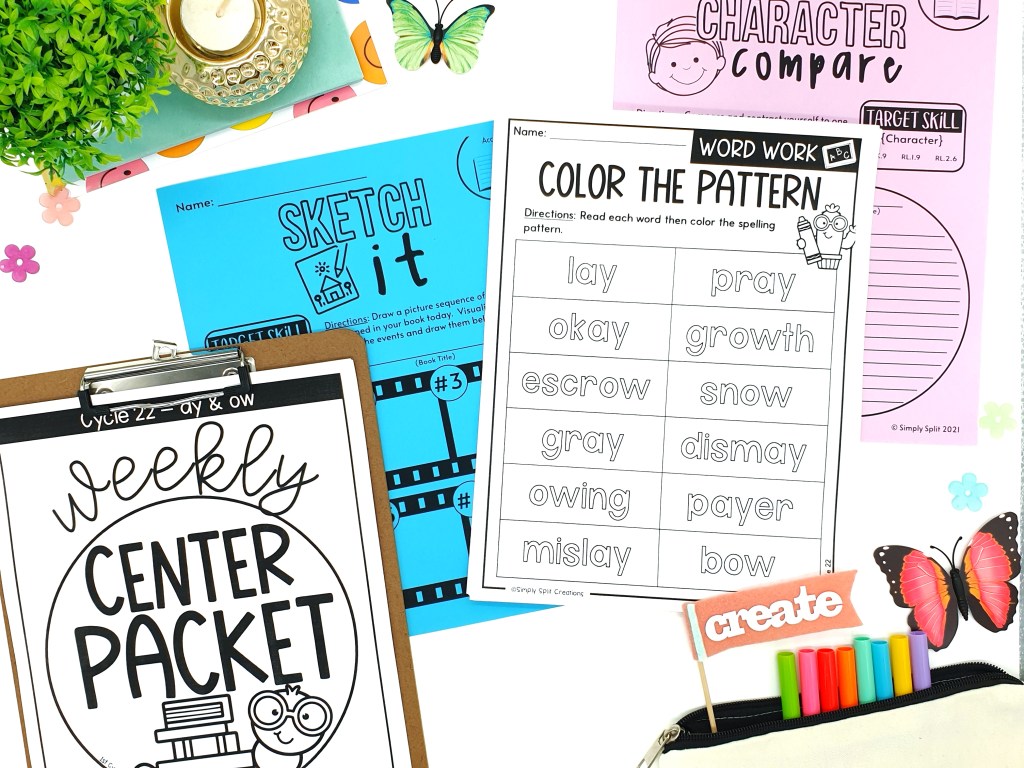
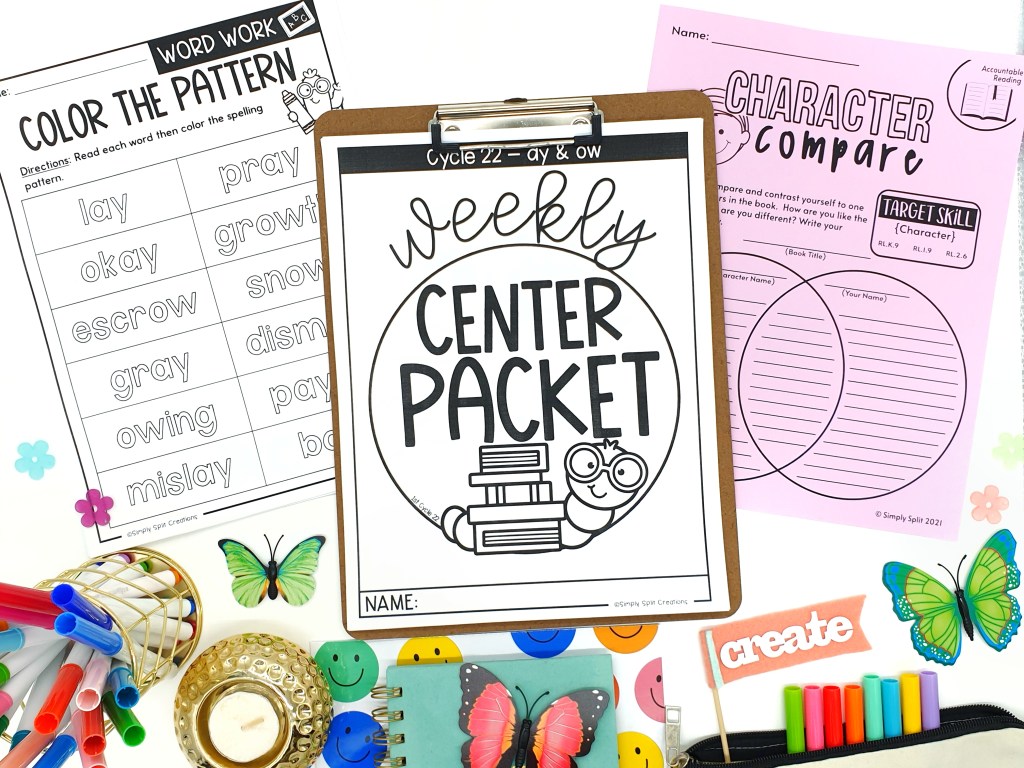
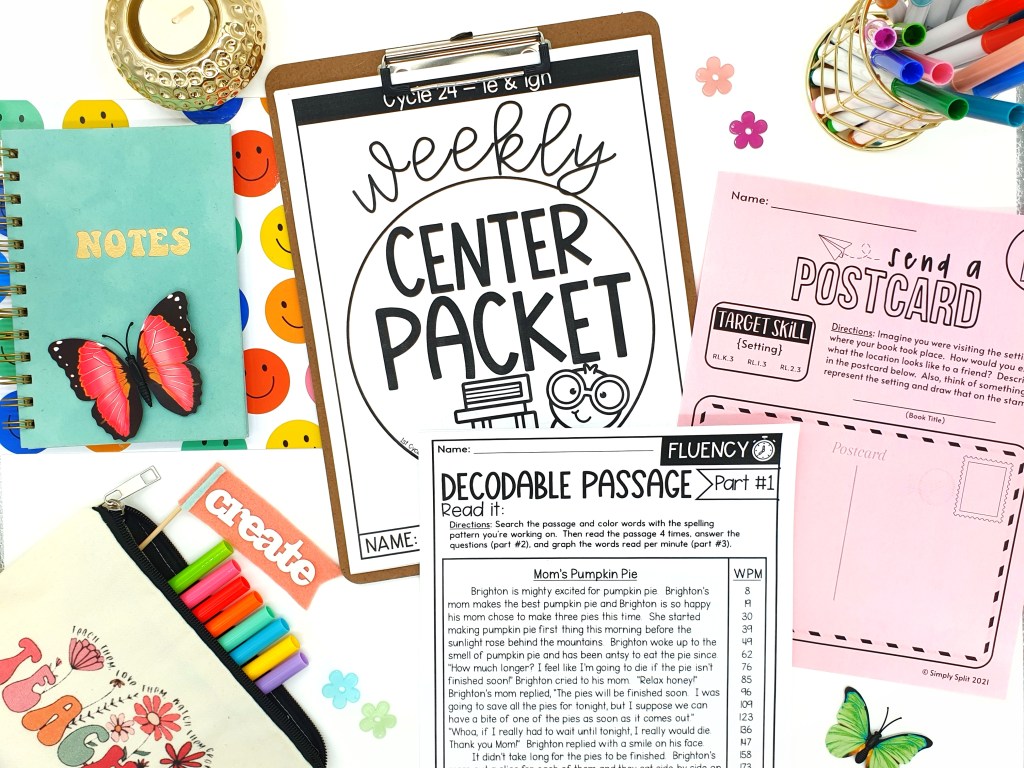
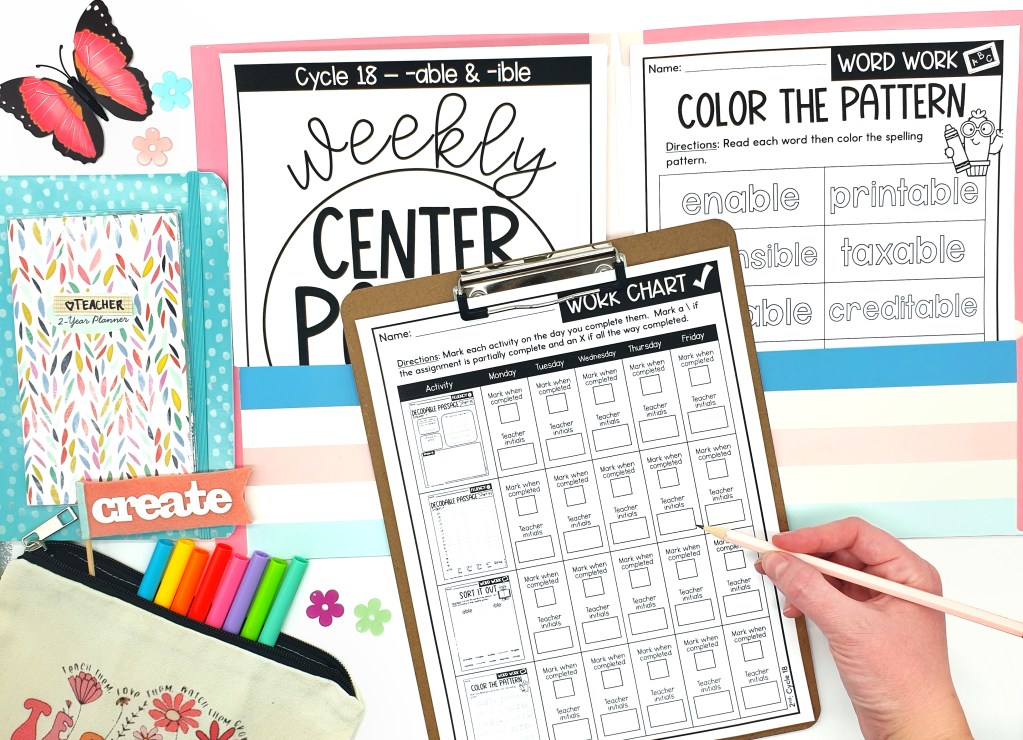
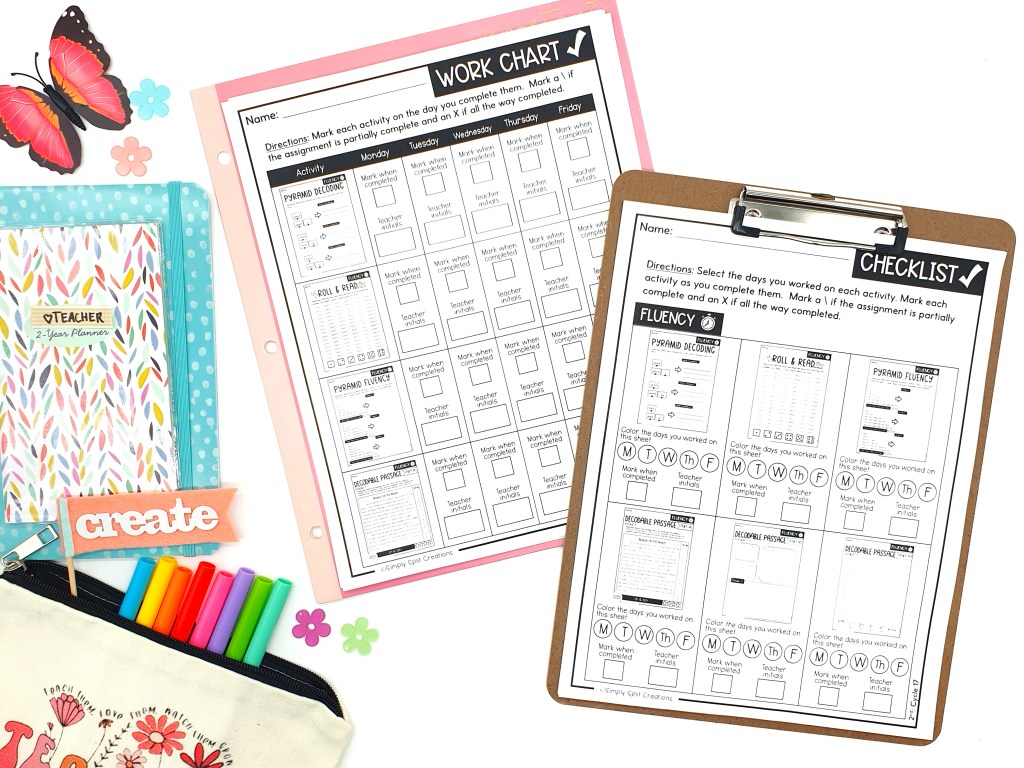
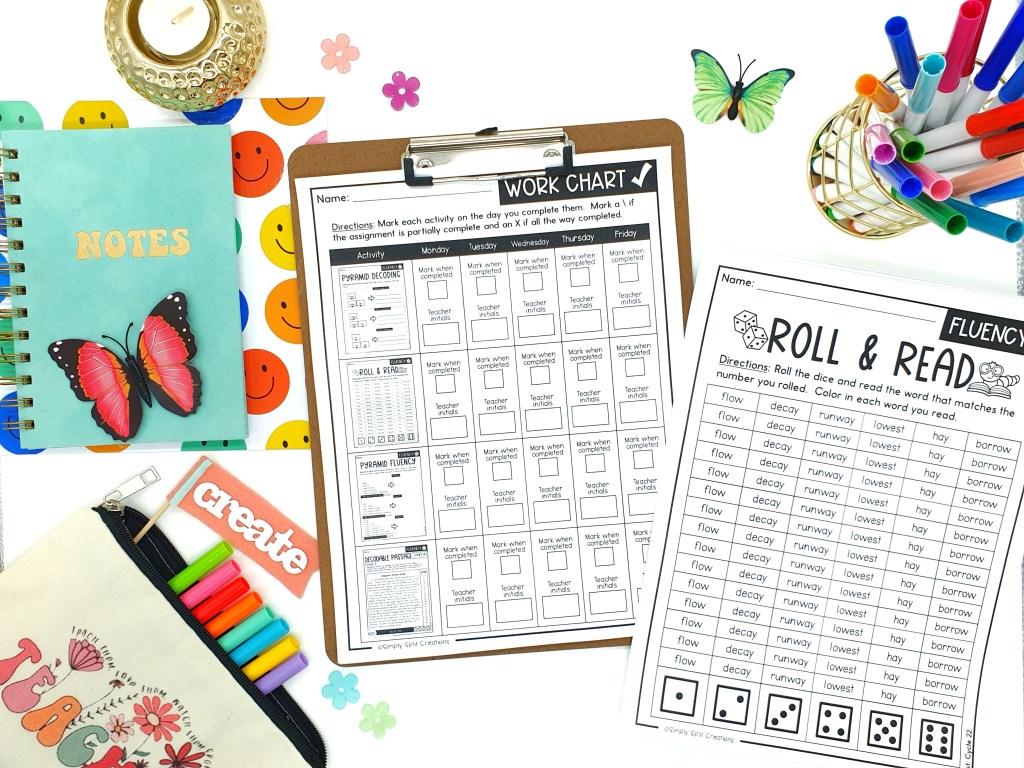
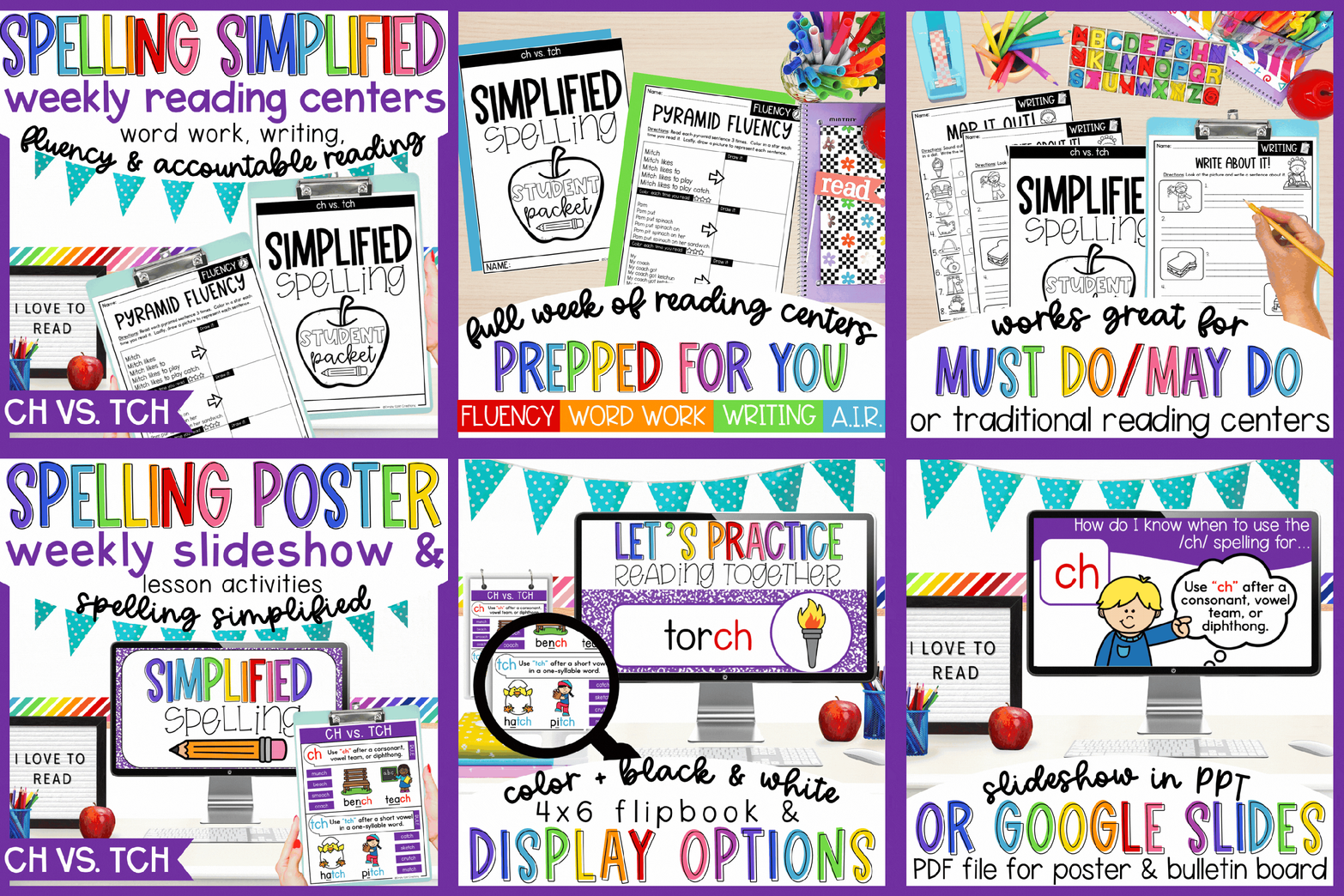
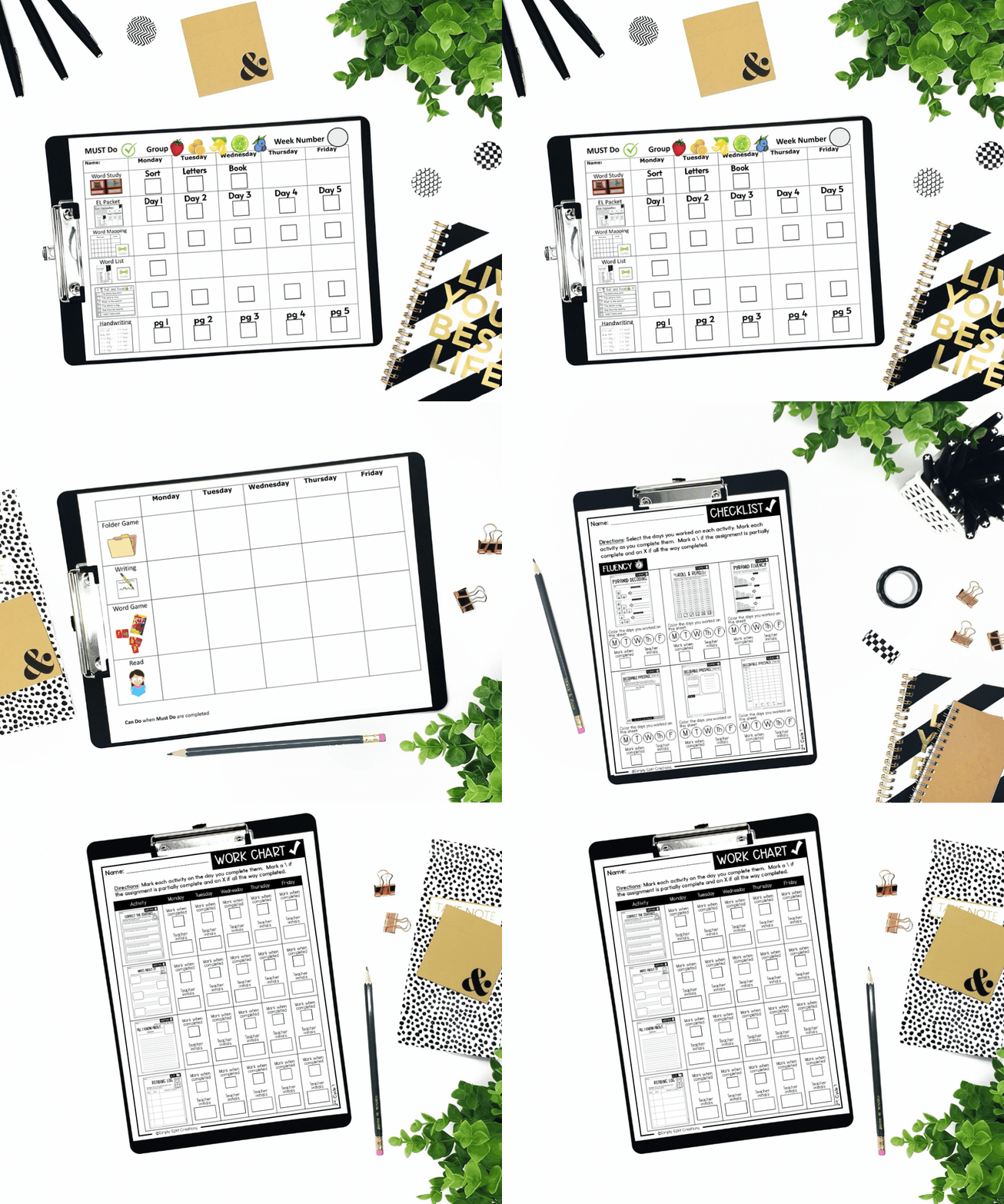
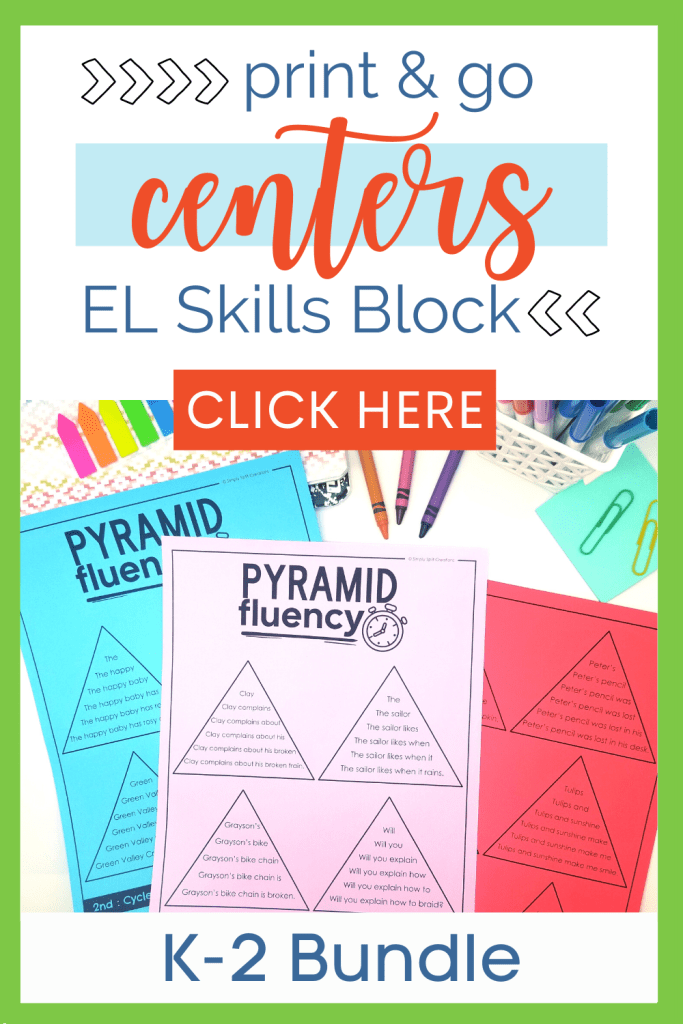
I have spent years (literally-since 2018) working on materials to make Skills Block be a bit easier for myself and other amazing teachers.  My main focus has been to help make Skills Block centers easy to prep as well as effective for students so they can grow throughout the program.  I have many options you can choose from that all align with Skills Block and continue to create more and more resources to help you out.  The bundle I recommend the most is my LOW PREP growing bundle.  This includes a bunch of print and go activities that all align with Skills Block that are perfect for centers.  I have these listed by individual grade level as well as a K-2 bundle.  The K-2 bundle is heavily discounted and makes it really easy to differentiate.  The really cool thing is that this is a GROWING BUNDLE meaning that you’ll pay a lower price now, but gain access to new resources that will be added.  I will continue to add more and more resources to this bundle that are low prep and align with Skills Block.  As I add more products, the price will continue to go up, but you gain access to them as they are released without paying extra.  You can check out these links below:

Click to view the K-2 Print and Go Centers Bundle

I have also created a buyers guide to make it easy for you to figure out which resources would best fit your needs.  This buyer’s guide is constantly being updated as new resources are released.  You’ll find great resources for ALL CENTERS for Skills Block.  You can check out the latest version of my buyers guide by CLICKING HERE or below:

I hope this blog post has been helpful to you as you try to navigate Skills Block.  If you have questions that weren’t mentioned in this post, feel free to drop them below and I’ll do my best to briefly answer them AND I may also include a more detailed response in upcoming blog posts.  Make sure to follow my blog so you can be notified when new blog posts are released. You can also join my email list AND get the FREEBIE pictured below — the K-2 Scope & Sequence for EL Skills Block. Click below to gain access to this FREEBIE.

EL Skills Block, Literacy Centers, Phonics

10 Engaging Flashcard Games For Phonics Instruction

If you were anything like me growing up, the thought of using flashcards was always tedious and boring. Despite it being a boring way to study, it was always effective for me and helped me ace my tests. When it comes to young students, the last thing in the world we want to do is make reading “boring.”  Instead, a good teacher wants to find ways to engage students while they are learning to help ignite the love of learning inside their heart.  Helping students to specifically enjoy their reading instruction time will help them grow their love of learning.  If they love books and reading, they will be able to learn through reading.  

So how do you get the effectiveness of flashcard practice AND engage those young readers?

Well buckle up and keep reading to learn just that.

Maybe you’re skeptical about the effectiveness of flashcards and that’s okay, it’s good to ask questions and do your research.  The truth is that repetition actually helps to build confidence1.  And once students gain that confidence, they start to like that topic more and more and trust in their abilities.  AND when using spaced repetition to practice flashcards, they become more and more effective because it helps students actually retain what they’re learning.  So what is spaced repetition2?  An example of spaced repetition would be using flashcards to practice a concept for a short period of time daily rather than spending an hour once a week to practice.  

So are flashcards really effective? The answer is YES! Flashcards are very effective because the repetition helps to build confidence and using spaced repetition can help students retain the knowledge much easier.  However, because of the repetition, flashcards can also be somewhat boring.  So now let’s get into how you can actually make flashcard practice engaging and meaningful for students to practice phonics spelling patterns.

This seems like an obvious answer but make a game out of it!  Games are engaging and your students won’t even realize they are learning.  I have 10 different games you can use to play with phonics flashcards.  I’ll share my top 3 favorite games in this blog post and you can download and have access to the rest of the games by CLICKING HERE.  

This is a very simple but engaging game that is very easy to prep.  This can be done on a table (during small groups) or on the floor in an open area.  I personally like doing it on the floor in an open area.  You can use premade phonics flashcards or you can write spelling words or high-frequency words on either index cards or full sized papers. Then scatter them all on the ground or table face up. Finally, choose a word to read aloud.  Each of the students will then scan through the words and “attack” the word that was read aloud. “Attacking” the word, simply means, slapping near the word (if on a table) or standing near the card if on the ground. You can do variations of this activity by saying something like “Find a word that rhymes with play” or “find a word with the same spelling pattern as spray.”  You can also have students take turns calling out the word for them to attack.  

My students love this game, and it’s a great movement activity that helps with my hyperactive students as well.

This is a fun game to get those creative juices flowing.  This works best in a small group setting with small premade flashcards.  Pass out 7 cards to each student and place the remaining cards facedown on the table. All the players will work together to tell a story.  Players will look at their cards, reading the words and think of a way to incorporate a card (or cards) into the story.  The player who thinks of an opening storyline first, can begin and players will take turns going in a circle clockwise.  A player can add 1- 2 sentences at a time incorporating at least one card from their hand and discarding those cards after they are used.  After discarding their used card(s), players will draw a new card(s) so they always have 7 cards.  The game is over once the players feel the story has ended OR when they run out of cards.  

Those creative students will LOVE this game, but you may have some reluctant students.  I recommend working with your reluctant students at first and sharing your cards.  You can both work together to think of a sentence to add.

This is a fun one to also practice vocabulary.  You will need whiteboards and dry erase markers for all students participating.  This works best in small groups.  Lay out several flashcards face up on the table.  Randomly pick a word that is face up and think of 2-3 clues to describe the word.  Slowly give your clues to the students.  The students will look over all the words that are face up and decide which word it is that you’re describing.  When they think they know the word, they’ll secretly write the word on their whiteboard.  Once everyone has written a  guess on their whiteboard, the students will reveal their whiteboards. Students get 1 point for guessing the right word and a bonus point for spelling it correctly.  

Your students will love this game!
To check, see the printable game rules for these 3 games PLUS 7 additional games you can play with phonics flashcards, CLICK BELOW

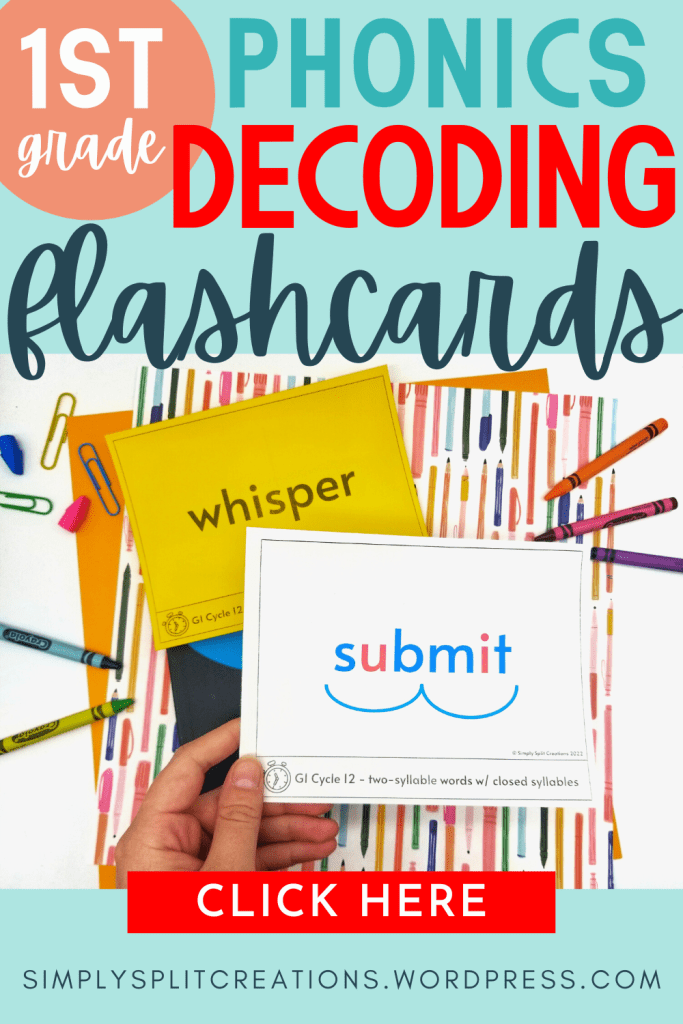
There are a lot of flashcards out there.  There are phonics flashcards, there are sight word flashcards or high-frequency word flashcards and honestly YES any word flashcards can be used with these activities.  I do however have flashcards that I recommend that are amazing for 1st and 2nd grade leveled students.

Here’s what I love about these phonics decoding flashcards.

  1. There are 3 differentiated levels
  2. They can be printed in various sizes
  3. There are many multisyllabic words giving students just the practice they need (plus the 3 differentiated levels can help struggling readers also practice multisyllabic words)
  4. There are so many word options (40 per set – which makes 1,000 for 1st & 1,040 for 2nd grade)
  5. The phonics skill practiced in each set is notated on each card making it easy to find it’s home if a card is misplaced
  6. There are so many phonics spelling pattern options

Yes I am a bit biased because I did make these cards myself, but these are helpful features that you won’t see in other phonics flashcard options.  Check out the video below to see the 1st grade phonics flashcards in action.

There are lots of purchasing options.  You can purchase based on the specific phonics skills you want or you can bundle and save.  CLICK HERE to view all the phonics flashcards available.

References

  1. https://www.nwtutoring.com/2019/10/07/confidence-comes-from-repetition/
  2. https://www.nwtutoring.com/2016/01/04/spaced-repetition/
Organization

Teaching Reading Fluency: Why does it matter?

Probably the first thing that pops into your mind when you think about fluency is speed, how quickly one can read.  True, this is an aspect of fluency BUT it doesn’t fully describe what fluency is, and you can really hurt students overall if speed is the only thing you focus on when teaching fluency.. If you solely focus on speed, then students will likely get in the habit of not comprehending what they are reading, and they may even begin to HATE reading, which is a hard mindset to change. As parents or educators, we do NOT want to fall into this trap and in turn cause children to dislike reading. Therefore, it is important to focus on ALL of the aspects of fluency.

The three aspects of fluency are:

  1. Accuracy
    • Making little to no errors while reading
  2. Reading Speed
    • The rate at which a student reads. Often measured in WPM (words per minute)
  3. Prosody
    • Reading aloud with proper intonation, phrasing and expression

Below are a few reasons why fluency matters, starting with comprehension, which is the end goal of reading.

Fluency is the bridge to comprehension.  The ultimate goal of teaching reading is to help students understand and comprehend what they are reading.  When faced with new words, students often take 5-30 seconds to sound out each word.  If that is the case, the student is putting all of their thought and energy into sounding out each word. Therefore, the chance of them comprehending anything they just read is very slim.  The student may remember 2 or 3 of the words they read, but most likely, they are not going to be able to comprehend the meaning of what they read.

Expression/prosody are also key components when it comes to comprehension.  When a student reads with expression, it helps them comprehend what is written.  The words come alive and feel more like a conversation or a podcast (depending on the content) and in turn, this will help them with comprehension.

Reading fluently is a major benefit to everybody, specifically in relation to future academics. Let’s put this thought into perspective with this example about Jane & Wendy who are high school students.

  • Jane is an excellent reader and can read about 280 words per minute.  Wendy is a decent reader and can read 150 words per minute.  Both Jane and Wendy were assigned to read 2 chapters in their text book in their science class.  Jane completed her reading assignment in about 1 hour, where Wendy spent 3 hours reading and was only able to complete 75% of the assigned reading before falling asleep. 
  • In this example, Wendy was perfectly capable of completing the reading assignment.  She knew how to read the content, she simply didn’t have enough time to get it all done.  Jane on the other hand hardly broke a sweat and completed the reading assignment in a fraction of the time.  The crazy thing is that this wasn’t even for an ELA class, this was for science.  Reading impacts ALL areas of learning.  The short story is that the quicker you can read, the more you can learn, progress and grow.  By teaching students how to be fluent readers, you are preparing them to be lifelong learners.

Once reading becomes less of a challenge or a chore, students will start to find the joy in reading.  They begin to catch that thrill of reading new stories, or discovering interesting facts about dinosaurs or whatever else interests them.  Students can gain this love of knowledge from listening to books, but they actually gain power to access this knowledge/entertainment whenever they desire once they become fluent readers.

There are so many fun and effective activities you can do with your students to help them become fluent readers. Check out some of my favorite activities below.

Planning repeated readings in the classroom can be very effective in increasing fluency. Students can gain confidence in the words they are reading because they have already read through it once. This helps them to be able to read more quickly. Students may dread repeated readings so it’s important to talk about why you are having them repeatedly read the same material over and over again. I suggest perhaps doing a mini lesson on repeated readings to discuss the importance of them towards the beginning of the year or prior to implementing repeated readings. A few resources to use for repeated readings are:

1. Decodable books

  • Anyone that does even a little bit of research into the science of reading will find that decodable books are highly favored over leveled books.  This is because it helps students to succeed in reading.  When a student reads a decodable book, they encounter words that they can decode + some high frequency words.  By focusing on words that students can decode, it helps them to gain confidence in reading, practice their phonics knowledge AND increase fluency.  
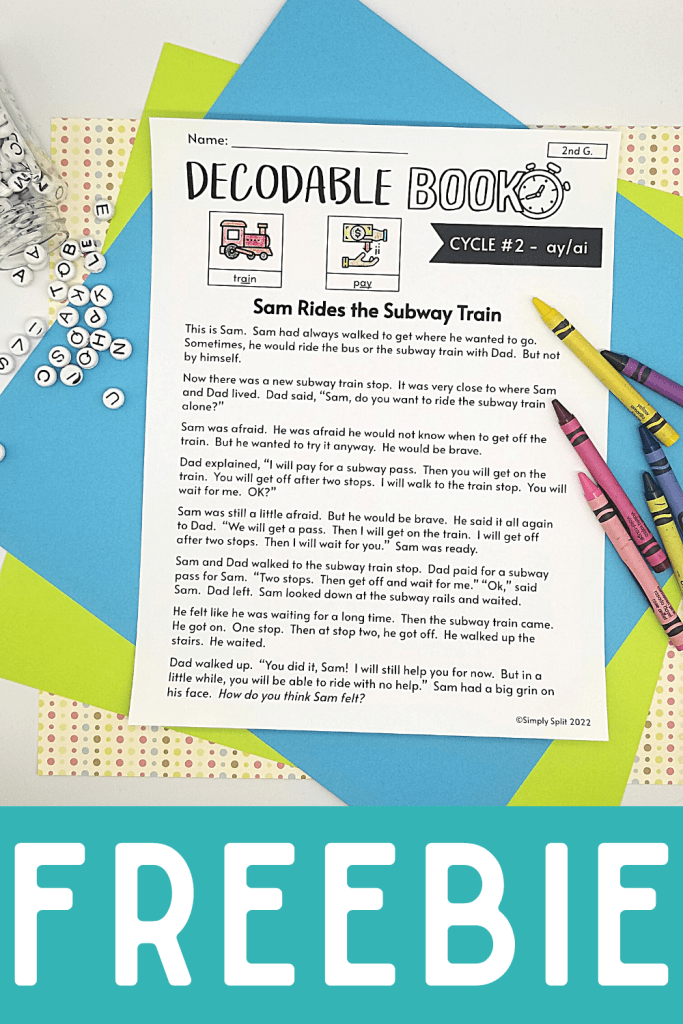
  • Make sure you do your research before purchasing decodable books.  You’ll want to make sure that the books are actually decodable and follow a scope and sequence that build upon each other.  Check out this FREE sample of decodable books from my store.  If you like these decodables, you may be interested in purchasing the full set.  These decodable books are available in Kindergarten, 1st and 2nd grade levels.  Click on the image above or below to view all decodable books available.

2. Fluency voice cards (FREEBIE ALERT)

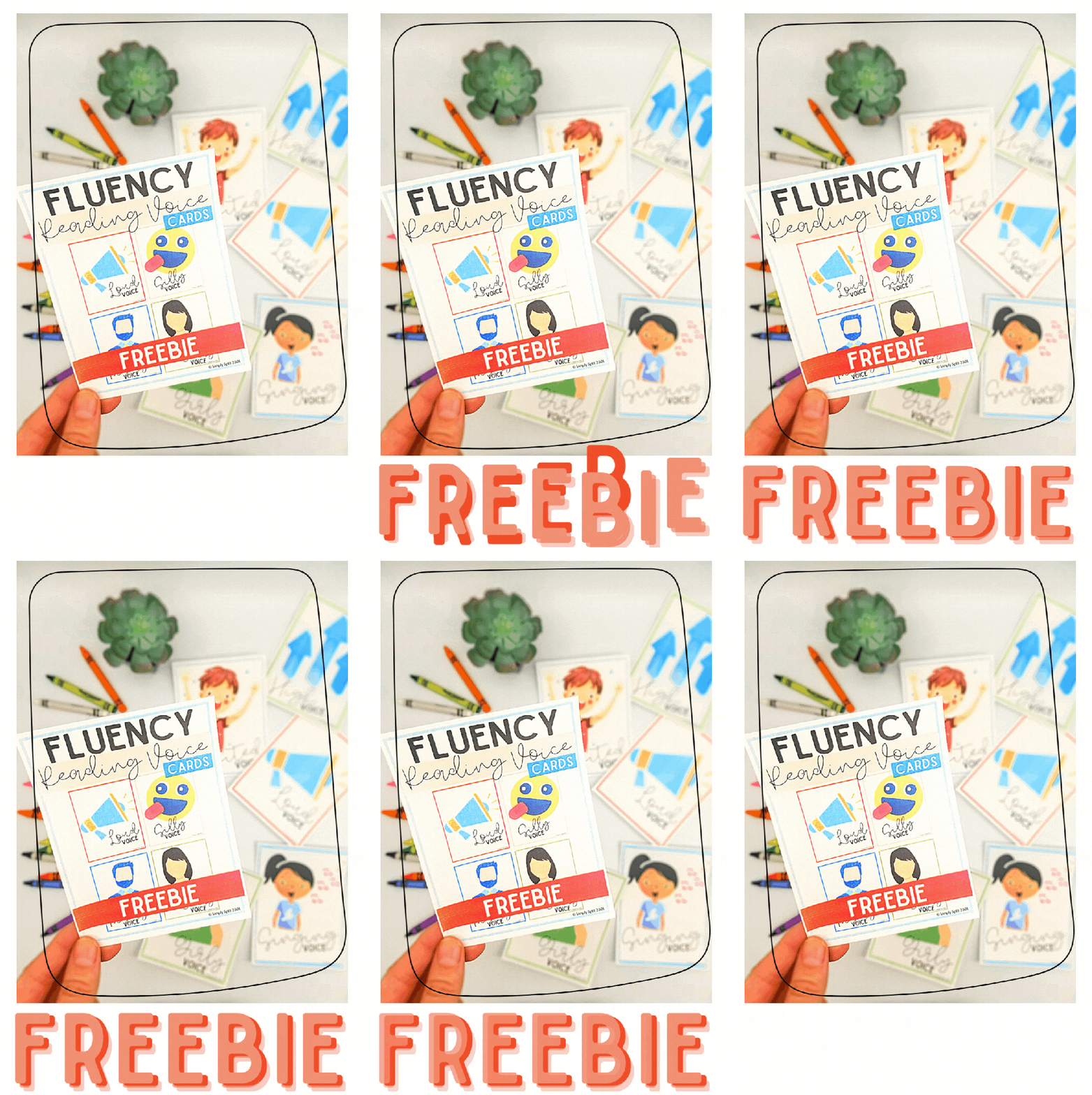
  • This is a great way to increase engagement. Students pick a fluency voice card and read the passage in whatever voice is listed on the card. This way repeated readings won’t feel too redundant. Each time the passage is read, it will be a little bit different. You can grab this freebie by clicking below and subscribing. The FREEBIE will then be sent to your email.

The idea of a pyramid sentence is to read a sentence progressively. You’ll start with the first word of the sentence on a line, then the next line includes the first word and the second word.  Each line adds a new word until the sentence is complete.  Look at the picture to see what this might look like.  The reason this kind of activity helps with fluency is because students are building and practicing reading familiar words quickly.  Even though they are repeating the same words over and over again, this is building their fluency and helping them to increase their fluency rate.

You can do a make-shift version of this activity all on your own with sentence strips.  All you need to do is write a sentence.  You can grab a sentence from a book you are reading or create a sentence with words matching the phonics skills you are practicing.  Then use a paper or blank sentence strip to cover all of the sentence besides the first word.  Then after each word is read, uncover the next word, but re-reading the whole sentence over as you uncover each word.

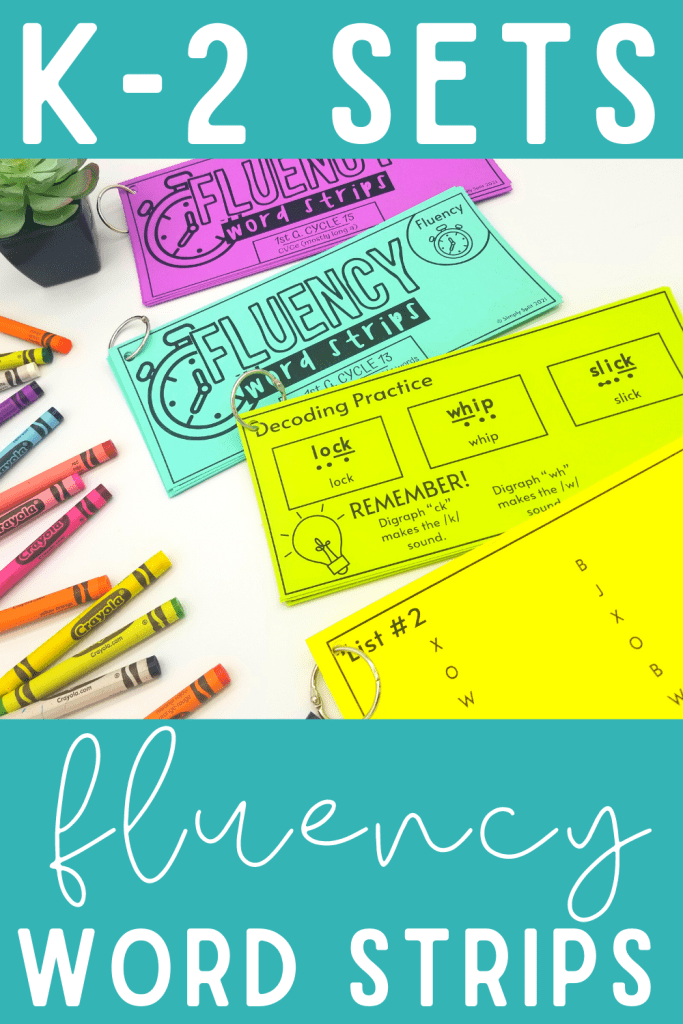
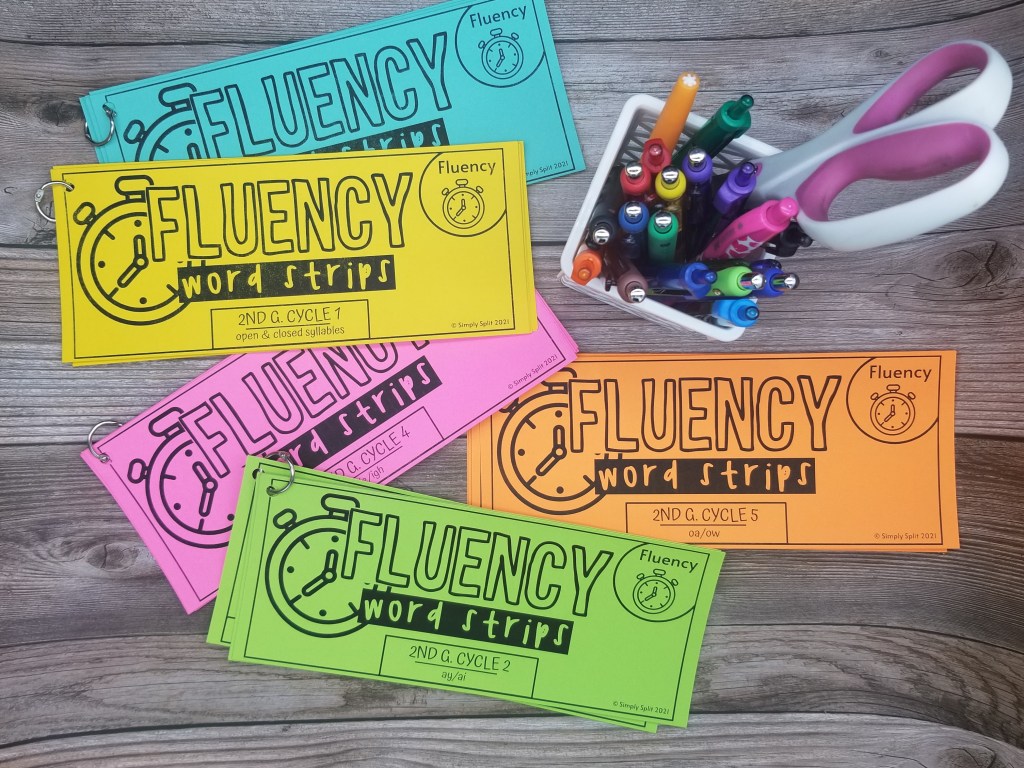
This is a fun and easy activity to implement. It will take some prep if you choose to make your own, or you can try out the fluency word strips I have made by clicking here. This is a pretty easy activity to make for students that need to practice letter names and sounds. All you need is a pocket chart, sentence strips and a pointer. Simply write down the letters you’d like each group to practice on the sentence strips and place them in the pocket chart. When students go to that center, they will have someone point to each letter on the sentence strip as another says the name & sound. This is repeated until they become more and more fluent. Students tend to have a fun time with this activity and find motivation to get better and better.

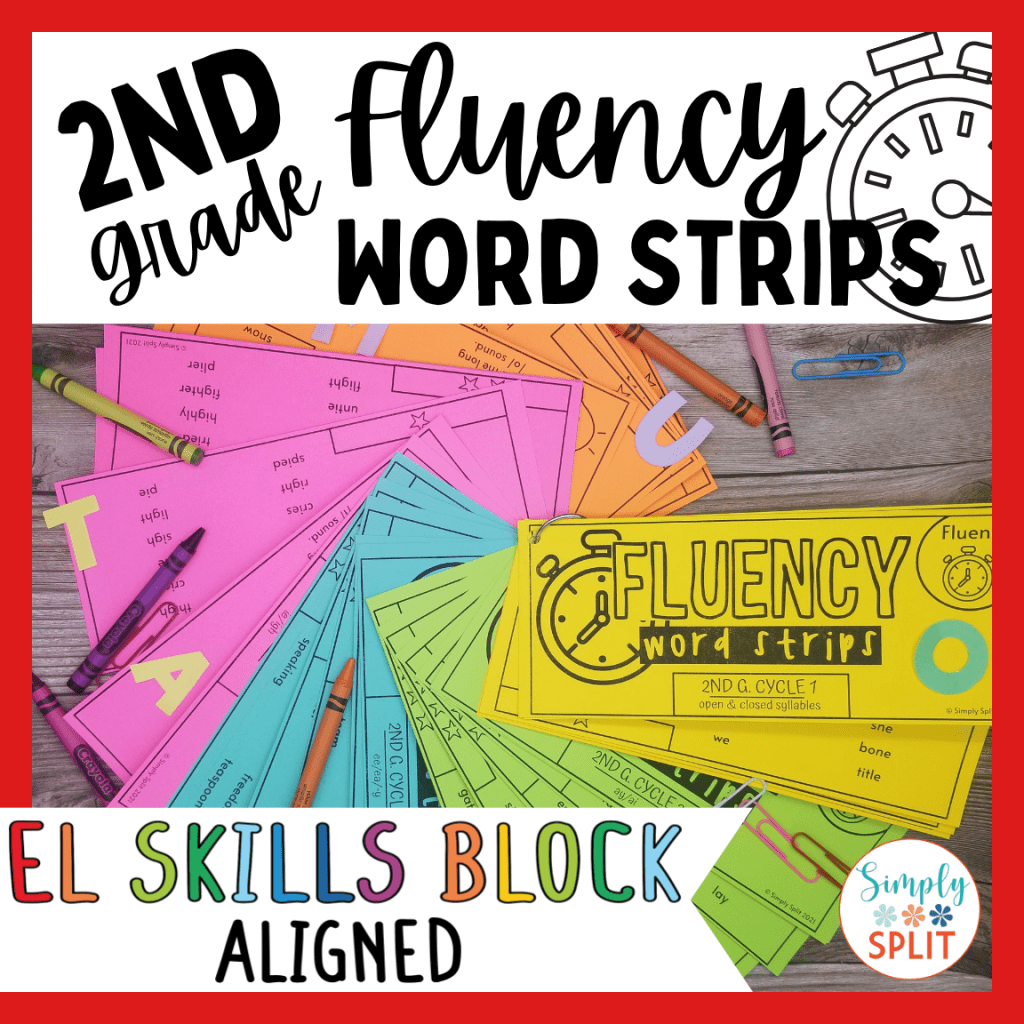
If you don’t like the idea of having to make your own, have no fear, I got you covered. There are 25-26 (depending on the grade level) different packets of fluency word strips that each focus on a different phonics skill. Within each packet, there are 4 levels. This makes it easy to differentiate.

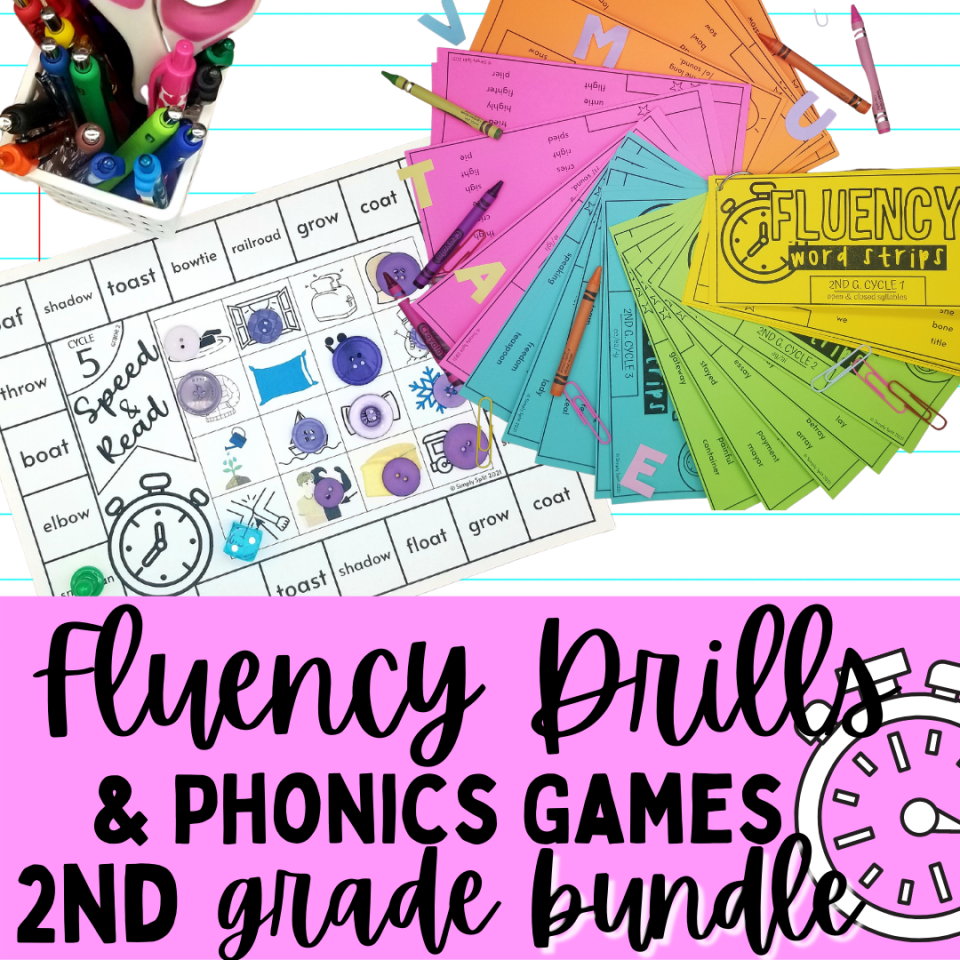
If you like the idea of your students completing all of the levels within each decoding packet, I would definitely suggest purchasing the bundle. In the bundle I have included a puzzle piece game board which aligns with the fluency word strips and can be used as an incentive to pass off each list within the packet. It’s pretty simple, once a student passes off one of the word lists within the fluency packet (reading fluently), they get a piece to the coordinating game board puzzle. Once they pass off all lists, they can put the puzzle together and play the game. The coordinating phonics game board focuses on the same phonics skill practiced in the fluency word strips. The game can be played independently or with a group. Your students will love it and be motivated to pass off each list. Watch the video below to see the bundle in action or click here to view the bundle in my shop.

Teaching students decoding skills might seem like a weird thing to do to increase fluency, but it really works.  If you think about it, if a student doesn’t have the skills to decode and sound out a word properly, there’s no way they’ll be able to read fluently.  Students that can’t decode very well but can read somewhat often rely on memorization.  Memorization can only take you so far and at some point, students that memorize will get stuck.  Decoding skills help students in the short term and the long term.  It helps students to learn how to sound out simple words and complex words.  Once they get enough practice with decoding words and they get quicker at it, they will then be on their way to becoming fluent by reading accurately and quickly.

Decoding flashcards can be so helpful to young readers.  They are very easy to make on your own.  All you need are index cards and colored markers.  Write on each flashcard a word you are working on (I would suggest working on a specific phonics skill and selecting words with that same spelling pattern).  Next you’ll want to figure out your own notation system.  I like to underline spelling patterns that are familiar, then use an arrow to mark magic e words, and a swoop for the syllable breaks.  I would suggest doing these notations in different colors.  Then when you use the flashcards, teach students to cover up and only read one syllable at a time.  This will help them decode more easily and build their fluency accuracy. Click here to view this decode mode activity.

I used to make all my flashcards by hand and it was very time-consuming (although nice because it’s FREE).  I finally buckled down and started making my own printable flashcards and they have been so helpful.  If you are looking to save some time, make sure you check out my decoding flashcards.  Each flashcard set includes 40 flashcards focused on a specific phonics skill.  There are 3 differentiated levels in each set as well.  The differentiated levels are all the same words, but they don’t have all the decoding helps (as some students may not need as much guidance). You can bundle and grab all of the 2nd grade decoding flashcards (26 sets) for a discounted price.  Other grade levels (kindergarten and 1st grade) will be coming soon as well.

Some students simply have not had enough practice with blending words quickly and smoothly.  When students aren’t able to blend quickly and smoothly, this will definitely affect their fluency. 

My favorite activity to help students blend more smoothly and quickly is shown below.

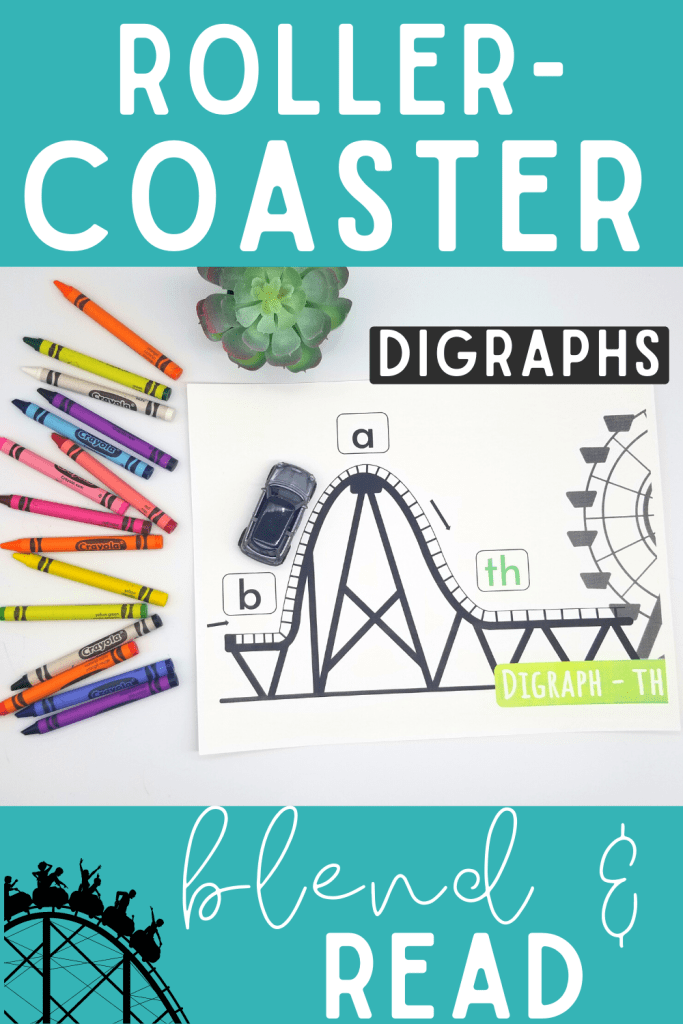
This is such a FUN and ENGAGING blending activity that your students will love, and it will actually help to improve their blending skills.  As shown in the video, I like to use a toy car as the blend-er.  Students simply roll the toy car on the rollercoaster over each letter as they blend the sounds together out loud. 

This product is sold in a CVC Bundle or a Digraph Bundle.  You can also buy short vowels or individual digraphs on their own outside of the bundle.

Try out some of these tips and let me know how they go! I’d love to hear how it influences your classroom.

Organization

5 Ways to Increase Reading Fluency

Fluency is such an important part of reading but often can be frustrating to teach or help young readers learn. If you find your child or student frustrated when reading or practicing to read fluently, it may be time to try a different approach. Before we talk about HOW to increase fluency, let’s first talk about WHAT fluency is.

Often when we think about fluency, we only think about reading speed and forget about the other aspects of fluency. If you solely focus on speed, then students will likely get in the habit of not comprehending what they are reading or may even begin to HATE reading, which is a hard mindset to change. As parents or educators, we do NOT want to fall into this trap and in turn cause children to dislike reading. Therefore, it is important to focus on all the aspects of fluency.

The three aspects of fluency are:

  1. Accuracy
    • Making little to no errors while reading
  2. Reading Speed
    • The rate at which a student reads. Often measured in WPM (words per minute)
  3. Prosody
    • Reading aloud with proper intonation, phrasing and expression

Okay so you might be wondering why this is important? Well, teaching all of the aspects of fluency will overall help to increase fluency. Therefore, you will want a good variety of fluency activities that focus on each of the three aspects of fluency.

Learning to decode is so important for young readers. Teaching phonics skills explicitly will help prepare students to decode accurately. My favorite activity to practice decoding is what I like to call “decode mode.” If you use the EL Skills Block Program, they refer to this activity as “syllable sleuth.”

Watch the video to see what decode mode/syllable sleuth sheet looks like. You can also preview what the full packets for each week look like.

In this activity, students become little detectives as they analyze the word. The steps are the following:

  1. Look for the vowels and place a dot under each of the vowels.
  2. Underline spelling patterns that you know and recognize.
  3. If there is a “magic e” draw an arrow to the vowel it affects.
  4. Find where the syllable break is and draw a line or swoosh to separate the syllables.
    • You will need to make sure most if not all syllable types are taught prior to practicing this activity.
  5. Lastly, read each syllable separately then blend them all together.

This activity can be done with 1 syllable words as well, simply forego steps 4 and 5. This is such an effective technique. My lower students will sometimes need help, but they are always so surprised and impressed that they can read longer words.

This activity is very low prep and very effective. You can make your own words and have students copy in a notebook or whiteboard which costs you nothing. If you are looking for something already made that’s print and go, check out these phonics packets. They include a syllable sleuth/decode mode activity in most weekly packets along with other activities focused on the same phonics skill. Click on the picture or here for the link.

26 packets with fun phonics activities including: syllable sleuth/decode mode, decodable books, word sorts, silly sentences and more!

Planning repeated readings in the classroom can be very effective in increasing fluency. Students can gain confidence in the words they are reading because they have already read through it once. This helps them to be able to read more quickly. Students may dread repeated readings so it’s important to talk about why you are having them repeatedly read the same material over and over again. I suggest perhaps doing a mini lesson on repeated readings and discuss the importance of them towards the beginning of the year or prior to implementing repeated readings. A few ways to make it more engaging are:

  1. Timed readings
    • This is a tricky one. Students can dread timed readings IF it is done too frequently and not properly explained. Students should know that they should NOT be competing with other students to read more quickly. Instead, teach a growth mindset and to compete with THEMSELVES. This way students can have motivation on their own to continually grow.

  2. Fluency voice cards (FREEBIE ALERT)
    • This is a great way to increase engagement. Students pick a fluency voice card and read the passage in whatever voice is listed on the card. This way repeated readings won’t feel too redundant. Each time the passage is read, it will be a little bit different. You can grab this freebie by clicking below and subscribing. The FREEBIE will then be sent to your email.
Get these FREE fluency reading voice cards sent right to your email by clicking here.
colendra-font

Echo reading is an easy strategy to implement. You can do this with a short passage or a book. It can even be done with other subject material. The teacher/adult will first model reading the excerpt with the words displayed for the child/class to see. A document camera is good for this or a big book. The teacher/adult should point to the words as he/she reads them for the students to follow along. After modeling how to read, students will then “echo” and all will read together as the teacher/adult points to the words a second time. This helps students with reading all aspects of fluency, accuracy, rate & prosody and is such an effective AND easy strategy.

This is a fun and easy activity to implement. It will take some prep if you choose to make your own, or you can try out the fluency word strips I have made by clicking here. This is a pretty easy activity to make for students that need to practice letter names and sounds. All you need is a pocket chart, sentence strips and a pointer. Simply write down the letters you’d like each group to practice on the sentence strips and place them in the pocket chart. When students go to that center, they will have someone point to each letter on the sentence strip as the other says the name & sound. This is repeated until they become more and more fluent. Students tend to have a fun time with this activity and find motivation to get better and better.

If you don’t like the idea of having to make your own, have no fear, I got you covered. There are 25-26 (depending on the grade level) different packets of fluency word strips that each focus on a different phonics skill. Within each packet, there are 4 levels. This makes it easy to differentiate. You can also encourage students to try and decode the harder lists by using the strategies from the decode mode activity (syllable sleuth) which is explained above.

If you like the idea of your students completing all of the levels within each decoding packet, I would definitely suggest purchasing the bundle. In the bundle I have included a puzzle piece game board which aligns with the fluency word strips and can be used as an incentive to pass off each list within the packet. It’s pretty simple, once a student passes off one of the word lists within the fluency packet (reading fluently), they get a piece to the coordinating game board puzzle. Once they pass off all lists, they can put the puzzle together and play the game. The coordinating phonics game board focuses on the same phonics skill practiced in the fluency word strips. The game can be played independently or with a group. You’re students will love it and be motivated to pass off each list. Watch the video below to see the bundle in action or click here to view the bundle in my shop.

Click below to view the bundle or decoding strips sold on their own.
colendra-font
colendra-font

This two fold activity works as follows. First, students will be able to practice reading with expression and rate. I love this strategy because students have so much fun with readers theater. They won’t even realize that they are practicing fluency. You can do as much or as little with this activity as you want. Students can make props to help to add to the role, perform for the class or parents, or it can just be a simple reading practice in small groups.

You will need to find an appropriate leveled readers theater and provide a copy (or share) with students for each part. I suggest highlighting each role throughout the whole script for each part so it is easy for students to find their part. You can do this yourself, ask for parent volunteers, or if you feel your students are capable, have them highlight their part on their own. I would suggest modeling the reading to your group of students first, then you can have them practice reading through the script as a group. This will help students hear how to read with expression and also help students with reading any unfamiliar words that are in the script.

If you would like some suggested materials for younger grades to use for readers theater, check out these below:

  1. 25 Fun Phonics Plays for Beginning Readers
  2. Evan Moor Readers Theater, Grade 1
  3. Leveled Readers’ Theater, Grade 1

Try out some of these tips and let me know how they go! I’d love to hear how it influences your classroom. If you’re interested in any of the mentioned products from my shop, you can find the links below.