Have you heard of word blindness? We can thank Adolph Kussmaul for his 1877 study that helped us understand a bit more about how reading and writing are processed in the brain. He coined the term “word blindness” and… more importantly, he did a study that discovered “word blindness” helped us understand a secret hack that will help your students become great spellers/encoders.
A little bit about Adolph’s 1877 study:
Two months after a 45-year-old woman suffered a stroke, she suddenly was unable to read written or printed text.
Oddly enough, she could see text clearly, think normally, yet could not interpret written or printed language
Even stranger, she could write and spell flawlessly, but couldn’t read her own writing.
What does this weird study teach us about encoding?
Forming muscle memory helps us encode:
Repeated writing helps form that muscle memory
What a crazy thing to have happen, right? Well, because writing actually becomes muscle memory, we can conclude that all it takes is lots and lots of repeated writing to nail spelling.
Take-away
Word work centers DO help our students become good encoders when implemented correctly
Sooo, there might not be science to back up the ever so popular punishment of repeatedly writing “I will not…(fill in the blank).” BUT there IS science to back up repeated writing to help improve encoding.
What might this look like in the classroom?
I want you to think about how often you incorporate repeated writing in your classroom right now. Do you have a word work center that your students go to? And if so, is it set up in the most effective way?
If you want this approach to be effective, make sure you go over the correct way to do it with your students, so be sure they follow these guidelines:
Do not mindlessly copy words
Say the letters out loud as you write them
Go slow for the first 2 or 3 writings
Test your memory – close your eyes or cover up the reference, then fix errors immediately
Here are some things for you to keep in mind when implementing repeated writing:
Try a multisensory approach (visual, auditory, tactile, or kinesthetic)
It may be helpful to limit your list of words – this is great for differentiating work for students
What are some activity ideas for this approach?
Multisensory Activities
⭐Visual
Color-coded writing – write consonants in red and vowels in blue (this helps students pay attention to their word structure and visually see the difference)
Look, say, cover, write, check
Staircase (pyramid) writing – build the word line by line, adding one letter at a time (example: c, ca, cat, catc, catch)
⭐Auditory
Clap the syllables in words
Record & listen – have students record themselves spelling a word (correctly), then have them play it back as they look at the printed word
Letter-by-letter echo: A partner says the word and its first letter; the learner echoes it, and they alternate letters back and forth until the word is complete.
Sound-blending segmentation: Say the target word slowly, break it down into its distinct individual sounds (phonemes) aloud, and then blend them back to the full word.
⭐Tactile (touch)
Write with a finger in shaving cream
Write with a finger or pencil eraser in sand
Write with a finger on sandpaper
Trace it (something they can feel)
Use a hot glue gun to write the spelling words – then have students trace the words with their finger (say each letter as they trace it)
⭐ Kinesthetic (movement)
Sky writing or writing in the air
Write big on a whiteboard – then small on paper
Jump & spell – include big letter cards, have students unscramble the letters, then jump on the side of each letter and have the students spell the letter out loud as they jump to each letter
Finger tapping – students can finger tap words as they spell them out loud.
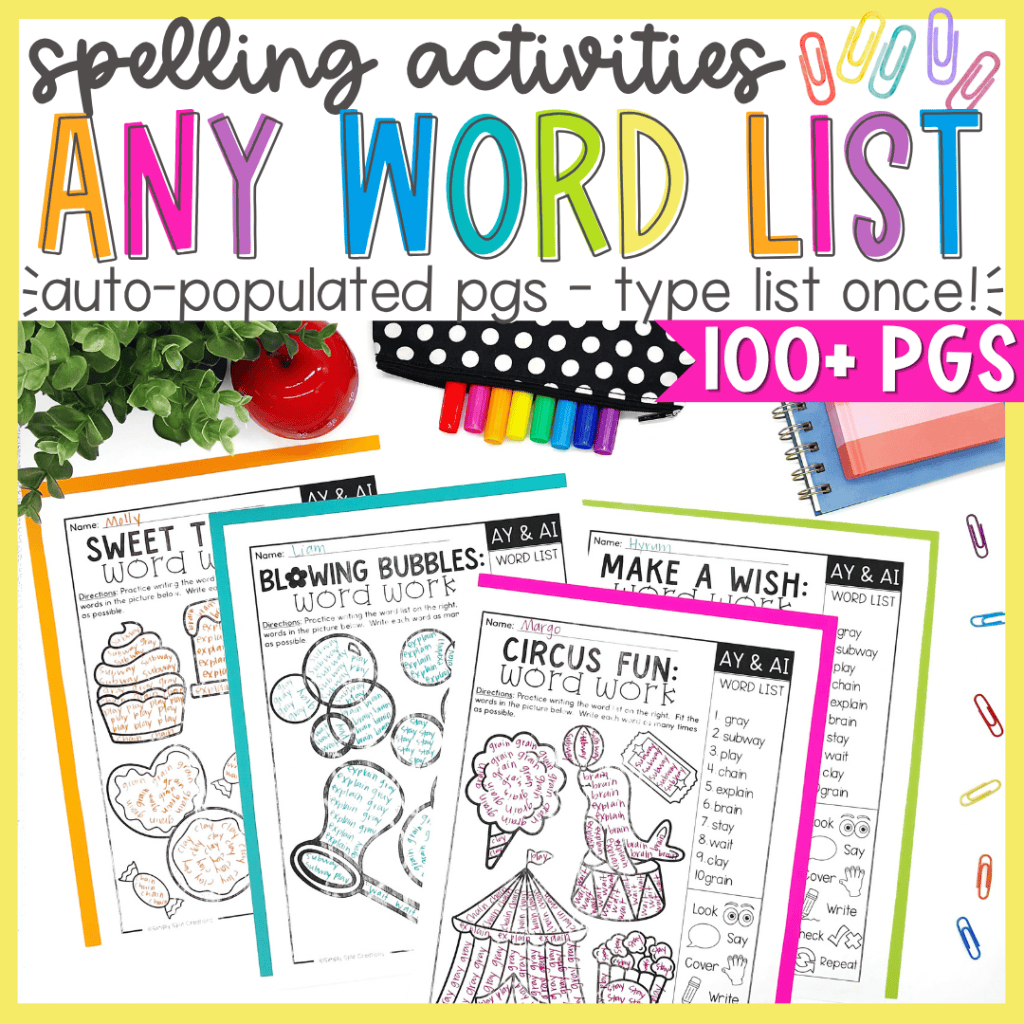
Rainbow Write (make sure they aren’t changing the color for each letter; that would not be effective) – included in this spelling resource for any word list
Misc. Picture Writing – included in this spelling resource for any word list
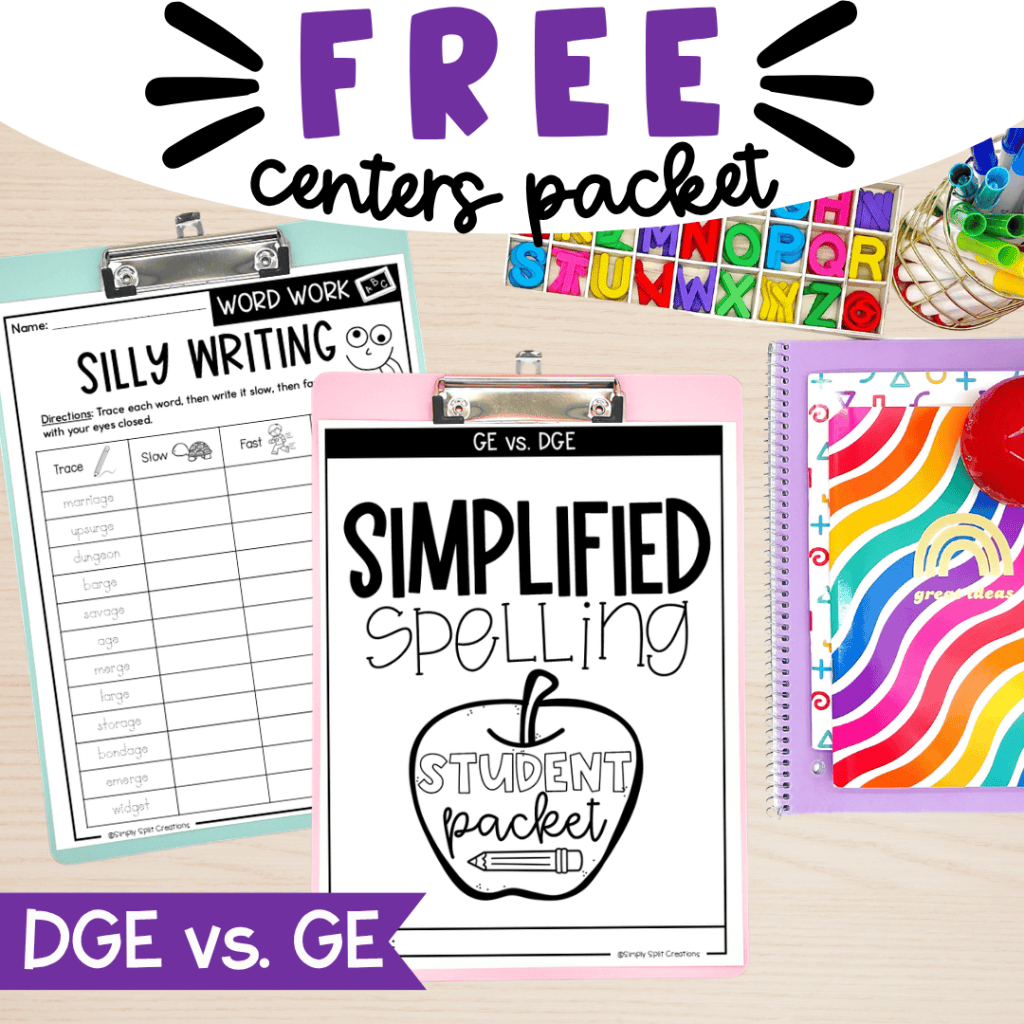
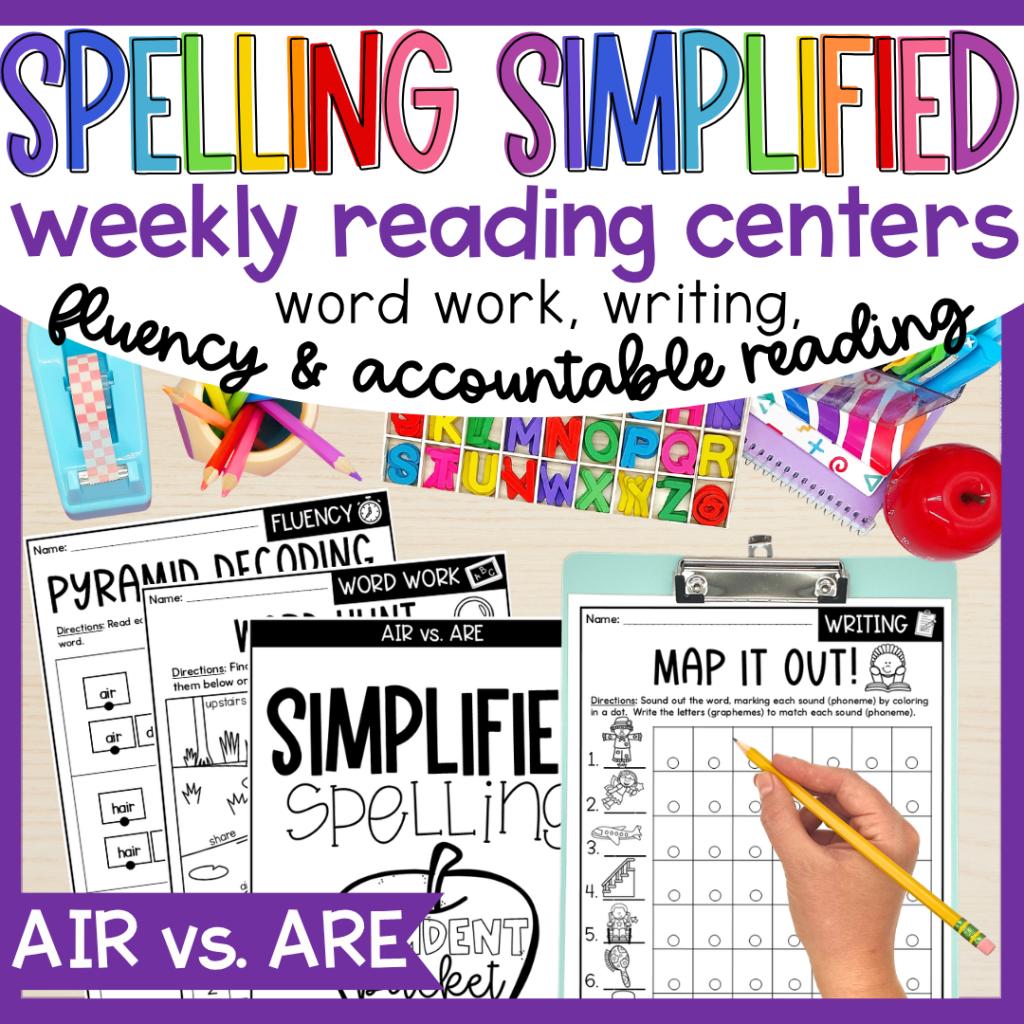
The silly writing and roll & write activities are included in my weekly center packets & simplified spelling. You can use the search bar to find the specific phonics skill you’re looking for. Click below to view.
You have probably heard lots of talk about work charts (must do/may do) as a replacement for reading centers, and may be wondering what the hype is all about. As with everything, there are pros and cons to work charts. I’m going to share some of the perks below that may intrigue you…
Benefits of a Work Chart System
Little to no transitions – this saves a lot of time
Students get a choice in the order that they complete their work (making it more enjoyable or feasible for them)
Teachers can pull students whenever during this time frame – this means you can have groups for as long or as little as you need to.
Allows students to take time if needed on certain items or work quickly through concepts that are easier for them (less wasted work time)
Students can stay at the same table/desk almost the whole time (depending on the work chart activities) – less moving around and wasting time
It holds students accountable for completing their work
So you might be wondering how the work chart system works and how you can implement it in your classroom. I’m going to show you how below:
Pick the Work Chart Activities
The activities you choose can be very similar to your reading center activities. I choose activities for fluency, word work, writing, & accountable independent reading. I recommend choosing activities that are easy to organize in one area, prep, and for students to complete independently.
-Need a premade & low prep option?
After a couple of years of piecing together activities for my students’ work chart, I finally created an all-inclusive work chart packet that covers everything I need. It includes a FULL YEAR of engaging work chart activities, and all you have to do is print it out each week. Check out what it all includes below:
6 fluency activities
5 word work activities
4 writing activities
1 accountable reading activity (bonus extras included in the bundle)
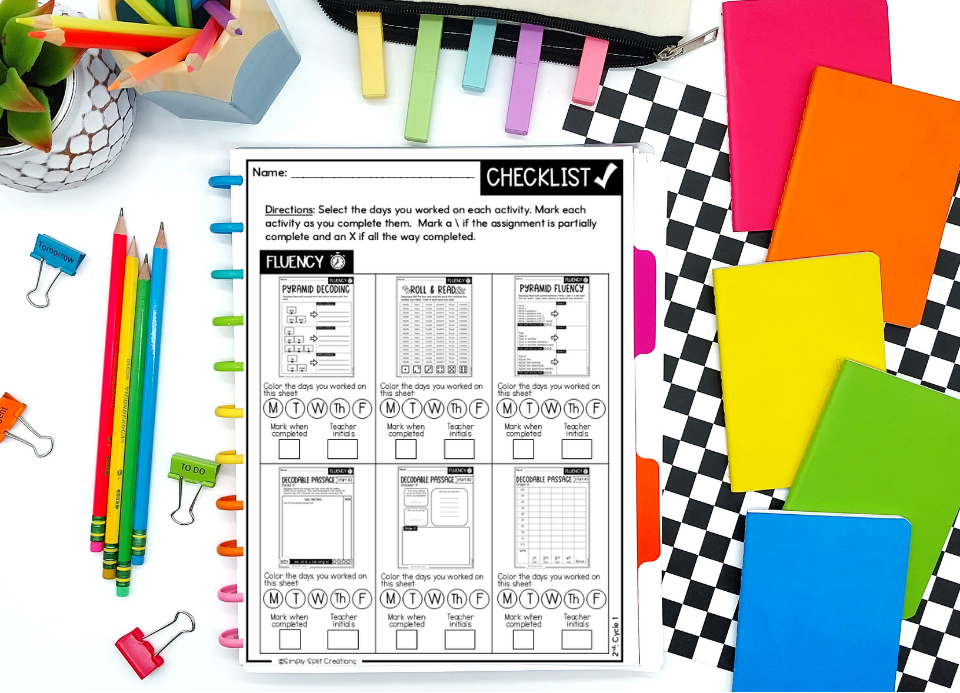
A work chart OR a checklist w/ screenshots of each activity (students will check off as they go)
Plus, there’s a spot for a teacher or adult to verify completion for each item
The great news is that if the full bundle does not align with your phonics curriculum, you can pick and choose the specific phonics packets you need (and buy them individually).
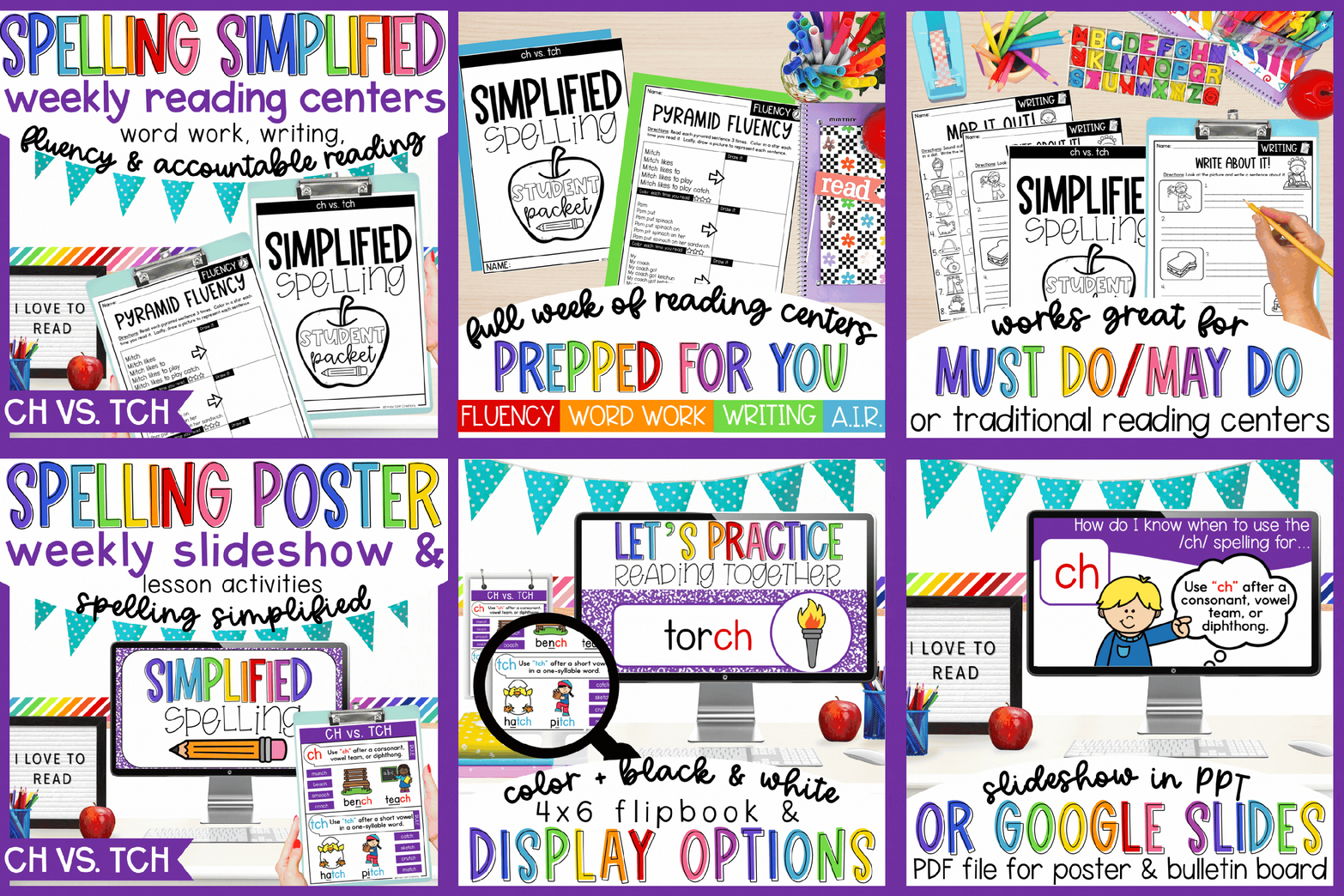
AND, I am starting to make a broader selection of packets like these (plus some extras like lesson slideshows and phonics posters). If you don’t see the skill you need, you may want to check out the “Spelling Simplified” packets. You can check out all the available packets HERE (then use the search bar to find the specific skill you’re looking for.
Build the Work Chart
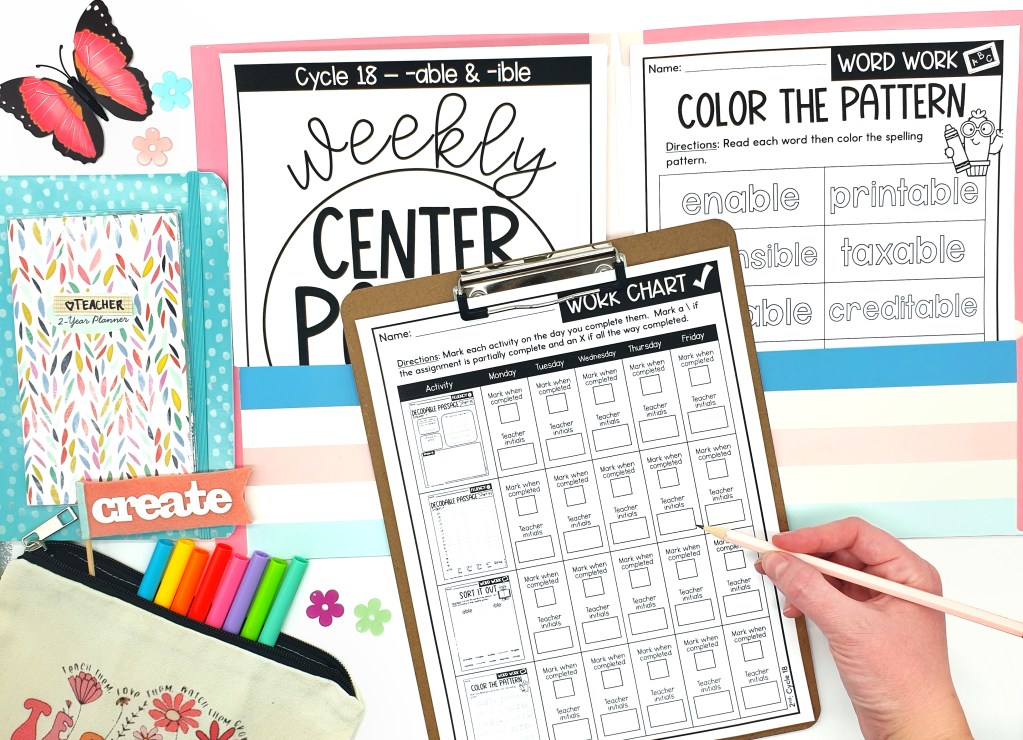
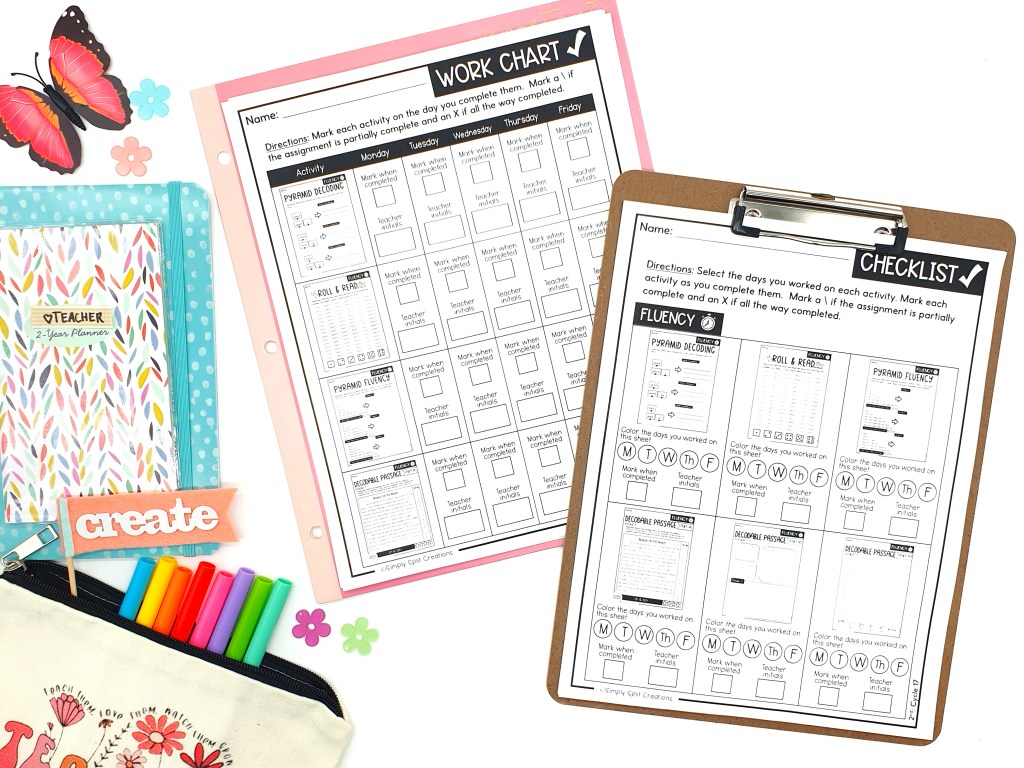
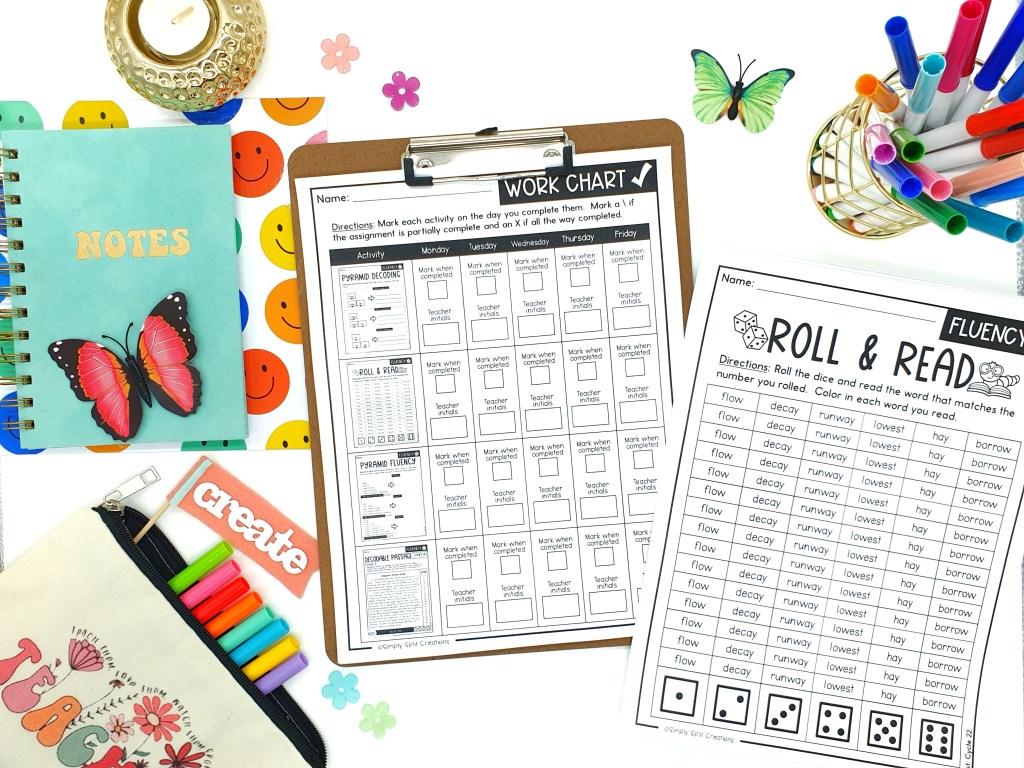
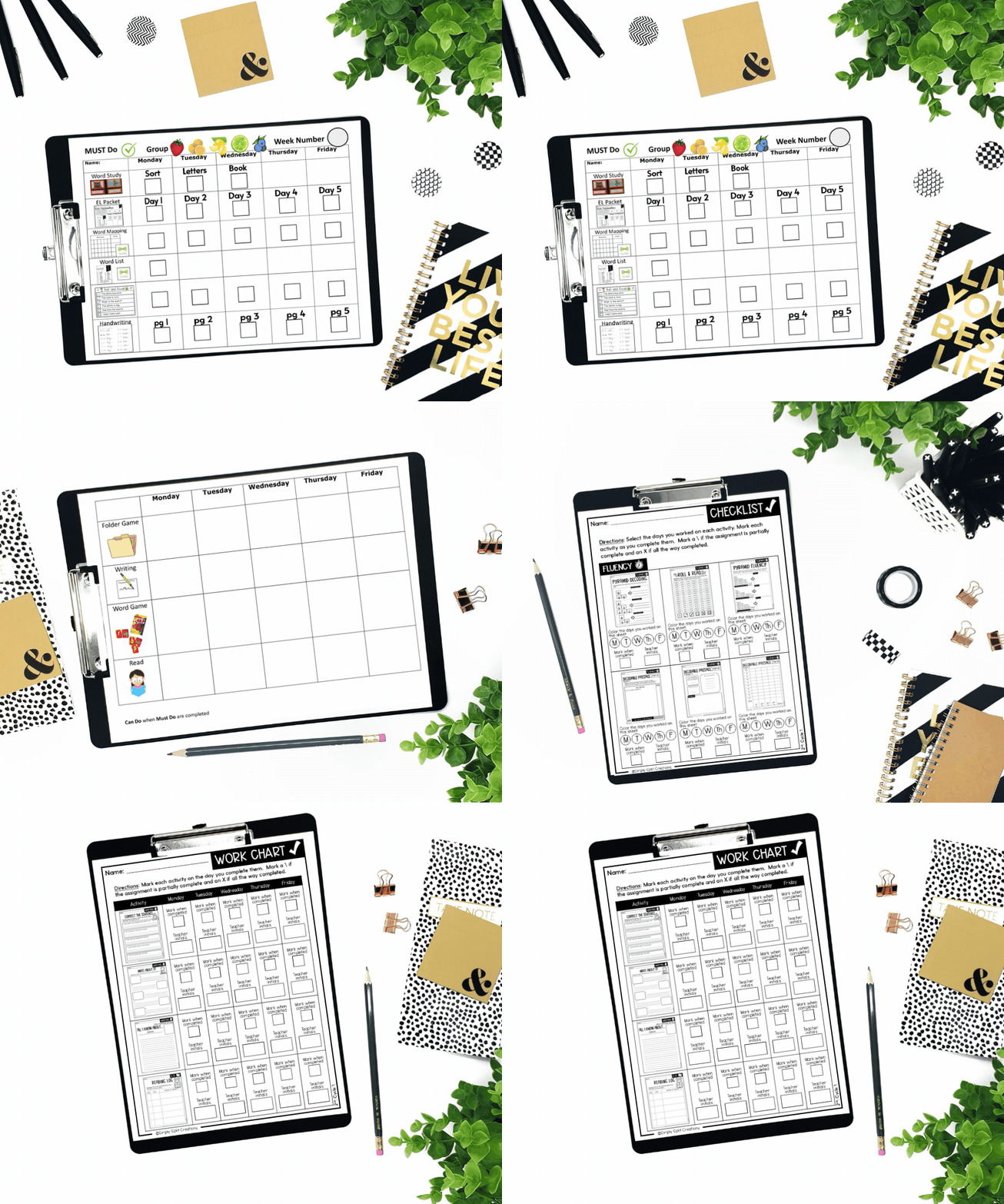
After you have selected the activities you want students to use for the work chart, you’ll need to build the physical work chart. I recommend including a picture of each activity (especially in a k-2 classroom) and a checkbox next to each activity. There are lots of different types of work charts; I’ll share a couple of examples below:
Examples
If you like either of the portrait options, you can grab the EDITABLE work chart in the bundle of weekly center packets OR in the editable template.
Snipping Tool: I recommend using the snipping tool to grab screenshots of items you are using for your activities in the work chart. This really helps students follow along and make sure they complete their work when they can see a nice visual of the actual paper or activity materials.
On a Windows computer, you can use the search bar to find the “snipping tool,” or you can use the shortcut WINDOWS + SHIFT + S, and the snipping tool will pop up. Then drag a box around the area you want to “snip” or grab a screenshot of. A new screen should load, and you can save the image to your computer, or you can copy and paste directly into your document. I would recommend using Google Slides, PowerPoint, or Canva so you can easily move the pictures as needed.
Organization
If you’re not sure how to organize this system or are having a hard time picturing how it might function, below are a few tips.
Grouping Students
I recommend grouping students like you would with regular centers. Students in a group should be on the save reading level and should be given differentiated materials.
If you need help learning how to group students and level them appropriately, I have a blog post that shows the assessment I use to group students for reading centers or a work chart system. HERE’S a link to the POST.
Tables
I recommend having each group assigned to a table. Students should stay at the table for most of work chart time. This helps students stay focused on tasks, allows them to ask their group members questions if they have them, and also prevents lots of unneeded transitions.
Caddies
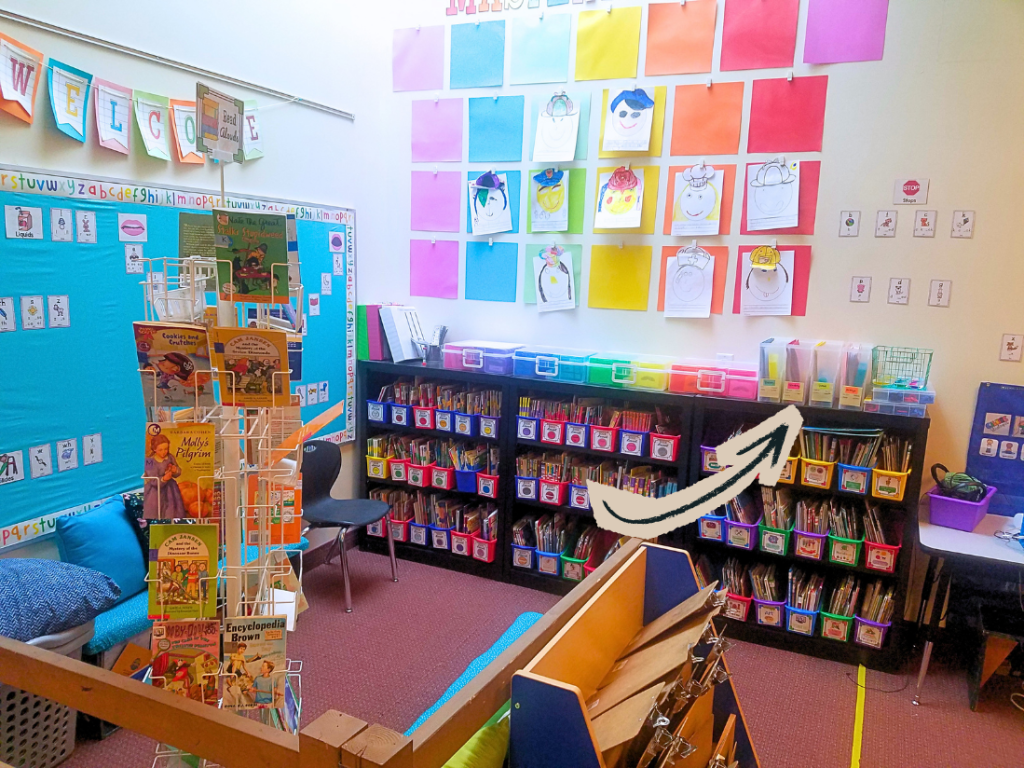
I have a folder for each student in a caddy that’s assigned to each group. At the beginning of work chart time, the caddy is brought to the table so students can easily grab their folder and start to work. Some materials are also included in the caddies that are needed for students to complete their work. Examples might be: a timer, decodable books, fluency drills, iPad, etc. This way, students don’t have to wander around the room gathering materials.
Below is a picture of the caddies I use to store group materials.
Checking Work
It is super important to hold students accountable with completing their work; otherwise, it can turn into a big distraction or waste of time. This is what I love SO much about a work chart system, because you can check students’ work throughout the week, and students can feel that pressure to actually get their work done. It can become a little bit tricky finding time to actually check off students’ work, though, so here are a few things I have done to make sure there’s ample time to check off.
Daily 5-10 Check-off Time: I will take the last 5-10 minutes of “centers” to check off student work each day. This motivates students to have a few items ready to sign off each day.
Friday 20 Check-off Time: On Fridays, I take extra time to check off students’ work. I usually do 20 minutes.
Sign-off for a few min with each group at the beginning of your small group lesson: You can also have students bring their work charts to small groups, and you can check off each student’s work during this time.
Ask for parent volunteers to help sign students off (once or twice a week): This is a super simple and easy way for parents to help out in the classroom. If you have a parent willing to come in once a week or a few parents who rotate coming in once a week, then you have the perfect system for checking off student work. I usually like to remind my students the day before a volunteer comes in so they are super motivated to have a lot of work ready to be checked off the next day.
Utilize SeeSaw for students to record themselves reading, or take a picture of their work: Another way to hold students accountable is to utilize the app SeeSaw. SeeSaw is a great app where students can take pictures of their work, record themselves reading, or you can even create activities directly on the app. This can make it really easy to see which students are slacking and which students aren’t. Plus, you have a clear record of their progress.
Small Group
One of the perks of having nontraditional reading centers and using a work chart system instead is that you can take as long or as little time as you need with each group. If you have a higher group that is nailing the content, you can quickly wrap up your session, OR, if you have a group really struggling with a skill, you can pull them more frequently or have a longer lesson.
On the other hand, it can be very easy to lose track of time so I have a few recommendations for you to ensure you utilize this time the best.
Form a rough schedule: It’s important to have a goal or schedule in mind with how frequently you’d like to meet with each group. Figure out about how long each group session might be and schedule it out roughly, and do your best to stick to the schedule so groups don’t get behind.
Use a timer to keep you on track: I recommend using a timer to keep yourself on track. You can definitely ignore the timer if needed, or stop the timer early, but it just helps you not lose track of time.
I hope these tips have been helpful for you. If you decide to give a work chart system a try in your classroom, I’d love to hear how it goes! Feel free to leave a comment below.
Somehow, each school year, I always forget how hard it can be to turn a classroom into a well-oiled machine.
One of the hardest areas I have found to get set up and fully functioning each year is reading centers. The struggle might be real, but it doesn’t have to be.
Let me share some tips for teaching your students about your reading center process to make the transition period less painful.
Tip #1
My #1 tip is…
Go slow to go fast. Going slow in the beginning is so important so your students can really nail the routines, procedures, and structure of centers.
This might include…
Teaching, reteaching, & practicing the same center over and over again
Practicing transitions over and over again
Stopping centers abruptly to go over expectations again
Focusing solely on the procedure and less on actual learning (at least at first) – This is so important, because if it’s chaotic, there won’t be much learning or practicing going on at all anyway.
Addressing problems quickly when you see them happening in real time
These suggestions might sound tedious, daunting, and disruptive, but I can promise you that if you focus on these things in the beginning, your classroom will run much more smoothly, which will allow learning to take place and exponential growth for your students.
Tip #2
Teach each center independently. Your students should know exactly how each center works and have zero questions about them before combining that reading center with another center.
Tip #3
Slowly add in centers to a rotation. Do NOT start rotating all centers at once. You need students to get used to rotating centers and completing centers independently while rotating with 2 centers at a time, then 3 centers at a time, and so forth until all centers are rotating at once. The teacher center should be the last center introduced, so you can walk around and answer questions as needed.
I typically follow a schedule like this:
Introduce center 1 and practice center 1 independently for 3 days.
Introduce center 2 and practice center 2 independently for 3 days.
Practice centers 1 and 2 on the same day (but go over expectations or procedure before/in between each center – therefore, no transitioning/switching centers independently) for 2 days
Introduce center 3 and practice center 3 independently for 3 days.
Practice centers 1 and 3 on the same day (but go over expectations or procedure before/in between each center – therefore, no transitioning/switching centers independently) for 2 days.
Introduce center 4 and practice center 4 independently for 3 days.
Practice centers 2, 3, and 4 on the same day (but go over expectations or procedure before/in between each center – therefore, no transitioning/switching centers independently) for 2 days.
Practice centers 1, 2, 3, and 4 on the same day (but go over expectations or procedure before/in between each center – therefore, no transitioning/switching centers independently) for 1 day.
Introduce center groups. Introduce center rotation slideshow & timers. Practice rotating with your group to each center (literally just moving to the different areas, not completing any work. Practice transitioning to two centers for each group (completing the work in each center) for 1 day.
Practice transitioning to two different centers for each group (completing the work in each center) for 1 day.
Practice full centers (including the teacher center).
Tip #4
Reteach expectations often. Especially in the beginning, it is important to go over expectations for centers often. Don’t be afraid to stop centers completely to reteach expectations altogether again. This might seem annoying and redundant, but it’s important to have those expectations nailed down. If your centers are sloppy to begin with, they will only get worse – I promise you – unless the problem is addressed and fixed.
Tip #5
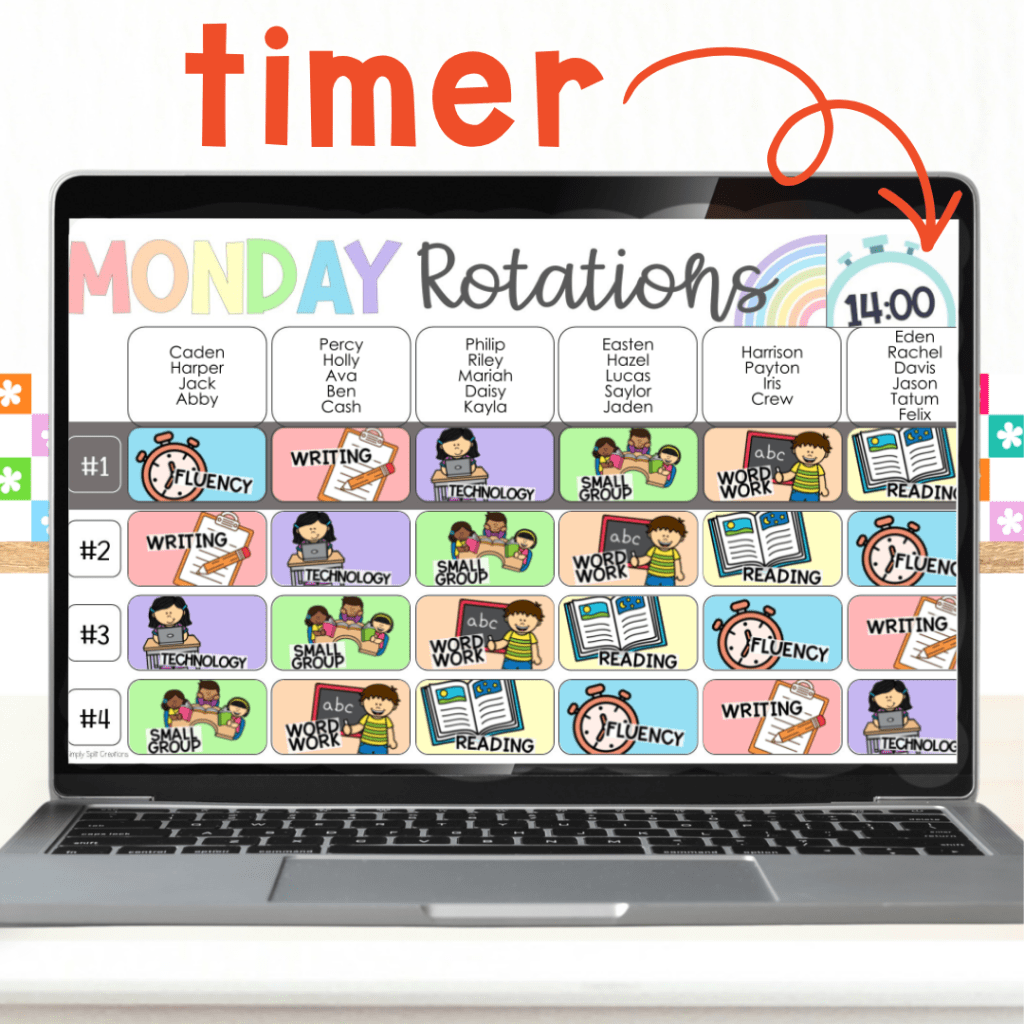
Use a visible countdown timer. Let’s face it, timers help people of all ages stay on task. If students know what is expected of them to finish by the end of center time, having a visible timer showing students how much time is left in each center helps students hold themselves accountable during center time.
The center rotation slideshow also really helps students understand clearly which center they’re supposed to be at and where they will go next. The slideshow definitely keeps my centers nice and organized. I sell these center rotation slides in my shop, and they are linked below if you’re interested.
Tip #6
Plan for clean-up time in between centers. Picture this, you’re a little 2nd grader heading to your next center, really excited to do the word work activity. BUT, when you get to the word work center, you find papers scattered around the table, pencil shavings everywhere, and you’re not sure where all the dice went that are needed for the activity. Would you be able to get to work very quickly? Probably not. First, you’ll need to find Jimmy and ask him where all the dice went. Then, if you are lucky enough to find the dice and don’t get distracted talking to other students in Jimmy’s group, then you have to clean the work station, or hope that it doesn’t become a distraction.
Do you get the point? The bottom line is that clean centers = less distractions which means more productive students
STILL STRUGGLING?
If your centers are still a hot mess after implementing these suggestions, you may want to take some time to analyze your center activities. Ask yourself questions like…
Are my centers easy enough for my students to complete independently, while still being challenging enough to help them progress and grow?
Are my centers consistent each week? Or am I constantly introducing new centers?
Are there too many steps, moving parts, or tools needed to complete any of my centers?
If it seems that your center activities are the problem, I will share my favorite full year reading centers resource that will not only help fix any of the above problems, but also be super EASY to prep each week because who has hours to prep centers each week.
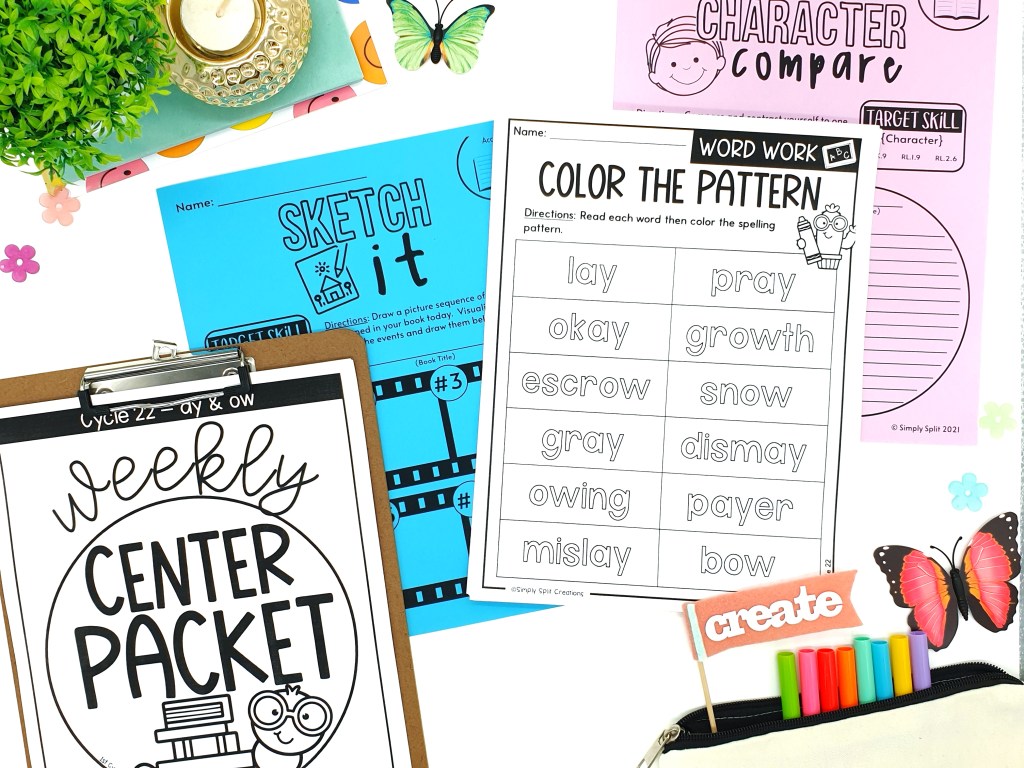
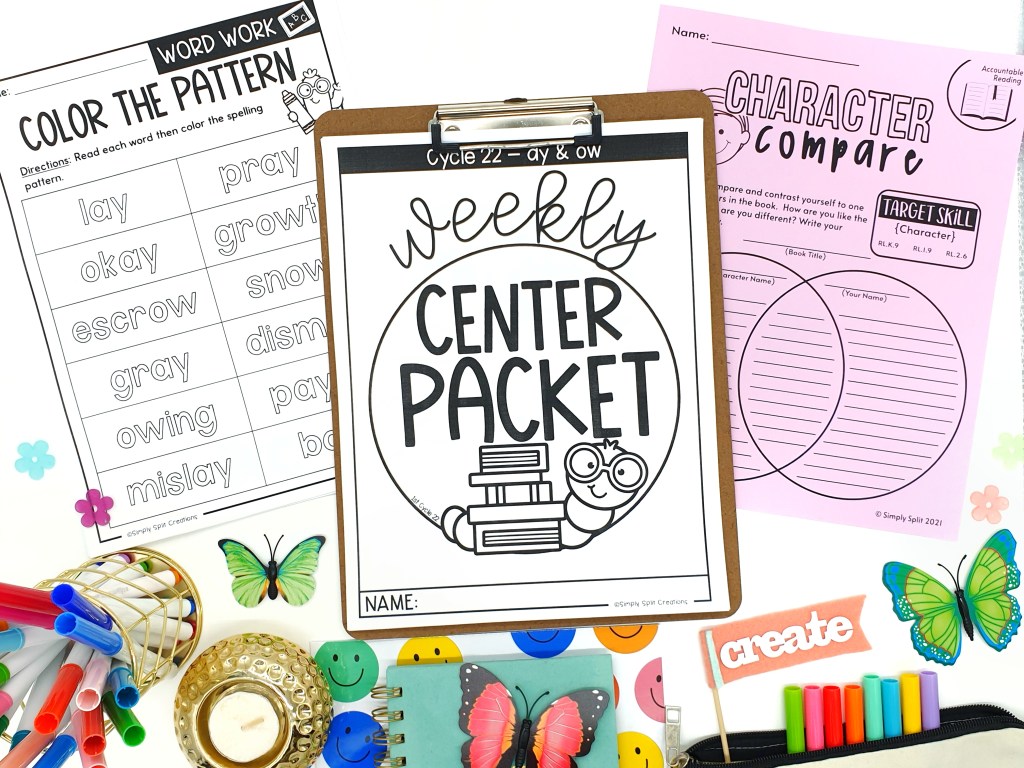
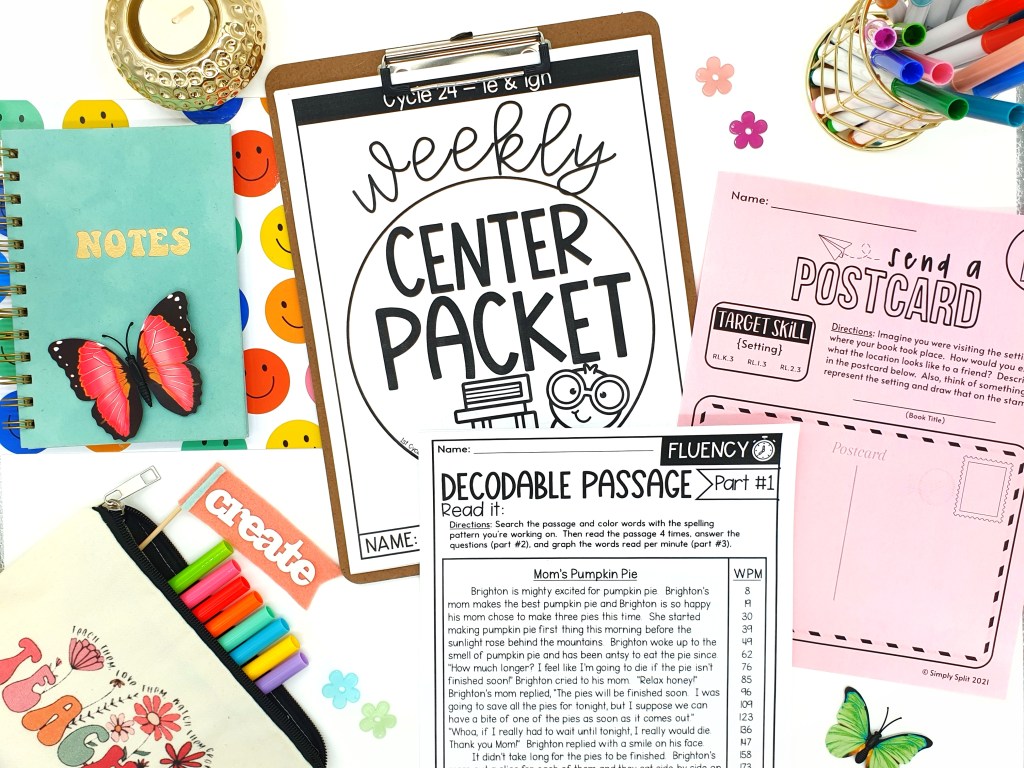
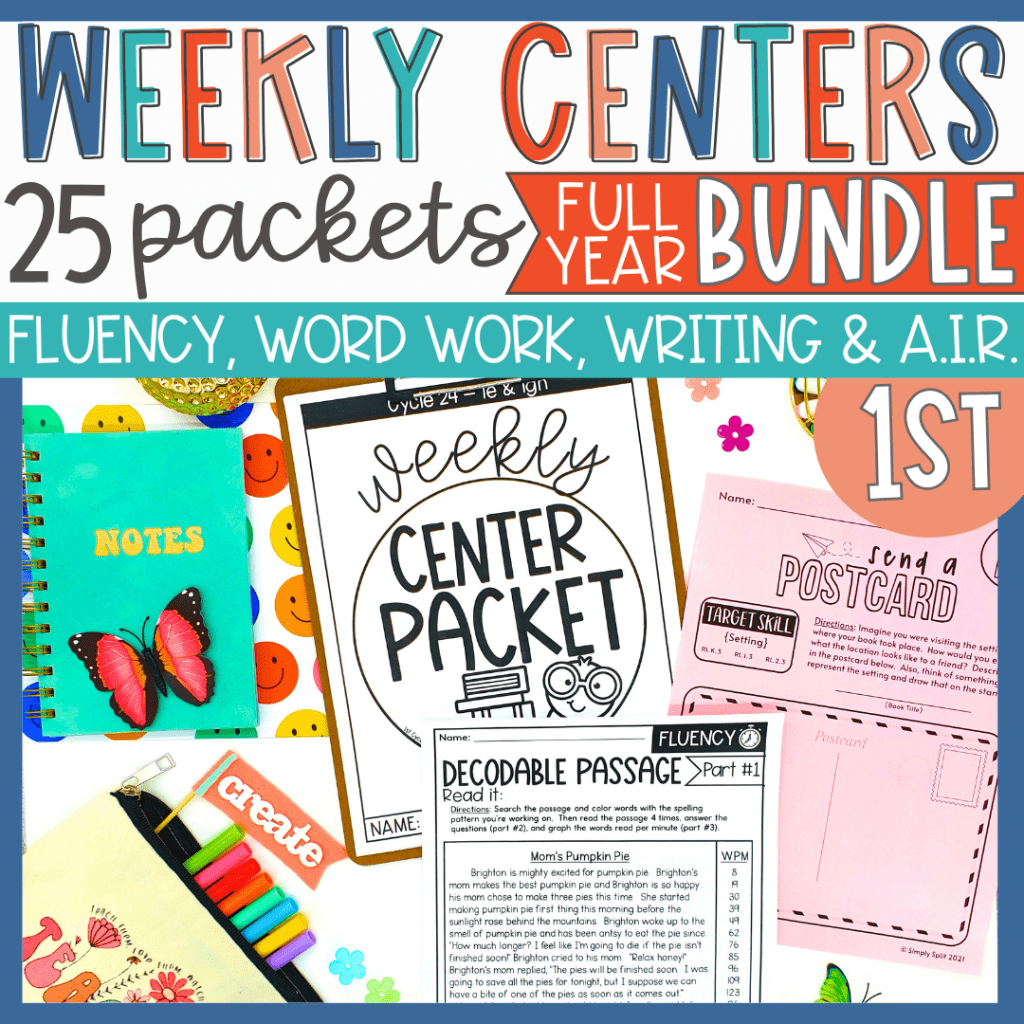
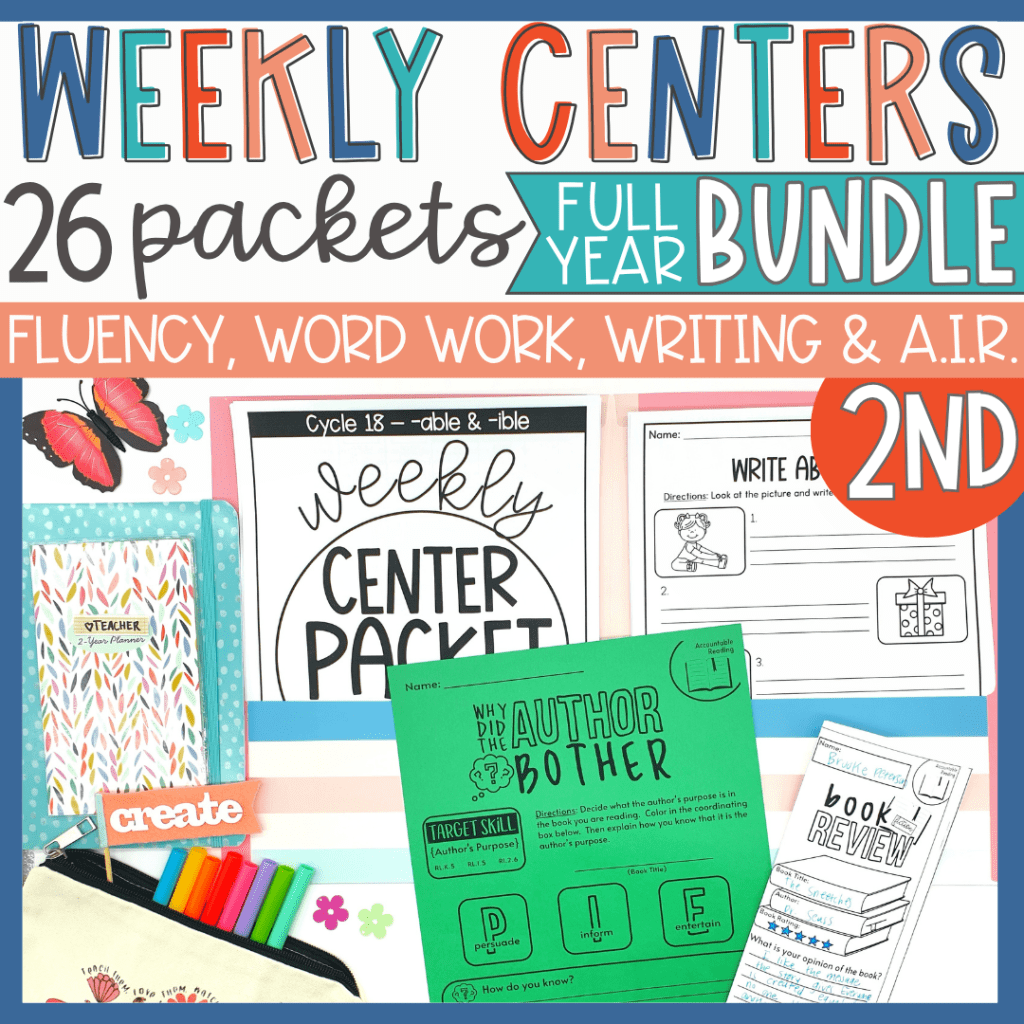
These weekly reading center packets include several activities for each center (word work, writing, fluency, and accountable independent reading) totaling in 29 pages (per packet). This gives you the ability to pick and choose the activities you’d like your students to complete.
My favorite part about these weekly center packets is that there is an accountability portion included. The first pages include a checklist where students can mark off each page as they complete them. With an accountability portion like this, it helps students stay on task and take ownership for the work they have completed (or not completed).
I know many people might not be a fan of “worksheet” styled centers, but I will tell you why I will always choose this style of center over task cards, a game, or activity…
You can actually SEE the work students are doing which allows you to check their progress
Student can be held accountable (rather than, slack off or play games without the academic portion included)
The prep is actually manageable and takes WAY less time. No laminating, no cutting, no little pieces.
as a sidenote…
I was very intentional when making these worksheets. They are not traditional, boring worksheets. Instead, these worksheets were made with the child’s interest in mind, meant to engage and challenge students.
The activities are consistent week to week, so students are never guessing HOW to do an activity. They already know what is expected of them.
I like to include fun learning games/activities at my teacher center, which gets students excited, and I can monitor their progress this way
These weekly center packets are available for the full year for 1st & 2nd grade (look at the bundling options below):
BUT, did you know that there is a template of these weekly packets that you can use to build your own center activities as well. This means that if you have a different scope and sequence you follow, you can buy the centers that match, and then buy the template to create the remaining packets you need. This also means that you can purchase the template to build packets for a different grade level.
Assessments are very important. They provide teachers with valuable information about each student: what each student already understands and what they are struggling with. Assessments don’t just help you understand what students do and don’t understand; they help teachers analyze student growth and can help teachers improve their teaching methods.
However, especially in K-2 classrooms, assessments are not always easy. As a teacher who has taught in Kindergarten, 1st, and 2nd grade, I know the struggle of assessing K-2 students (especially reading assessments) because they almost always have to be done one-on-one. Where does a teacher find time to assess each student one-on-one? What is the rest of the class doing while the teacher is assessing? These are the hard problems that teachers often have to find solutions to, and it’s not easy. Along the way, I found a few things that were helpful to me as I tried to make one-on-one assessments work in my classroom. Keep on reading to learn of my secrets that can hopefully benefit you in your classroom.
VOLUNTEERS: Ask for parent volunteers! – Many parents are eager to help in classrooms but just need to be asked. Depending on what you feel comfortable with, you can either have parent volunteers do a portion of your assessment, OR you can have them read books aloud to the class while YOU assess students. I personally usually like to do most if not all of the assessing myself because it helps me get a better picture of each student plus you’re able to make sure the assessment was performed with fidelity, but if you’re comfortable with parents assessing, this may be a great option for you. I would recommend having parents sign a confidentiality agreement if they do help with assessments just to be on the safe side. Otherwise, parents are perfect for reading books aloud for the class, while you assess. I recommend assessing students in the hallway so that they aren’t distracted by the book being read aloud.
ONLINE BOOKS: Use Vooks, Epic, or Story Online – all of these websites are amazing classroom tools. These websites will read books aloud to the class. Just project it to a screen and let it do its thing. I’ve sometimes used these websites to play books in the morning time as students arrived at school and it is so helpful in keeping students engaged and quiet in the morning time. These websites are also great when you need to do one-on-one assessments. Let the books play while you assess students. I would recommend using some noise-canceling headphones for your students to wear while they are assessed so they aren’t distracted by the book, or if you feel you are able, you can step into the hallway to assess students as well.
CATCH-UP DAY/FREE FRIDAY: Another option is to have Free Friday. This works like a “Catch-up Day” where students are able to catch up on any work that they missed or haven’t fully completed yet. Students completing all their assignments get to have “Free Friday.” This is a great time to assess students. Again, I recommend using noise-canceling headphones for the students being assessed to help them not get distracted while they are assessed.
ADDITIONAL COMPUTER TIME: Schedule additional computer time in the computer lab – This may not be an option for you or you may only have an opportunity for additional computer time at random times throughout the year, BUT if your school does allow this, it is so helpful to schedule extra computer time. Have students work on something specific, use Epic, or whatever program subscriptions your school has, and assess students while the rest of the class is busy on the computers. This is the easiest way to get assessments done very quickly. Students are all usually quiet when on computers, and there is a lot less chaos going on, making it easy to assess students very quickly.
LITERACY GAME DAY: Literacy game day is something that my students usually beg for. All you need is some engaging phonics or reading games, and your students will be entertained while practicing reading skills. My students typically behave really well during these times because they know if they don’t, we’ll end our game time early. This makes it easy to assess students. As long as students understand how to play each game, this is a really great option and can help you assess students quickly. I would also recommend using noise-canceling earphones for students being assessed – that is, if they are getting distracted.
If you would like game recommendations, I will link some of my favorites below:
Snap it up! – This game is a really fun and easy game for students to learn. This is available on Amazon – click here to view
Phonics Three in a Row – This is such a fun partner game. It plays just like tic tac toe, except students must read the word in the box in order to place their “x” or “o” in the spot – click here to view
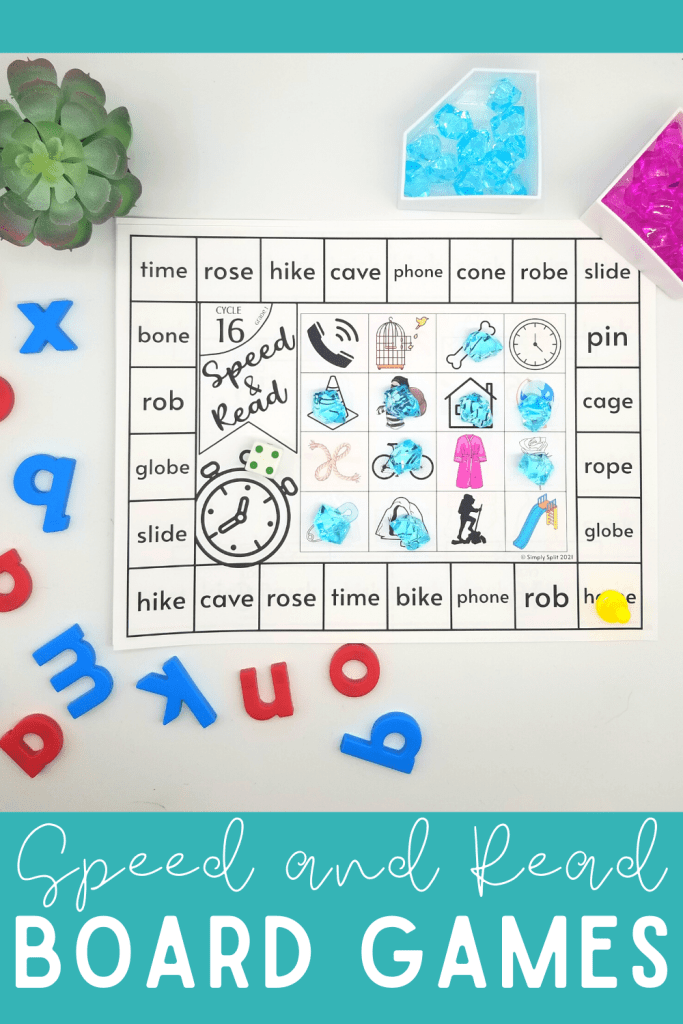
Speed & Read – I love this game option because it can be played with a group or individually. Students roll the dice, move around the board, read the word, then find the clipart that matches the word they read, and then place a game chip over the clipart. They work to get 4 in a row. – Click here to view
K-2 Phonics Games Mega Bundle – This includes all the phonics games listed in my shop. If you want a wide variety of games, this is a much cheaper option than purchasing games separately – click here to view
Flashcard Games – I have a blog post you can view that talks about several fun games students can play with any flashcard set – click here to view
CENTERS/WORK CHART – This works better for MOY or EOY testing because students will already be familiar with centers or a work chart in your classroom. How this works is that instead of having a “teacher table,” you’ll just call individuals to be assessed. This is typically when I assess students most frequently, but this is trickier to do at the BOY before students start centers.
PREP TIME – Using your prep time is a last resort but sometimes necessary. Don’t sacrifice your whole prep time, but take 5 minutes of your prep time to assess 1-2 students while the class is at specials. This will add up over time and before you know it, you can make it through your whole class of students.
Write each student’s name on the assessment sheets you need completed. This will help you keep track of which assessments still need to be completed (or use the tracker in my assessment pack).
If you have a literacy team at your school, I would recommend asking for assistance with assessments at the beginning of the year. Typically, the literacy team isn’t up and running until after assessments anyway, so this isn’t too unreasonable to ask and would save you a LOT of class time.
Finding a good assessment that gives you a clear picture of each student’s strengths and weaknesses is so important. It is also very helpful if you’re able to track students’ progress throughout the year to measure growth. Grouping students for centers can also be tricky.
What if I told you there was an assessment that does all three of these things…because it’s true, there is! Check out the K-2 Assessment Bundle in my shop! Click here to view the assessment.
Are you new to EL Skills Block? Are you having difficulty understanding how Skills Block is organized and set up? Well, you’ve come to the right place! Just a few years ago, I was in your shoes, ready to pull my hair out because I was so frustrated and unsure how to make this new program work. I was frustrated trying to figure out how to make my reading centers align with Skills Block and frustrated trying to navigate all the manuals Skills Block provided. I have found some great ways to help make this program work for my classroom and am here to share all the secrets I discovered and hopefully, this can help you feel more comfortable as you implement the Skills Block program. Below you’ll find some frequently asked questions that I hear many Skills Block users ask.
CURRICULUM
If you are a classroom teacher, you may not get a whole lot of say in what will be purchased for your classroom. Luckily, however, there are ways to make Skills Block bearable with or without the manuals. It is nice that all of Skill Block can be found FREE on EL Education’s website. The downside is that it is not extremely user-friendly and can be hard to lesson plan from a digital manual. I’ll explain the workarounds for Skills Block regardless of your skills situation and ability to purchase all the materials.
K-2 Manuals for each teacher – It would be very ideal to purchase the k-2 manuals for every teacher. You may not realize the importance to begin with, but when it comes to centers, it is so much easier to lesson plan small group lessons with ALL THE MANUALS. This is because during small groups, you will differentiate your instruction based on students’ skills. A 2nd grade teacher might have kindergarten level students in their classroom, therefore, during small groups, they may be teaching a kindergarten lesson to a group.
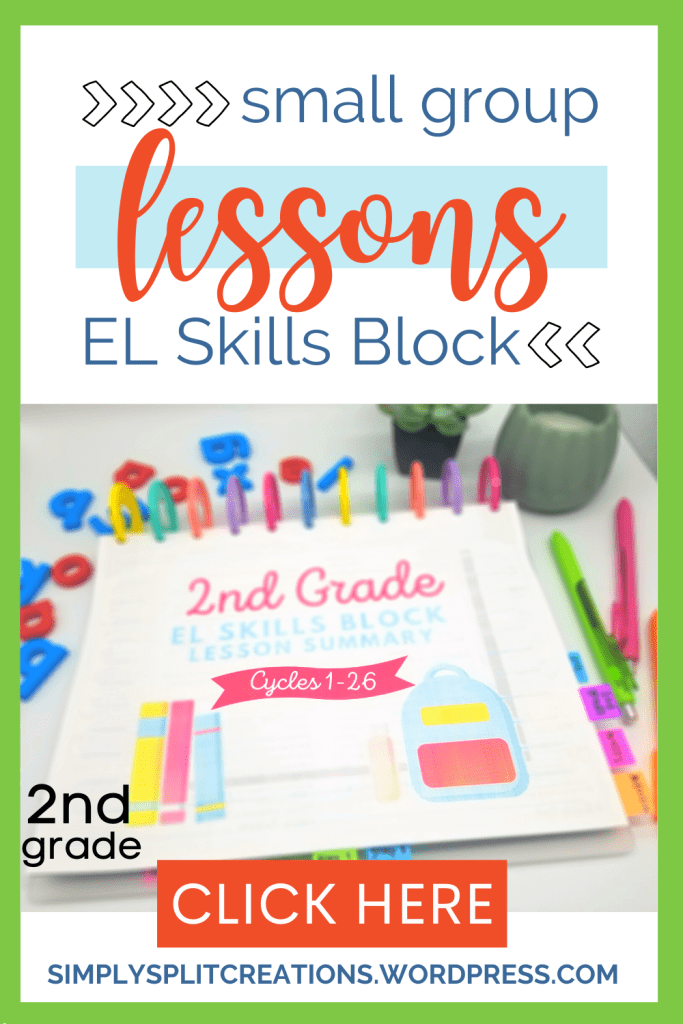
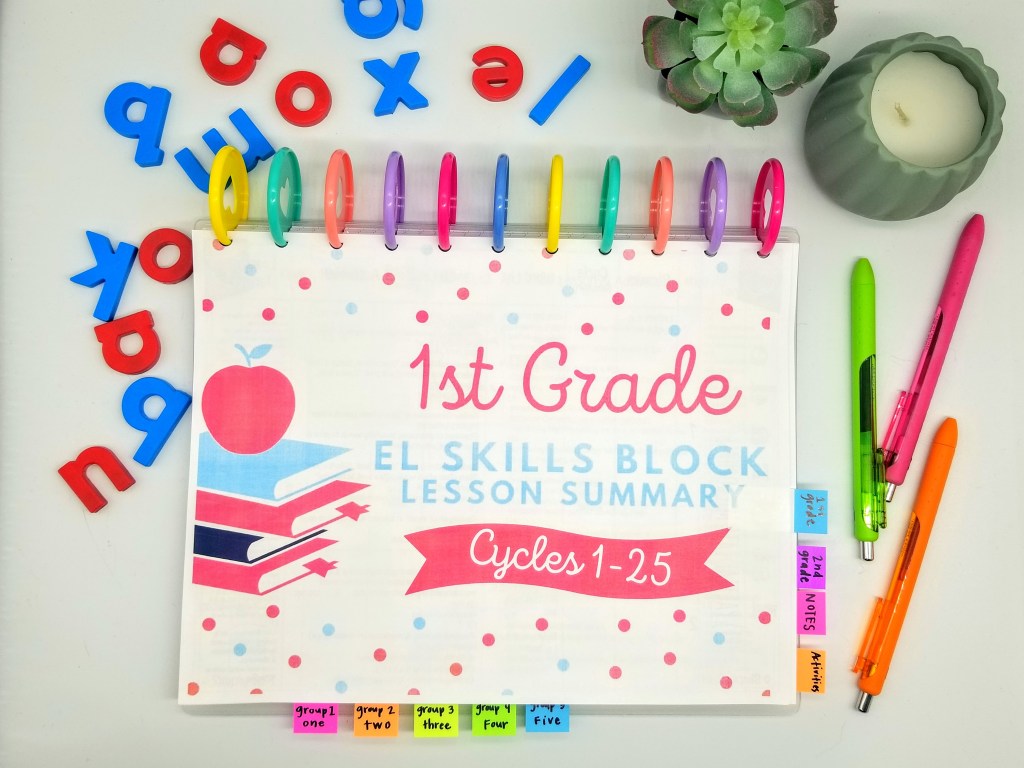
Grade-level manuals for each teacher – The next best thing is to purchase just the grade level manuals for each grade level teacher, meaning the 2nd grade teacher only gets the 2nd grade manuals. This will help the grade level be able to plan their whole group lessons more easily. Small groups lessons will be somewhat of a struggle though without having a physical copy of all the lessons you may be teaching. What I recommend doing is checking out these Skills Block lesson summary resources found in my shop. I specifically made this resource to help simplify my small group planning time and found it to be so helpful. You can buy these separately by grade level or buy the k-2 small group bundle that also includes EL’s phonics assessment along with data tracking documents. With the use of the small group lesson plans, I was able to easily find the lesson that each group needed during small group time by keeping them all in one binder. This makes it nice to not juggle between 20+ manuals. It has all the information you need in a simplified format making it easy to follow along. I have gotten to a point where I no longer plan small group lessons beforehand and I don’t prep any materials. During small groups, I can now look at the title of the activity and adapt it to work with just whiteboards. The small group lesson plans are definitely an economical way to access EL’s materials AND will save you lots of lesson planning time. Links can be found below.
Don’t have funds to purchase any manuals? – Not a problem! All of EL’s lessons can be found online. I highly recommend downloading all the manuals and materials and organizing them into google drive. This way you can access the lessons from anywhere and easily print materials without having to navigate through EL’s website constantly. Also, like mentioned above, I definitely recommend getting the small group lesson plans especially if you aren’t purchasing any manuals.
K-2 Small Group Lessons Bundle + Reading Assessment Phonics Screener
The consumable decodable books are a nice idea. It’s cool that students can write in them and take them home to read more later. However, in my experience, students don’t appreciate them or care about taking them home. Plus, they are expensive and hard to store. I recommend using the printable version that EL provides on its website. These are easy to print and can still be written on and taken home, but are much cheaper.
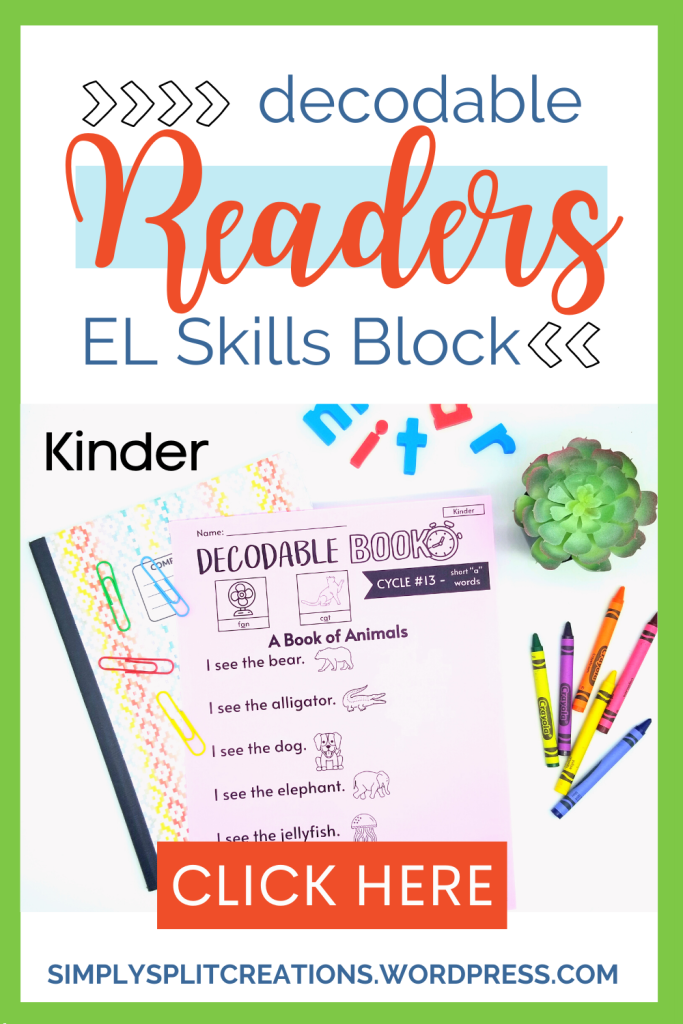
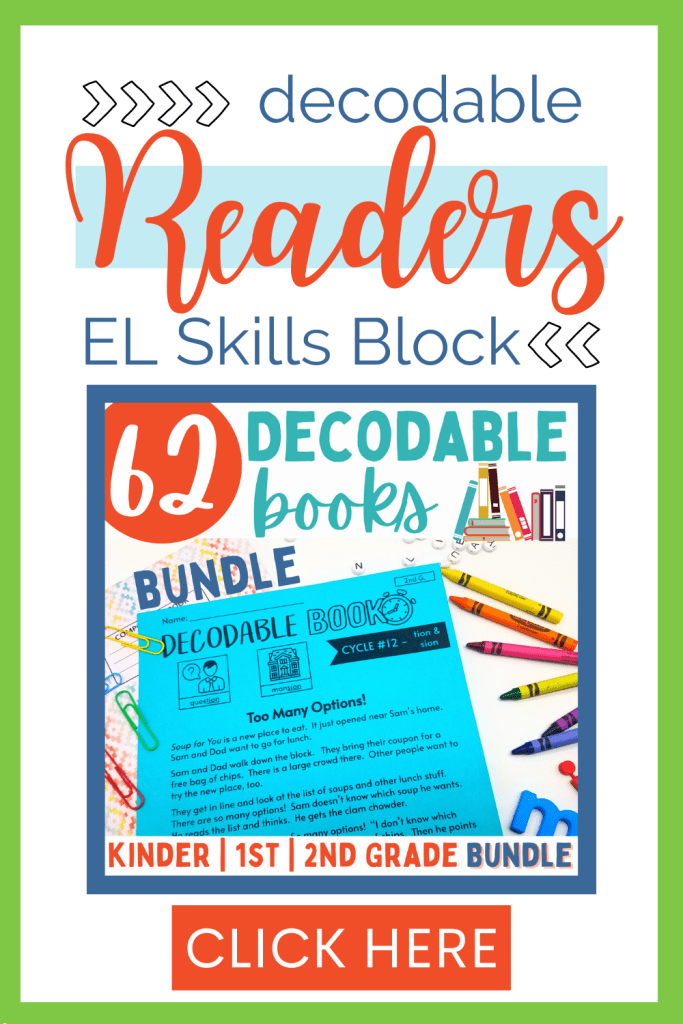
If you are finding that you are using too much paper printing the decodables from EL’s website, I have a solution for you. I re-formatted EL’s decodable books to fit onto one page to help save paper. I have also included some practice words with the phonics skill for each cycle at the beginning of the decodable. These are sold separately by grade level, plus there are some k-2 bundling options. Check them out below:
K-2 Decodables Bundle + AIR Reading Response Sheets
TIP
If your school decides to purchase the consumable books after all, the easiest way I’ve found to store the books is in clear sterilite storage boxes. The consumables fit perfectly in the sterilite storage boxes on its side (spine up). To make it easy to find the books, place the first book of each cycle vertically.
All of EL’s manuals can be very overwhelming at first. It can be tricky to figure out which manual a particular cycle or lesson is found in and it can be hard to navigate where the lessons actually are. I recommend putting stickers on the spine of each manual. I put 2 stickers on each spine. One sticker is numbered in the order the books should be used. For example, module 1 book 1 would be labeled #1, module 1 book 2 would be labeled #2, module 2 book 1 would be labeled #3 etc. This can really help you keep all the manuals straight. The other sticker I put on the spine says which cycles are included in that particular book. For example, module 1 book 1 contains cycles 1 & 2, module 1 book 2 contains cycles 3-5 etc. This is really helpful when it comes to planning small group lessons.
Next, I suggest using sticky tabs to tab each cycle and lesson in each book (also write the cycle number and lesson number on each tab). This will help you quickly find the lesson you need to teach and help you find the cycle words quickly.
FYI: If you’d like to have the cycle words all in one place or a premade cycle word list to send home to students, check out the EL cycle word lists I made. They are sold separately by grade level, plus there is a k-2 bundle. Check them out below:
Tab each lesson starting with the back of the book. This will help you line up your tabs more easily (trust me!)
TIP
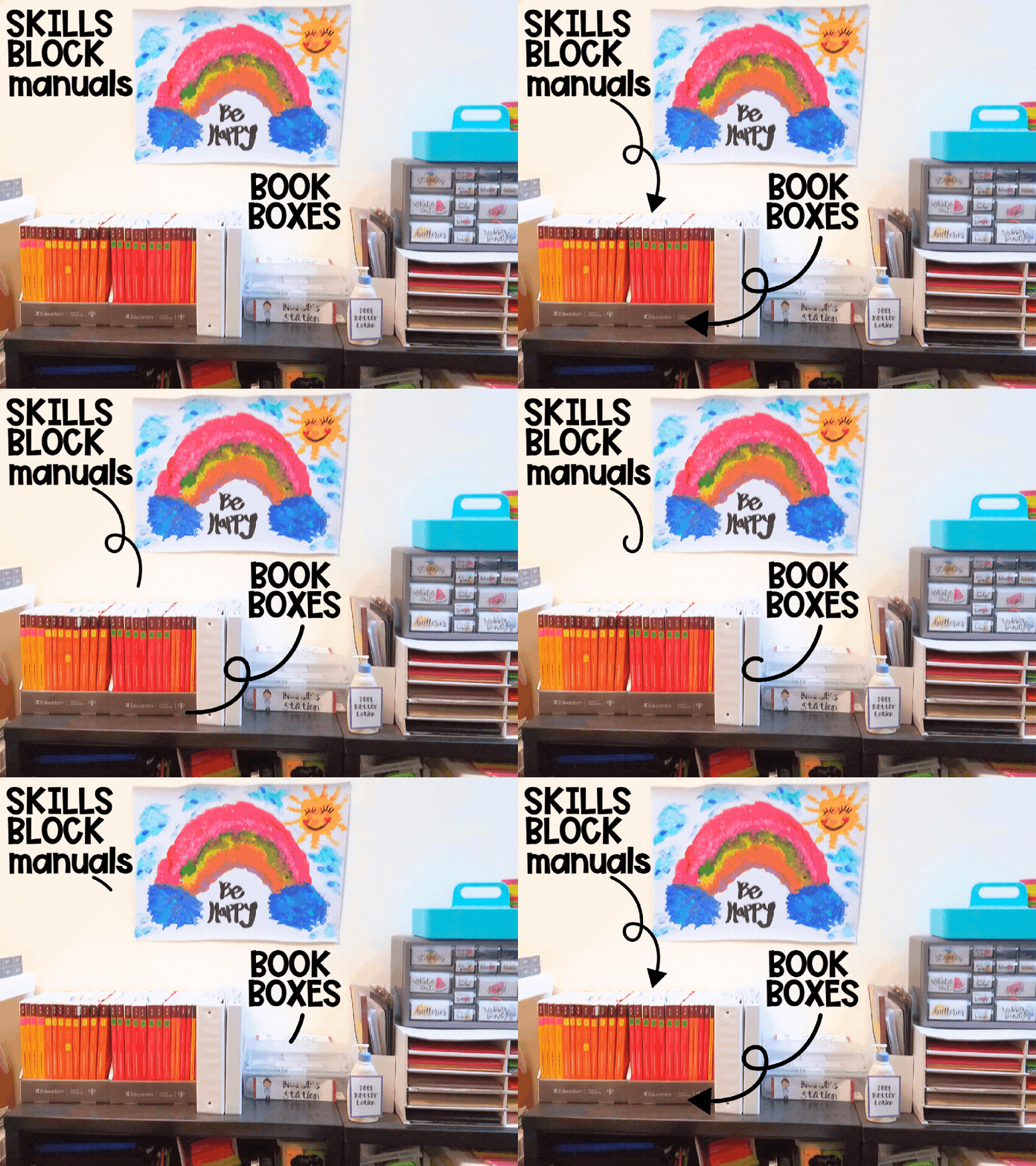
Keep the boxes the manuals come in. This makes it really nice to store them on a bookshelf or table. (SEE PICTURE)
There are several manuals for each grade level. There are about 8 per grade level. There are a few cycles included within each manual. There is also a resource manual that includes the assessment and other activities (read the section below titled “What’s in the resource manual” for more information).
There is a summary of each cycle just before all the lessons within that cycle. The cycle words and high-frequency words for that cycle are listed on the first page of the cycle summary (SEE PICTURE BELOW).
All of the materials provided by EL for the lessons will be found at the end of each lesson. They can be printed from the PDF manual, copied from the hard copy manual, or downloaded individually from EL’s website. It is helpful to have all of the documents from EL’s website downloaded and uploaded to google drive or whatever file storage system you use. This helps to save at least a little bit of time in the long run.
TIP
I would not recommend printing every lesson material provided by EL. It can be a pain to prep. Most activities included in each of EL’s lessons can actually be adapted to work with students using whiteboards. If you are low on prep-time, definitely figure out which activities work well on whiteboards (without printing the materials) and which ones you actually need the printed materials for. This will help you save a lot of time.
The resource manual is where you’ll find EL’s assessment. The resource manual also includes an activity bank. The activity bank is full of games and activities you can use perhaps during small groups or as an intervention to help with a particular skill. Most of these activities require a good amount of prep.
ASSESSMENT
The most important thing to note about the assessment is that it is the KEY to reading centers. The assessment is what you need in order to form reading groups and it helps you know which cycle each group needs to work on. Students may be taught a curriculum from another grade level. For example, the assessment might show that a 2nd grader is below grade level and therefore should be taught a 1st grade lesson in small groups. I have a whole blog post all about Skills Block’s assessment, which you can read by CLICKING HERE.
I also have created a more user-friendly version of EL’s assessment that includes data tracking documents which will help you measure student growth easily. You can check that out by CLICKING HERE or clicking on the image below.
CENTERS
The first step is to complete the assessments which will help you systematically form reading groups. The most important assessments to complete in order to figure out each student’s microphase are the decoding & spelling assessments. Once you have each student’s microphase, group students within the same microphase together. Then plan your actual center activities.
The centers that EL suggests to include are below:
Fluency
Word Work
Writing
Accountable Independent Reading (AIR)
Teacher-led small group lesson
I have seen different schools approach centers differently. Some schools will make centers geared towards whatever cycle is being taught in whole-group and then use small group time to teach differentiated lessons based on each group’s microphase. However, I find this approach not to work as well because students aren’t able to get adequate practice on their individual level. I find it better to differentiate activities for each group based on the microphase and cycle each group is on. This helps meet students’ needs and students are able to work independently more easily because they are actually doing work on their own level. This can seem overwhelming to prep all the differentiated work, but I promise I have some simple suggestions to make your life easier. You can see these suggestions under the “What activities can I use in my centers that align with Skills Block” section.
EL provides an activity bank which can technically be used for centers, however, in my opinion these activities are not feasible for a few reasons:
First off, the activities require quite a bit of prep which is not feasible especially if you are differentiating for each group’s specific cycle.
Secondly, the activities are not sorted by center type (fluency, word work, writing & AIR). This makes it hard to know which center is the best to put each activity in.
Lastly, the activities are not labeled by grade level or cycle number. This requires you to match the skill with the correct cycle which is especially difficult to do for teachers new to Skills Block.
If you need some ideas for centers, keep on reading – I’ve worked hard to try and make Skills Block be a little easier for you.
I have spent years (literally-since 2018) working on materials to make Skills Block be a bit easier for myself and other amazing teachers. My main focus has been to help make Skills Block centers easy to prep as well as effective for students so they can grow throughout the program. I have many options you can choose from that all align with Skills Block and continue to create more and more resources to help you out. The bundle I recommend the most is my LOW PREP growing bundle. This includes a bunch of print and go activities that all align with Skills Block that are perfect for centers. I have these listed by individual grade level as well as a K-2 bundle. The K-2 bundle is heavily discounted and makes it really easy to differentiate. The really cool thing is that this is a GROWING BUNDLE meaning that you’ll pay a lower price now, but gain access to new resources that will be added. I will continue to add more and more resources to this bundle that are low prep and align with Skills Block. As I add more products, the price will continue to go up, but you gain access to them as they are released without paying extra. You can check out these links below:
I have also created a buyers guide to make it easy for you to figure out which resources would best fit your needs. This buyer’s guide is constantly being updated as new resources are released. You’ll find great resources for ALL CENTERS for Skills Block. You can check out the latest version of my buyers guide by CLICKING HERE or below:
I hope this blog post has been helpful to you as you try to navigate Skills Block. If you have questions that weren’t mentioned in this post, feel free to drop them below and I’ll do my best to briefly answer them AND I may also include a more detailed response in upcoming blog posts. Make sure to follow my blog so you can be notified when new blog posts are released. You can also join my email list AND get the FREEBIE pictured below — the K-2 Scope & Sequence for EL Skills Block. Click below to gain access to this FREEBIE.
If you were anything like me growing up, the thought of using flashcards was always tedious and boring. Despite it being a boring way to study, it was always effective for me and helped me ace my tests. When it comes to young students, the last thing in the world we want to do is make reading “boring.” Instead, a good teacher wants to find ways to engage students while they are learning to help ignite the love of learning inside their heart. Helping students to specifically enjoy their reading instruction time will help them grow their love of learning. If they love books and reading, they will be able to learn through reading.
So how do you get the effectiveness of flashcard practice AND engage those young readers?
Well buckle up and keep reading to learn just that.
Maybe you’re skeptical about the effectiveness of flashcards and that’s okay, it’s good to ask questions and do your research. The truth is that repetition actually helps to build confidence1. And once students gain that confidence, they start to like that topic more and more and trust in their abilities. AND when using spaced repetition to practice flashcards, they become more and more effective because it helps students actually retain what they’re learning. So what is spaced repetition2? An example of spaced repetition would be using flashcards to practice a concept for a short period of time daily rather than spending an hour once a week to practice.
So are flashcards really effective? The answer is YES! Flashcards are very effective because the repetition helps to build confidence and using spaced repetition can help students retain the knowledge much easier. However, because of the repetition, flashcards can also be somewhat boring. So now let’s get into how you can actually make flashcard practice engaging and meaningful for students to practice phonics spelling patterns.
This seems like an obvious answer but make a game out of it! Games are engaging and your students won’t even realize they are learning. I have 10 different games you can use to play with phonics flashcards. I’ll share my top 3 favorite games in this blog post and you can download and have access to the rest of the games by CLICKING HERE.
This is a very simple but engaging game that is very easy to prep. This can be done on a table (during small groups) or on the floor in an open area. I personally like doing it on the floor in an open area. You can use premade phonics flashcards or you can write spelling words or high-frequency words on either index cards or full sized papers. Then scatter them all on the ground or table face up. Finally, choose a word to read aloud. Each of the students will then scan through the words and “attack” the word that was read aloud. “Attacking” the word, simply means, slapping near the word (if on a table) or standing near the card if on the ground. You can do variations of this activity by saying something like “Find a word that rhymes with play” or “find a word with the same spelling pattern as spray.” You can also have students take turns calling out the word for them to attack.
My students love this game, and it’s a great movement activity that helps with my hyperactive students as well.
This is a fun game to get those creative juices flowing. This works best in a small group setting with small premade flashcards. Pass out 7 cards to each student and place the remaining cards facedown on the table. All the players will work together to tell a story. Players will look at their cards, reading the words and think of a way to incorporate a card (or cards) into the story. The player who thinks of an opening storyline first, can begin and players will take turns going in a circle clockwise. A player can add 1- 2 sentences at a time incorporating at least one card from their hand and discarding those cards after they are used. After discarding their used card(s), players will draw a new card(s) so they always have 7 cards. The game is over once the players feel the story has ended OR when they run out of cards.
Those creative students will LOVE this game, but you may have some reluctant students. I recommend working with your reluctant students at first and sharing your cards. You can both work together to think of a sentence to add.
This is a fun one to also practice vocabulary. You will need whiteboards and dry erase markers for all students participating. This works best in small groups. Lay out several flashcards face up on the table. Randomly pick a word that is face up and think of 2-3 clues to describe the word. Slowly give your clues to the students. The students will look over all the words that are face up and decide which word it is that you’re describing. When they think they know the word, they’ll secretly write the word on their whiteboard. Once everyone has written a guess on their whiteboard, the students will reveal their whiteboards. Students get 1 point for guessing the right word and a bonus point for spelling it correctly.
Your students will love this game! To check, see the printable game rules for these 3 games PLUS 7 additional games you can play with phonics flashcards, CLICK BELOW
There are a lot of flashcards out there. There are phonics flashcards, there are sight word flashcards or high-frequency word flashcards and honestly YES any word flashcards can be used with these activities. I do however have flashcards that I recommend that are amazing for 1st and 2nd grade leveled students.
There are many multisyllabic words giving students just the practice they need (plus the 3 differentiated levels can help struggling readers also practice multisyllabic words)
There are so many word options (40 per set – which makes 1,000 for 1st & 1,040 for 2nd grade)
The phonics skill practiced in each set is notated on each card making it easy to find it’s home if a card is misplaced
There are so many phonics spelling pattern options
Yes I am a bit biased because I did make these cards myself, but these are helpful features that you won’t see in other phonics flashcard options. Check out the video below to see the 1st grade phonics flashcards in action.
There are lots of purchasing options. You can purchase based on the specific phonics skills you want or you can bundle and save. CLICK HERE to view all the phonics flashcards available.
Probably the first thing that pops into your mind when you think about fluency is speed, how quickly one can read. True, this is an aspect of fluency BUT it doesn’t fully describe what fluency is, and you can really hurt students overall if speed is the only thing you focus on when teaching fluency.. If you solely focus on speed, then students will likely get in the habit of not comprehending what they are reading, and they may even begin to HATE reading, which is a hard mindset to change. As parents or educators, we do NOT want to fall into this trap and in turn cause children to dislike reading. Therefore, it is important to focus on ALL of the aspects of fluency.
The three aspects of fluency are:
Accuracy
Making little to no errors while reading
Reading Speed
The rate at which a student reads. Often measured in WPM (words per minute)
Prosody
Reading aloud with proper intonation, phrasing and expression
Below are a few reasons why fluency matters, starting with comprehension, which is the end goal of reading.
Fluency is the bridge to comprehension. The ultimate goal of teaching reading is to help students understand and comprehend what they are reading. When faced with new words, students often take 5-30 seconds to sound out each word. If that is the case, the student is putting all of their thought and energy into sounding out each word. Therefore, the chance of them comprehending anything they just read is very slim. The student may remember 2 or 3 of the words they read, but most likely, they are not going to be able to comprehend the meaning of what they read.
Expression/prosody are also key components when it comes to comprehension. When a student reads with expression, it helps them comprehend what is written. The words come alive and feel more like a conversation or a podcast (depending on the content) and in turn, this will help them with comprehension.
Reading fluently is a major benefit to everybody, specifically in relation to future academics. Let’s put this thought into perspective with this example about Jane & Wendy who are high school students.
Jane is an excellent reader and can read about 280 words per minute. Wendy is a decent reader and can read 150 words per minute. Both Jane and Wendy were assigned to read 2 chapters in their text book in their science class. Jane completed her reading assignment in about 1 hour, where Wendy spent 3 hours reading and was only able to complete 75% of the assigned reading before falling asleep.
In this example, Wendy was perfectly capable of completing the reading assignment. She knew how to read the content, she simply didn’t have enough time to get it all done. Jane on the other hand hardly broke a sweat and completed the reading assignment in a fraction of the time. The crazy thing is that this wasn’t even for an ELA class, this was for science. Reading impacts ALL areas of learning. The short story is that the quicker you can read, the more you can learn, progress and grow. By teaching students how to be fluent readers, you are preparing them to be lifelong learners.
Once reading becomes less of a challenge or a chore, students will start to find the joy in reading. They begin to catch that thrill of reading new stories, or discovering interesting facts about dinosaurs or whatever else interests them. Students can gain this love of knowledge from listening to books, but they actually gain power to access this knowledge/entertainment whenever they desire once they become fluent readers.
There are so many fun and effective activities you can do with your students to help them become fluent readers. Check out some of my favorite activities below.
Planning repeated readings in the classroom can be very effective in increasing fluency. Students can gain confidence in the words they are reading because they have already read through it once. This helps them to be able to read more quickly. Students may dread repeated readings so it’s important to talk about why you are having them repeatedly read the same material over and over again. I suggest perhaps doing a mini lesson on repeated readings to discuss the importance of them towards the beginning of the year or prior to implementing repeated readings. A few resources to use for repeated readings are:
1. Decodable books
Anyone that does even a little bit of research into the science of reading will find that decodable books are highly favored over leveled books. This is because it helps students to succeed in reading. When a student reads a decodable book, they encounter words that they can decode + some high frequency words. By focusing on words that students can decode, it helps them to gain confidence in reading, practice their phonics knowledge AND increase fluency.
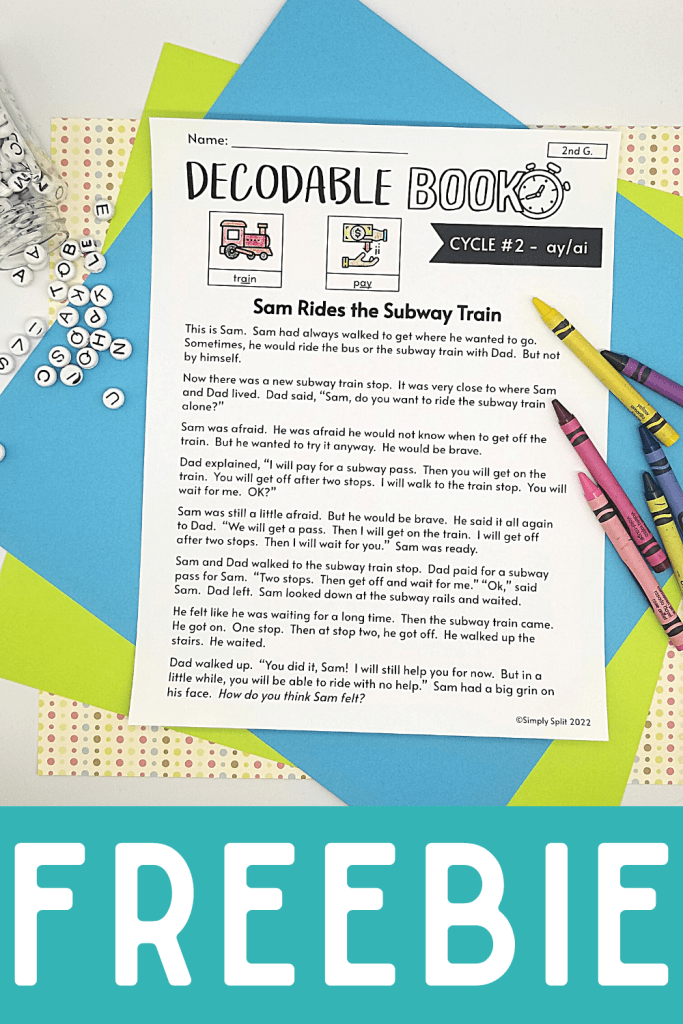
Make sure you do your research before purchasing decodable books. You’ll want to make sure that the books are actually decodable and follow a scope and sequence that build upon each other. Check out thisFREE sample of decodable books from my store. If you like these decodables, you may be interested in purchasing the full set. These decodable books are available in Kindergarten, 1st and 2nd grade levels. Click on the image above or below to view all decodable books available.
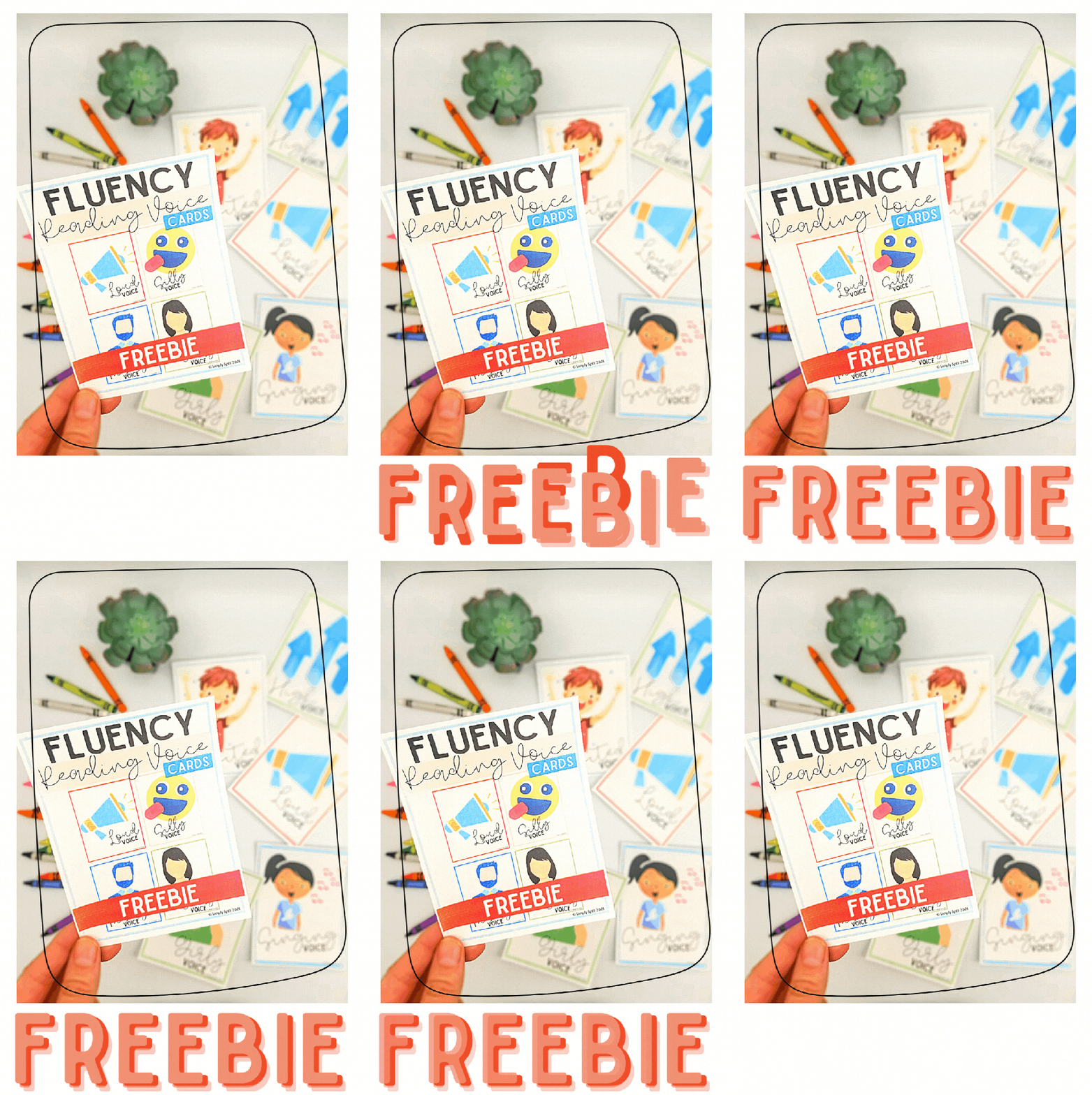
This is a great way to increase engagement. Students pick a fluency voice card and read the passage in whatever voice is listed on the card. This way repeated readings won’t feel too redundant. Each time the passage is read, it will be a little bit different. You can grab this freebie by clicking below and subscribing. The FREEBIEwill then be sent to your email.
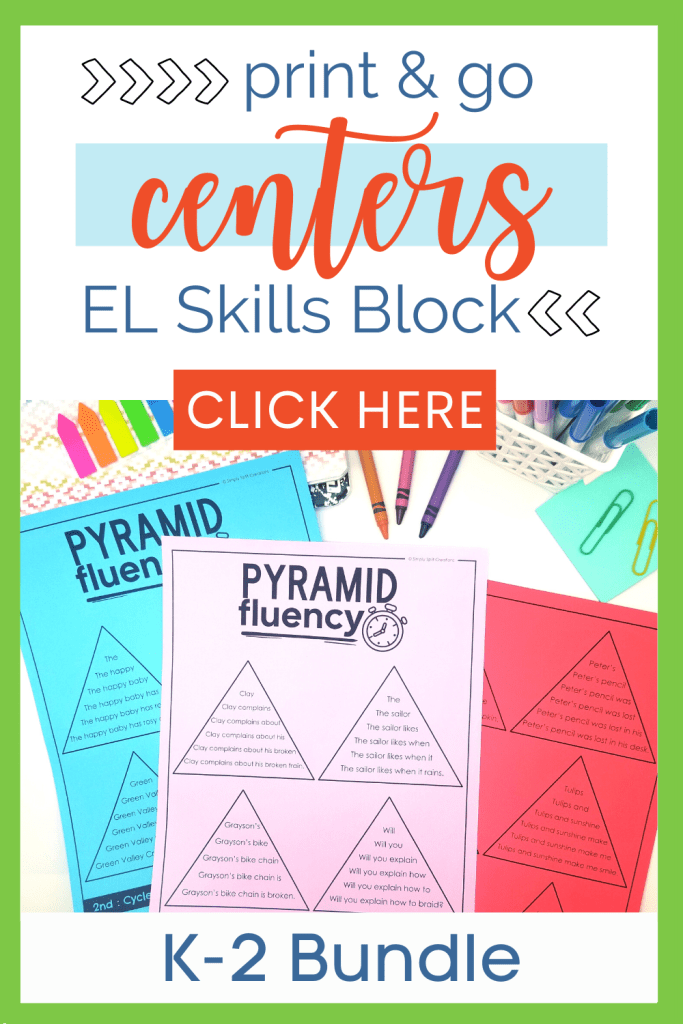
The idea of a pyramid sentence is to read a sentence progressively. You’ll start with the first word of the sentence on a line, then the next line includes the first word and the second word. Each line adds a new word until the sentence is complete. Look at the picture to see what this might look like. The reason this kind of activity helps with fluency is because students are building and practicing reading familiar words quickly. Even though they are repeating the same words over and over again, this is building their fluency and helping them to increase their fluency rate.
You can do a make-shift version of this activity all on your own with sentence strips. All you need to do is write a sentence. You can grab a sentence from a book you are reading or create a sentence with words matching the phonics skills you are practicing. Then use a paper or blank sentence strip to cover all of the sentence besides the first word. Then after each word is read, uncover the next word, but re-reading the whole sentence over as you uncover each word.
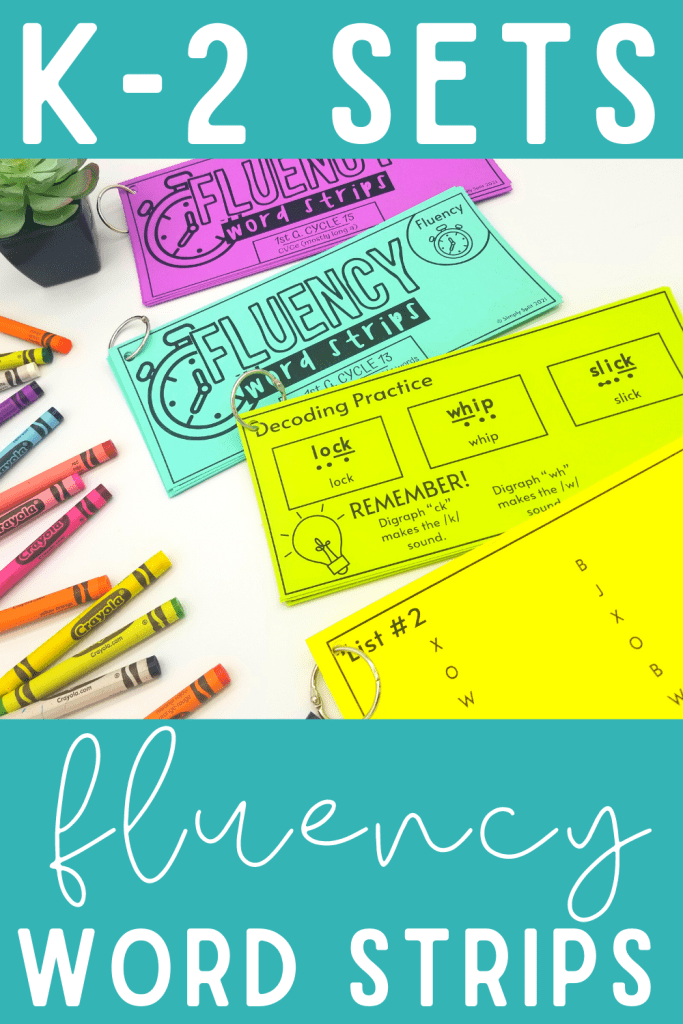
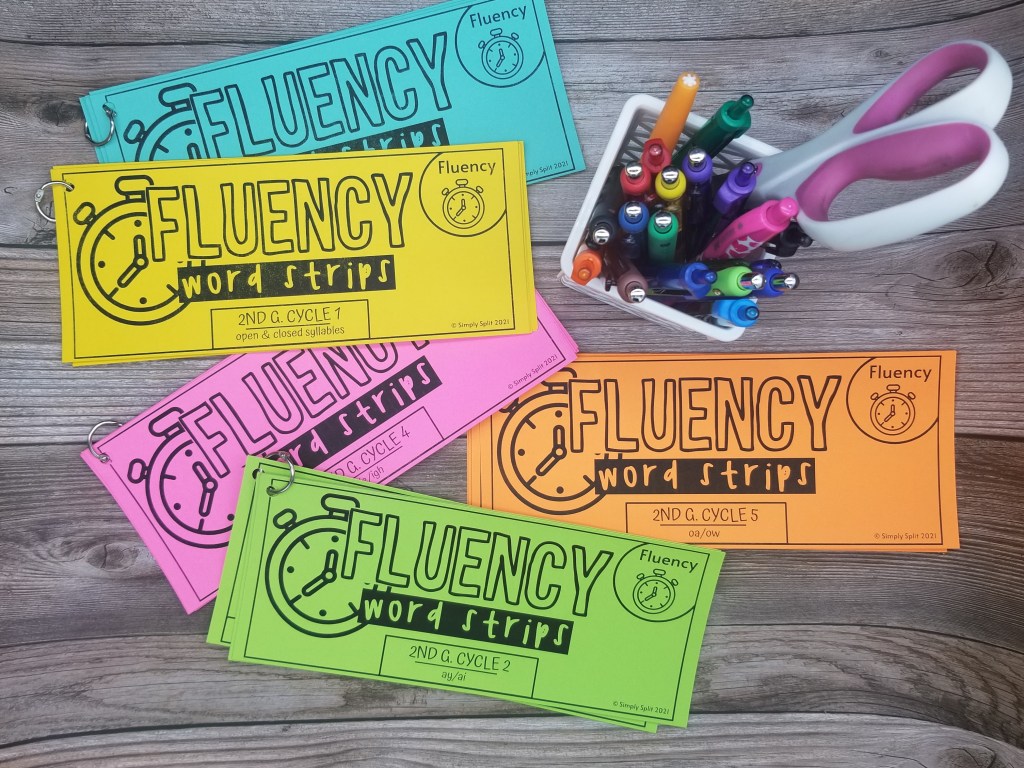
This is a fun and easy activity to implement. It will take some prep if you choose to make your own, or you can try out the fluency word strips I have made byclicking here. This is a pretty easy activity to make for students that need to practice letter names and sounds. All you need is a pocket chart, sentence strips and a pointer. Simply write down the letters you’d like each group to practice on the sentence strips and place them in the pocket chart. When students go to that center, they will have someone point to each letter on the sentence strip as another says the name & sound. This is repeated until they become more and more fluent. Students tend to have a fun time with this activity and find motivation to get better and better.
If you don’t like the idea of having to make your own, have no fear, I got you covered. There are 25-26 (depending on the grade level) different packets of fluency word strips that each focus on a different phonics skill. Within each packet, there are 4 levels. This makes it easy to differentiate.
If you like the idea of your students completing all of the levels within each decoding packet, I would definitely suggest purchasing the bundle. In the bundle I have included a puzzle piece game board which aligns with the fluency word strips and can be used as an incentive to pass off each list within the packet. It’s pretty simple, once a student passes off one of the word lists within the fluency packet (reading fluently), they get a piece to the coordinating game board puzzle. Once they pass off all lists, they can put the puzzle together and play the game. The coordinating phonics game board focuses on the same phonics skill practiced in the fluency word strips. The game can be played independently or with a group. Your students will love it and be motivated to pass off each list. Watch the video below to see the bundle in action or click here to view the bundle in my shop.
Teaching students decoding skills might seem like a weird thing to do to increase fluency, but it really works. If you think about it, if a student doesn’t have the skills to decode and sound out a word properly, there’s no way they’ll be able to read fluently. Students that can’t decode very well but can read somewhat often rely on memorization. Memorization can only take you so far and at some point, students that memorize will get stuck. Decoding skills help students in the short term and the long term. It helps students to learn how to sound out simple words and complex words. Once they get enough practice with decoding words and they get quicker at it, they will then be on their way to becoming fluent by reading accurately and quickly.
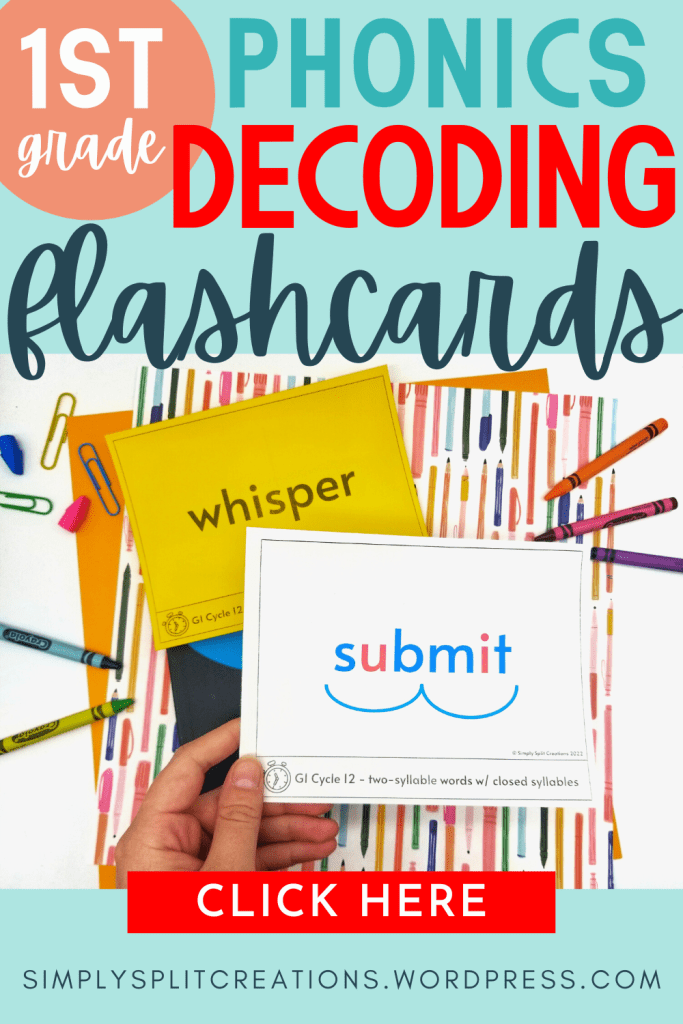
Decoding flashcards can be so helpful to young readers. They are very easy to make on your own. All you need are index cards and colored markers. Write on each flashcard a word you are working on (I would suggest working on a specific phonics skill and selecting words with that same spelling pattern). Next you’ll want to figure out your own notation system. I like to underline spelling patterns that are familiar, then use an arrow to mark magic e words, and a swoop for the syllable breaks. I would suggest doing these notations in different colors. Then when you use the flashcards, teach students to cover up and only read one syllable at a time. This will help them decode more easily and build their fluency accuracy. Click here to view this decode mode activity.
I used to make all my flashcards by hand and it was very time-consuming (although nice because it’s FREE). I finally buckled down and started making my own printable flashcards and they have been so helpful. If you are looking to save some time, make sure you check out my decoding flashcards. Each flashcard set includes 40 flashcards focused on a specific phonics skill. There are 3 differentiated levels in each set as well. The differentiated levels are all the same words, but they don’t have all the decoding helps (as some students may not need as much guidance). You can bundle and grab all of the 2nd grade decoding flashcards (26 sets) for a discounted price. Other grade levels (kindergarten and 1st grade) will be coming soon as well.
Some students simply have not had enough practice with blending words quickly and smoothly. When students aren’t able to blend quickly and smoothly, this will definitely affect their fluency.
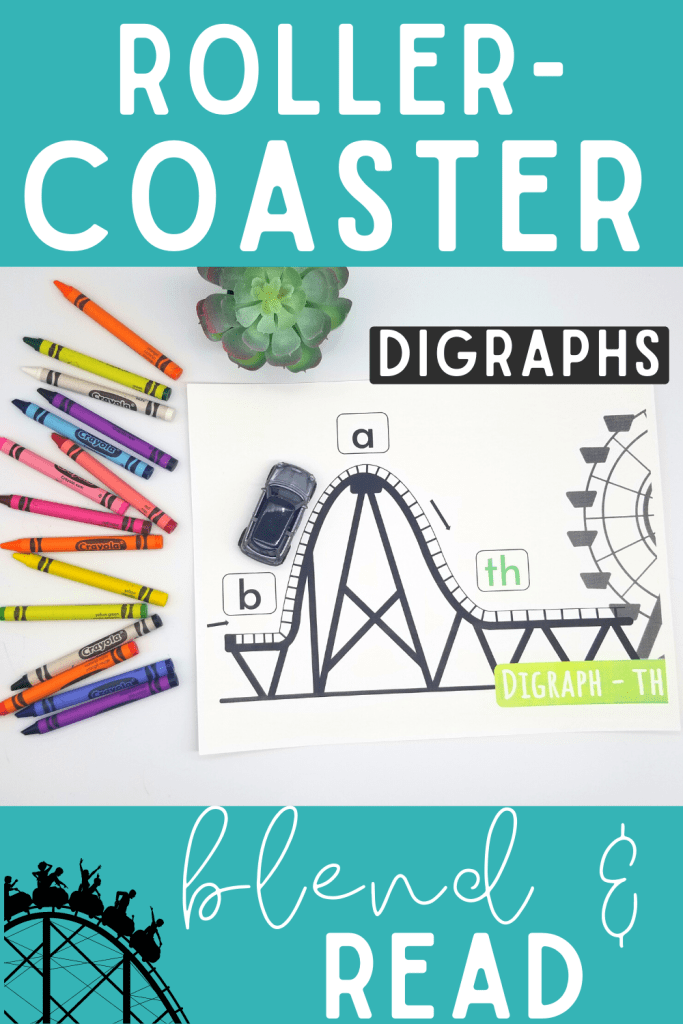
My favorite activity to help students blend more smoothly and quickly is shown below.
This is such a FUN and ENGAGING blending activity that your students will love, and it will actually help to improve their blending skills. As shown in the video, I like to use a toy car as the blend-er. Students simply roll the toy car on the rollercoaster over each letter as they blend the sounds together out loud.
This product is sold in a CVC Bundle or a Digraph Bundle. You can also buy short vowels or individual digraphs on their own outside of the bundle.
Try out some of these tips and let me know how they go! I’d love to hear how it influences your classroom.
If you feel like you never have time to complete all of your teacher tasks, you are not alone. This is a common feeling amongst teachers and because of this, teachers often get burned out very quickly. In order to avoid feeling burned out and still get all the important things done, it’s important to figure out how to streamline your processes to make better use of your time. In order to save my sanity, I figured out a great way to help save me time when it comes to planning my small group lessons that has worked really well for me. I’m going to share some of my favorite secrets to help you get more accomplished and hopefully feel less burned out.
Keep in mind that in order to make this a streamlined process, it will take some initial prep. This initial prep will end up saving you SO much time in the long run though. Once you have things organized, you will thank yourself in the future when you are able to successfully prep your small group lessons in 5 minutes or less.
Also note that it is possible to completely bypass a good majority of the prep work and skip steps 1-4. If you’re looking for less upfront prep work, skip to the end of step 4 and read the section labeled “Want something even more streamlined and with less up-front prep work?”
First, you will want to figure out what phonics scope and sequence you are going to follow within your small group lessons. If you have a phonics program that your school has adopted, use the scope and sequence provided and follow the order that each phonics rule is taught.
If you don’t have an adopted program, I would suggest choosing a program that is research based and follows the science of reading (SOR).
I highly recommend following the EL Skills Block curriculum. You can access all their manuals online for FREE and it is research based. This is a K-2 program. I have made several activities that align with this program which you can use to supplement any lessons or use in centers.
Another great scope and sequence to follow is the one that LETRS includes in their manuals. Their scope and sequence is laid out very nicely and specifies when each phonics skill should be mastered for reading and for spelling (they are at different times). Their scope and sequence is planned for K-3 students.
Next, you’ll want to create word lists that follow each of the phonics skills in your scope and sequence. This may seem silly, but it can be hard to think of words right on the spot and you’ll want to have this already figured out to streamline this process.
If you are using the EL Skills Block curriculum, I have pre-made spelling word lists that align with their scope and sequence. You can grab a copy for the grade level you teach from my TpT shop. However, I highly recommend getting the K-2 bundle, the reason being that you will have students that are above or below grade level and you will want to be able to accommodate them and have materials and resources already prepped.
I keep a stapled copy of all the word lists at my small group table that I can quickly reference when needed during small group lessons.
You may already have some great phonics activities up your sleeve which is great. You can skip this step if you feel strong in this area already.
Some of my favorite low prep activities to do during small group lessons are:
There are some additional small group activity ideas you can check out here. This is a FREEBIE from my teachers pay teachers shop. There are so many great ideas to use as a small group lesson. Most lessons can be adapted by just using a whiteboard which I LOVE because there is no prep needed.
It may be helpful to record the phonics activities you have already and figure out what phonics skills you may be lacking in your resource collection. This can also be used as your lesson guideline that you can use down the line. Feel free to use this FREE template I created to help you organize and analyze what you have and need to still get.
After you have been able to analyze all the materials you have and what you might need, you’re going to want to get all those materials fully prepped. You can enlist help from others so this can be a smooth quick process. Here are a few suggestions:
Contact the education department of a local college. Some colleges may require students with an education major to complete a related service project. Some students may just want to get involved with working with a teacher to gain experience. You can use this to your advantage and ask for volunteers to help prep materials for your classroom.
Ask teachers at your school if they have any students that may have spare time to help. Some teachers may be wanting to do a class service project or may have students that finish with their work early that can volunteer and help in your classroom. It never hurts to ask and see if you can get any help.
Ask for parent volunteers. Parents often want to get involved in the classroom but aren’t always available during school hours to help. I usually get a lot more parent volunteers to help prep materials on their own time rather than volunteers to help in the classroom. It is a great solution and can help save you so much time. One of my favorite ways to get parent volunteers is by using the ClassTag app. I use ClassTag as a way to communicate to all parents and it has a great method for asking for volunteers. When you ask for volunteers on the app, parents can see if the volunteer spot has been filled or not. ClassTag will automatically send out the volunteer opportunity again after a while if it has not been filled to make sure the volunteer opportunity isn’t lost. Since using this app, I was ALWAYS able to get a volunteer opportunity filled.
You may be facing a lot of challenges or feel stuck if you are just starting out with teaching small group lessons or are teaching a new grade level, or maybe small group lesson planning is just not your thing and you are trying to improve. You may just not have time to do the upfront prep work. Whatever problem you may be having, I can help you out. I have made small group lesson plans for the whole year that you can use. They follow the EL Skills Block Phonics Curriculum which is research based. All you need to do is print it out and get familiar with the different activities used throughout the booklet and your small groups are set! There are learning targets, word lists, and great research based activities to teach each phonics skill. You can adapt most activities to work with just a whiteboard. There are 1st grade and 2nd grade options to purchase. If you have students on various levels, you may want to grab both 1st and 2nd grade levels. This will help save you quite a bit of time and make it possible to skip over steps 1-4. Click below to see more details about these resources.
Before starting centers, you need to assess students, this is so you know how to group students AND what skill each group needs to work on. If you don’t know where to start when it comes to assessing and grouping students, I have another blog post all about this. You can check out this blog post by clicking here.
I personally really like to use the assessment that EL Skills Block provides with their curriculum. It systematically helps group students after they are assessed AND it tells you exactly what skill that each group should focus on next. It aligns with the other helpful resources talked about in this post. You can check out my version of this assessment by clicking here.
After you have been able to assess all your students, put them into groups, then comes the easy part. All you need to do is find the matching skill each group is working on. You should be able to easily find this if you filled out the FREE TEMPLATE or if you purchased the small group lesson activities. I like to place a tab for each group next to the lesson they are on. It looks something like this:
Now my weekly prep is literally moving each group tab marker up to the next phonics skill and pulling any pre-made materials if needed for the included activities. It really is that easy.
Where it does take initial prep which may be daunting, I promise you that in the future, you will thank yourself for making things streamlined. You can then use these materials year after year and will save so much time!
If you are new to EL Skills Block and are trying to figure out how to get your literacy centers set-up and ready aligning with the Skills Block program, you’ve come to the right place. There is a big learning curve when it comes to implementing the EL Skills Block program and it can be quite overwhelming when you’re getting started. I have made dozens of phonics resources that align with the EL Skills Block program to help get new teachers started in the program and feel confident while they are implementing it.
If you have already administered the appropriate Skills Block assessments AND grouped your students accordingly, please skip to #2.
If you have not been trained on how to administer and group your students using the Skills Block assessment, I would suggest reading my previous blog post that explains this first step in great detail. You can view this post by clicking here.
This is a crucial step so you can group your students correctly, PLUS see what skill each group should focus on. Below is a shortened version of what you need to do.
Perform appropriate assessments
The appropriate assessments will vary based on the grade that you teach. The 2 most important assessments when it comes to grouping your students are the spelling assessment AND the decoding assessment. You may need to give a student a second spelling/decoding assessment if they master the spelling list/word list OR if they struggle too much. This helps you hone in on the precise level they are on.
Determine each student’s microphase.
The spelling and decoding assessments can help you determine each student’s microphase. Each of the microphases are listed on the conversion chart inside the resource manual. I like to abbreviate each microphase making it quicker to group and see their exact level. I abbreviate like so in ascending order: (E=Early; M=Middle; L=Late)
-Pre-Alphabetic: Pre-E, Pre-M, Pre-L
-Partial Alphabetic: PE, PM, PL
-Full Alphabetic:FE, FM, FL
-Consolidate Alphabetic: CE, CM, CL
Write each student’s name in the appropriate microphase.
I created a sheet to make grouping easy that looks like the picture shown. You can purchase this sheet along with the full EL Skills Block assessment + data analysis sheets by clicking here.
I would suggest printing two copies of the blank conversion chart and labeling one as “spelling” and the other as “decoding.” Then write each student’s name in the appropriate microphase. This will help you visually see how students can be grouped.
Make Literacy Groups
You’ll have to decide which data you’d like to use to group your students. Students will usually score lower in spelling and higher in decoding. For this reason, I like to use the spelling data to group students and I use the decoding information to help me make more specific decisions if needed. If a group is too large, you can look at the decoding list to see what student would be best to move to a higher or lower group.
You can see how I grouped these students based on their microphase in the picture.
EL Skills Block makes this extremely easy. Once you have grouped your students, all you need to do is look at the conversion chart to see what lesson each group should focus on. For example, if you have a group in the Full Middle (FM) microphase, they would be on Grade 1 Module 3 Cycle 18 which focuses on CVCe (2 syllable words + suffixes). They would next move to Cycle 19 which focuses on r-controlled vowels (ar & or).
This is what the conversion chart looks like:
You can see how I grouped and leveled my students by watching the video below.
FREEBIE ALERT!! Grab this freebie to help you organize your group information and what needs to be prepped each week. There are three different options included in the freebie depending on how many groups you may have. There are 4, 5 & 6 group options. It also includes a poster of each group that you can use for labeling purposes if needed.
There are a few different ways you can use these organizational sheets. You can print several copies and cut off the bottom part on all but 1 copy. I would suggest laminating the full sheet copy (after you have written who is within each group). Then you can write what microphase & cycle each group will be working on each week, along with the number of copies you need, plus what needs to be printed & prepped.
OR
You can laminate one sheet and use a dry erase marker to write what needs to be prepped each week. This option can be a bit trickier if you have a lot to write down and prep.
I have made several literacy centers that align with EL Skills Block. If you are just starting out and need something low prep, I would highly recommend using the 5 Day Phonics Packets I have listed in my store. They are print and go, making it super manageable while you’re getting the hang of EL Skills Block. They are also easy to differentiate. There is 1 packet for each cycle which includes 5 activities to do for the whole week. There are kindergarten, 1st grade and 2nd grade options available with lots of bundling options.
Above is a video preview of the kindergarten packets. Click below to view product.
Above is a video preview of the 1st grade packets. Click below to view product.
Above is a video preview of the 2nd grade packets. Click below to view product.
Note that it may be helpful to buy a multi grade bundle so you can easily differentiate. With the EL Skills Block program, it is common for you to have students in kindergarten, 1st grade OR 2nd grade levels all within one class.
I am currently making dozens more centers that align with EL Skills Block. Below are the items that align with EL Skills Block and are already posted and ready to be purchased:
Phonics Speed & Read Board Games – works great in conjunction with the fluency word strips (available for 2nd grade – kindergarten & 1st grade will be released at the beginning of 2022)
Spelling Word Lists – perfect for a word work center (available in kindergarten, 1st & 2nd grade)
Fluency is such an important part of reading but often can be frustrating to teach or help young readers learn. If you find your child or student frustrated when reading or practicing to read fluently, it may be time to try a different approach. Before we talk about HOW to increase fluency, let’s first talk about WHAT fluency is.
Often when we think about fluency, we only think about reading speed and forget about the other aspects of fluency. If you solely focus on speed, then students will likely get in the habit of not comprehending what they are reading or may even begin to HATE reading, which is a hard mindset to change. As parents or educators, we do NOT want to fall into this trap and in turn cause children to dislike reading. Therefore, it is important to focus on all the aspects of fluency.
The three aspects of fluency are:
Accuracy
Making little to no errors while reading
Reading Speed
The rate at which a student reads. Often measured in WPM (words per minute)
Prosody
Reading aloud with proper intonation, phrasing and expression
Okay so you might be wondering why this is important? Well, teaching all of the aspects of fluency will overall help to increase fluency. Therefore, you will want a good variety of fluency activities that focus on each of the three aspects of fluency.
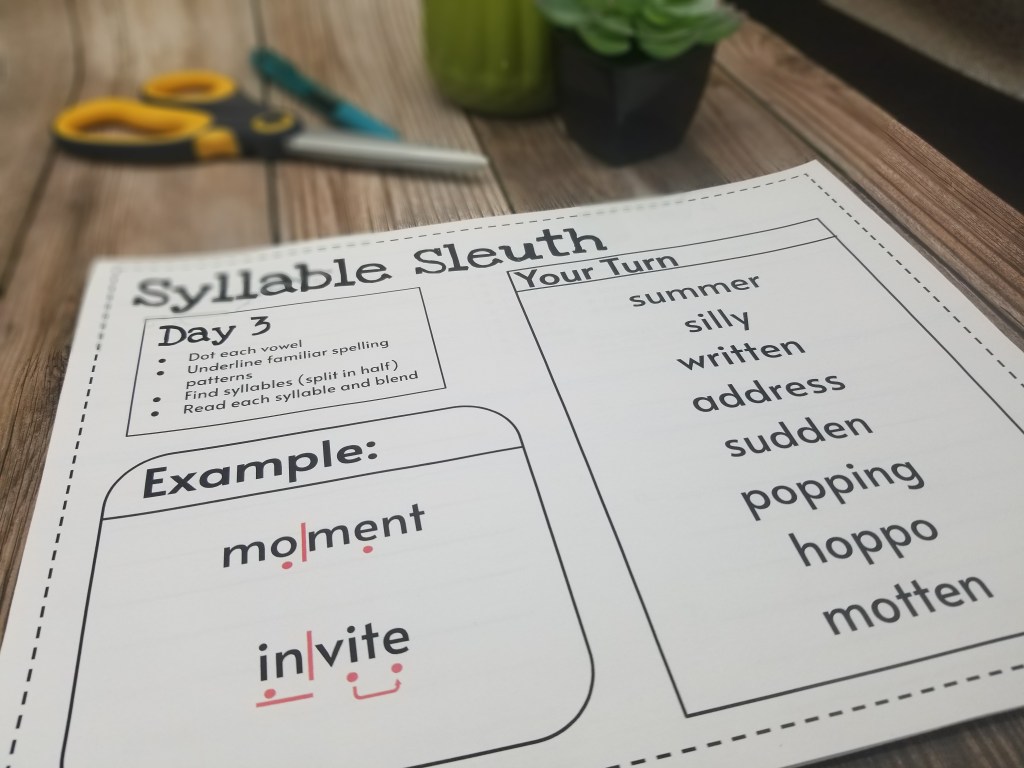
Learning to decode is so important for young readers. Teaching phonics skills explicitly will help prepare students to decode accurately. My favorite activity to practice decoding is what I like to call “decode mode.” If you use the EL Skills Block Program, they refer to this activity as “syllable sleuth.”
Watch the video to see what decode mode/syllable sleuth sheet looks like. You can also preview what the full packets for each week look like.
In this activity, students become little detectives as they analyze the word. The steps are the following:
Look for the vowels and place a dot under each of the vowels.
Underline spelling patterns that you know and recognize.
If there is a “magic e” draw an arrow to the vowel it affects.
Find where the syllable break is and draw a line or swoosh to separate the syllables.
You will need to make sure most if not all syllable types are taught prior to practicing this activity.
Lastly, read each syllable separately then blend them all together.
This activity can be done with 1 syllable words as well, simply forego steps 4 and 5. This is such an effective technique. My lower students will sometimes need help, but they are always so surprised and impressed that they can read longer words.
This activity is very low prep and very effective. You can make your own words and have students copy in a notebook or whiteboard which costs you nothing. If you are looking for something already made that’s print and go, check out these phonics packets. They include a syllable sleuth/decode mode activity in most weekly packets along with other activities focused on the same phonics skill. Click on the picture or here for the link.
26 packets with fun phonics activities including: syllable sleuth/decode mode, decodable books, word sorts, silly sentences and more!
Planning repeated readings in the classroom can be very effective in increasing fluency. Students can gain confidence in the words they are reading because they have already read through it once. This helps them to be able to read more quickly. Students may dread repeated readings so it’s important to talk about why you are having them repeatedly read the same material over and over again. I suggest perhaps doing a mini lesson on repeated readings and discuss the importance of them towards the beginning of the year or prior to implementing repeated readings. A few ways to make it more engaging are:
Timed readings
This is a tricky one. Students can dread timed readings IF it is done too frequently and not properly explained. Students should know that they should NOT be competing with other students to read more quickly. Instead, teach a growth mindset and to compete with THEMSELVES. This way students can have motivation on their own to continually grow.
Fluency voice cards (FREEBIE ALERT)
This is a great way to increase engagement. Students pick a fluency voice card and read the passage in whatever voice is listed on the card. This way repeated readings won’t feel too redundant. Each time the passage is read, it will be a little bit different. You can grab this freebie by clicking below and subscribing. The FREEBIE will then be sent to your email.
Get these FREE fluency reading voice cards sent right to your email by clicking here.
Echo reading is an easy strategy to implement. You can do this with a short passage or a book. It can even be done with other subject material. The teacher/adult will first model reading the excerpt with the words displayed for the child/class to see. A document camera is good for this or a big book. The teacher/adult should point to the words as he/she reads them for the students to follow along. After modeling how to read, students will then “echo” and all will read together as the teacher/adult points to the words a second time. This helps students with reading all aspects of fluency, accuracy, rate & prosody and is such an effective AND easy strategy.
This is a fun and easy activity to implement. It will take some prep if you choose to make your own, or you can try out the fluency word strips I have made by clicking here. This is a pretty easy activity to make for students that need to practice letter names and sounds. All you need is a pocket chart, sentence strips and a pointer. Simply write down the letters you’d like each group to practice on the sentence strips and place them in the pocket chart. When students go to that center, they will have someone point to each letter on the sentence strip as the other says the name & sound. This is repeated until they become more and more fluent. Students tend to have a fun time with this activity and find motivation to get better and better.
If you don’t like the idea of having to make your own, have no fear, I got you covered. There are 25-26 (depending on the grade level) different packets of fluency word strips that each focus on a different phonics skill. Within each packet, there are 4 levels. This makes it easy to differentiate. You can also encourage students to try and decode the harder lists by using the strategies from the decode mode activity (syllable sleuth) which is explained above.
If you like the idea of your students completing all of the levels within each decoding packet, I would definitely suggest purchasing the bundle. In the bundle I have included a puzzle piece game board which aligns with the fluency word strips and can be used as an incentive to pass off each list within the packet. It’s pretty simple, once a student passes off one of the word lists within the fluency packet (reading fluently), they get a piece to the coordinating game board puzzle. Once they pass off all lists, they can put the puzzle together and play the game. The coordinating phonics game board focuses on the same phonics skill practiced in the fluency word strips. The game can be played independently or with a group. You’re students will love it and be motivated to pass off each list. Watch the video below to see the bundle in action or click here to view the bundle in my shop.
Click below to view the bundle or decoding strips sold on their own.
This two fold activity works as follows. First, students will be able to practice reading with expression and rate. I love this strategy because students have so much fun with readers theater. They won’t even realize that they are practicing fluency. You can do as much or as little with this activity as you want. Students can make props to help to add to the role, perform for the class or parents, or it can just be a simple reading practice in small groups.
You will need to find an appropriate leveled readers theater and provide a copy (or share) with students for each part. I suggest highlighting each role throughout the whole script for each part so it is easy for students to find their part. You can do this yourself, ask for parent volunteers, or if you feel your students are capable, have them highlight their part on their own. I would suggest modeling the reading to your group of students first, then you can have them practice reading through the script as a group. This will help students hear how to read with expression and also help students with reading any unfamiliar words that are in the script.
If you would like some suggested materials for younger grades to use for readers theater, check out these below:
Try out some of these tips and let me know how they go! I’d love to hear how it influences your classroom. If you’re interested in any of the mentioned products from my shop, you can find the links below.