

If you feel like you never have time to complete all of your teacher tasks, you are not alone. This is a common feeling amongst teachers and because of this, teachers often get burned out very quickly. In order to avoid feeling burned out and still get all the important things done, it’s important to figure out how to streamline your processes to make better use of your time. In order to save my sanity, I figured out a great way to help save me time when it comes to planning my small group lessons that has worked really well for me. I’m going to share some of my favorite secrets to help you get more accomplished and hopefully feel less burned out.
Keep in mind that in order to make this a streamlined process, it will take some initial prep. This initial prep will end up saving you SO much time in the long run though. Once you have things organized, you will thank yourself in the future when you are able to successfully prep your small group lessons in 5 minutes or less.
Also note that it is possible to completely bypass a good majority of the prep work and skip steps 1-4. If you’re looking for less upfront prep work, skip to the end of step 4 and read the section labeled “Want something even more streamlined and with less up-front prep work?”
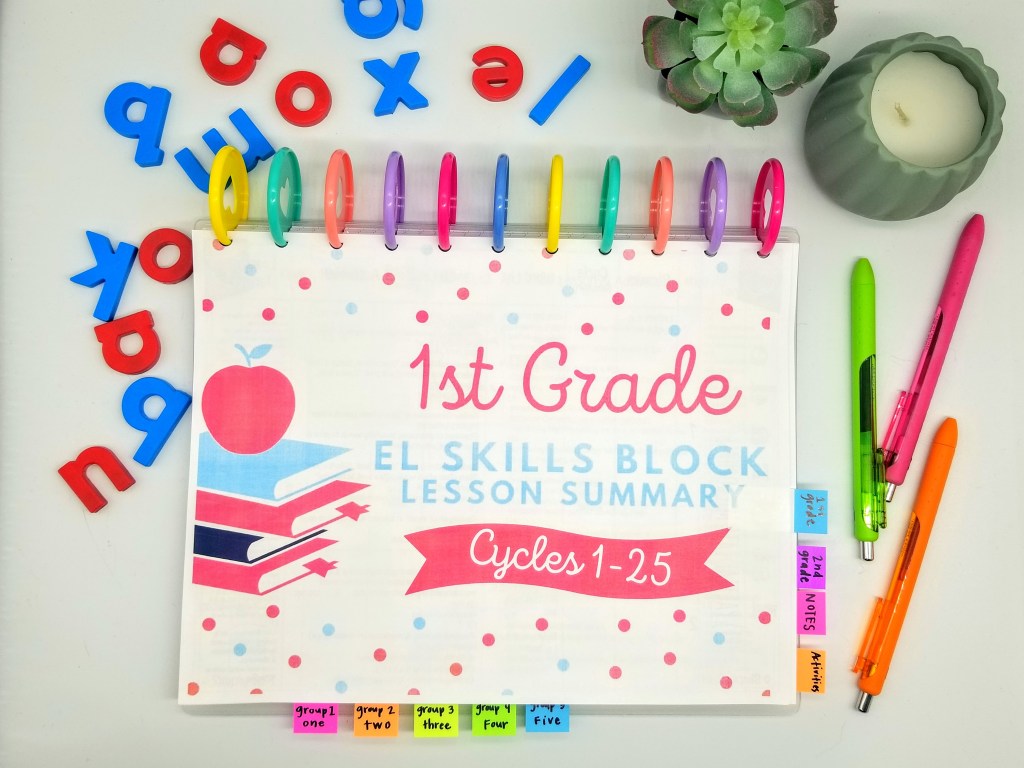


First, you will want to figure out what phonics scope and sequence you are going to follow within your small group lessons. If you have a phonics program that your school has adopted, use the scope and sequence provided and follow the order that each phonics rule is taught.
If you don’t have an adopted program, I would suggest choosing a program that is research based and follows the science of reading (SOR).
I highly recommend following the EL Skills Block curriculum. You can access all their manuals online for FREE and it is research based. This is a K-2 program. I have made several activities that align with this program which you can use to supplement any lessons or use in centers.
Another great scope and sequence to follow is the one that LETRS includes in their manuals. Their scope and sequence is laid out very nicely and specifies when each phonics skill should be mastered for reading and for spelling (they are at different times). Their scope and sequence is planned for K-3 students.

Next, you’ll want to create word lists that follow each of the phonics skills in your scope and sequence. This may seem silly, but it can be hard to think of words right on the spot and you’ll want to have this already figured out to streamline this process.
If you are using the EL Skills Block curriculum, I have pre-made spelling word lists that align with their scope and sequence. You can grab a copy for the grade level you teach from my TpT shop. However, I highly recommend getting the K-2 bundle, the reason being that you will have students that are above or below grade level and you will want to be able to accommodate them and have materials and resources already prepped.
I keep a stapled copy of all the word lists at my small group table that I can quickly reference when needed during small group lessons.



You may already have some great phonics activities up your sleeve which is great. You can skip this step if you feel strong in this area already.
Some of my favorite low prep activities to do during small group lessons are:
- chaining
- phoneme grapheme mapping
- fluency word strips
- phonics board games
- decodable books FREEBIE

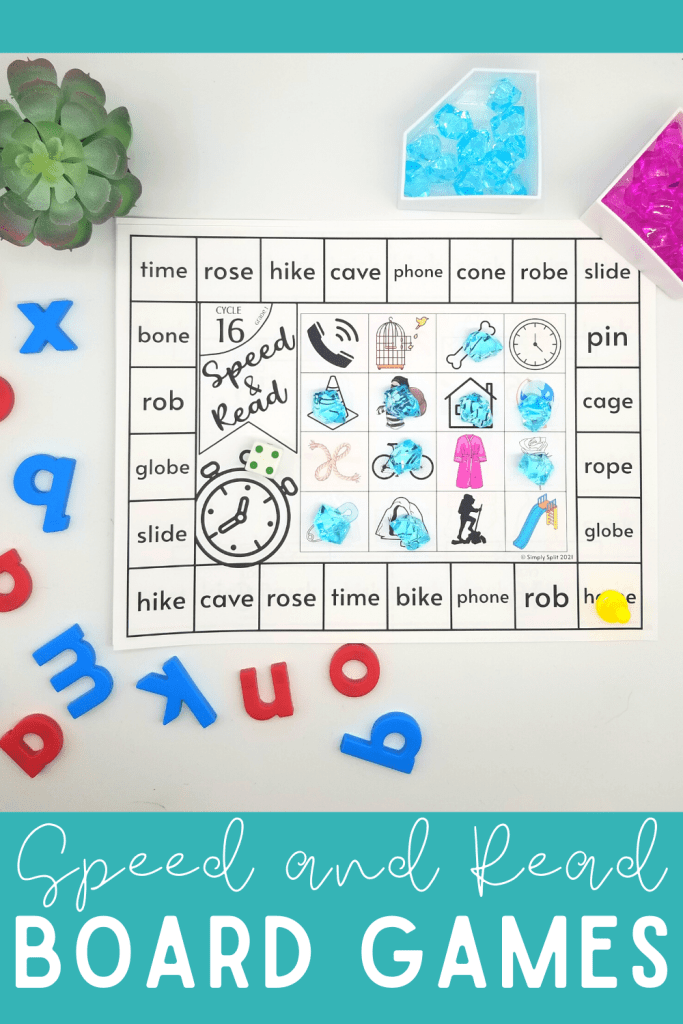
There are some additional small group activity ideas you can check out here. This is a FREEBIE from my teachers pay teachers shop. There are so many great ideas to use as a small group lesson. Most lessons can be adapted by just using a whiteboard which I LOVE because there is no prep needed.

It may be helpful to record the phonics activities you have already and figure out what phonics skills you may be lacking in your resource collection. This can also be used as your lesson guideline that you can use down the line. Feel free to use this FREE template I created to help you organize and analyze what you have and need to still get.



After you have been able to analyze all the materials you have and what you might need, you’re going to want to get all those materials fully prepped. You can enlist help from others so this can be a smooth quick process. Here are a few suggestions:
- Contact the education department of a local college. Some colleges may require students with an education major to complete a related service project. Some students may just want to get involved with working with a teacher to gain experience. You can use this to your advantage and ask for volunteers to help prep materials for your classroom.
- Ask teachers at your school if they have any students that may have spare time to help. Some teachers may be wanting to do a class service project or may have students that finish with their work early that can volunteer and help in your classroom. It never hurts to ask and see if you can get any help.
- Ask for parent volunteers. Parents often want to get involved in the classroom but aren’t always available during school hours to help. I usually get a lot more parent volunteers to help prep materials on their own time rather than volunteers to help in the classroom. It is a great solution and can help save you so much time. One of my favorite ways to get parent volunteers is by using the ClassTag app. I use ClassTag as a way to communicate to all parents and it has a great method for asking for volunteers. When you ask for volunteers on the app, parents can see if the volunteer spot has been filled or not. ClassTag will automatically send out the volunteer opportunity again after a while if it has not been filled to make sure the volunteer opportunity isn’t lost. Since using this app, I was ALWAYS able to get a volunteer opportunity filled.

You may be facing a lot of challenges or feel stuck if you are just starting out with teaching small group lessons or are teaching a new grade level, or maybe small group lesson planning is just not your thing and you are trying to improve. You may just not have time to do the upfront prep work. Whatever problem you may be having, I can help you out. I have made small group lesson plans for the whole year that you can use. They follow the EL Skills Block Phonics Curriculum which is research based. All you need to do is print it out and get familiar with the different activities used throughout the booklet and your small groups are set! There are learning targets, word lists, and great research based activities to teach each phonics skill. You can adapt most activities to work with just a whiteboard. There are 1st grade and 2nd grade options to purchase. If you have students on various levels, you may want to grab both 1st and 2nd grade levels. This will help save you quite a bit of time and make it possible to skip over steps 1-4. Click below to see more details about these resources.


Before starting centers, you need to assess students, this is so you know how to group students AND what skill each group needs to work on. If you don’t know where to start when it comes to assessing and grouping students, I have another blog post all about this. You can check out this blog post by clicking here.

I personally really like to use the assessment that EL Skills Block provides with their curriculum. It systematically helps group students after they are assessed AND it tells you exactly what skill that each group should focus on next. It aligns with the other helpful resources talked about in this post. You can check out my version of this assessment by clicking here.


After you have been able to assess all your students, put them into groups, then comes the easy part. All you need to do is find the matching skill each group is working on. You should be able to easily find this if you filled out the FREE TEMPLATE or if you purchased the small group lesson activities. I like to place a tab for each group next to the lesson they are on. It looks something like this:

Now my weekly prep is literally moving each group tab marker up to the next phonics skill and pulling any pre-made materials if needed for the included activities. It really is that easy.
Where it does take initial prep which may be daunting, I promise you that in the future, you will thank yourself for making things streamlined. You can then use these materials year after year and will save so much time!

