Are you new to EL Skills Block? Are you having difficulty understanding how Skills Block is organized and set up? Well, you’ve come to the right place! Just a few years ago, I was in your shoes, ready to pull my hair out because I was so frustrated and unsure how to make this new program work. I was frustrated trying to figure out how to make my reading centers align with Skills Block and frustrated trying to navigate all the manuals Skills Block provided. I have found some great ways to help make this program work for my classroom and am here to share all the secrets I discovered and hopefully, this can help you feel more comfortable as you implement the Skills Block program. Below you’ll find some frequently asked questions that I hear many Skills Block users ask.
CURRICULUM
If you are a classroom teacher, you may not get a whole lot of say in what will be purchased for your classroom. Luckily, however, there are ways to make Skills Block bearable with or without the manuals. It is nice that all of Skill Block can be found FREE on EL Education’s website. The downside is that it is not extremely user-friendly and can be hard to lesson plan from a digital manual. I’ll explain the workarounds for Skills Block regardless of your skills situation and ability to purchase all the materials.
K-2 Manuals for each teacher – It would be very ideal to purchase the k-2 manuals for every teacher. You may not realize the importance to begin with, but when it comes to centers, it is so much easier to lesson plan small group lessons with ALL THE MANUALS. This is because during small groups, you will differentiate your instruction based on students’ skills. A 2nd grade teacher might have kindergarten level students in their classroom, therefore, during small groups, they may be teaching a kindergarten lesson to a group.
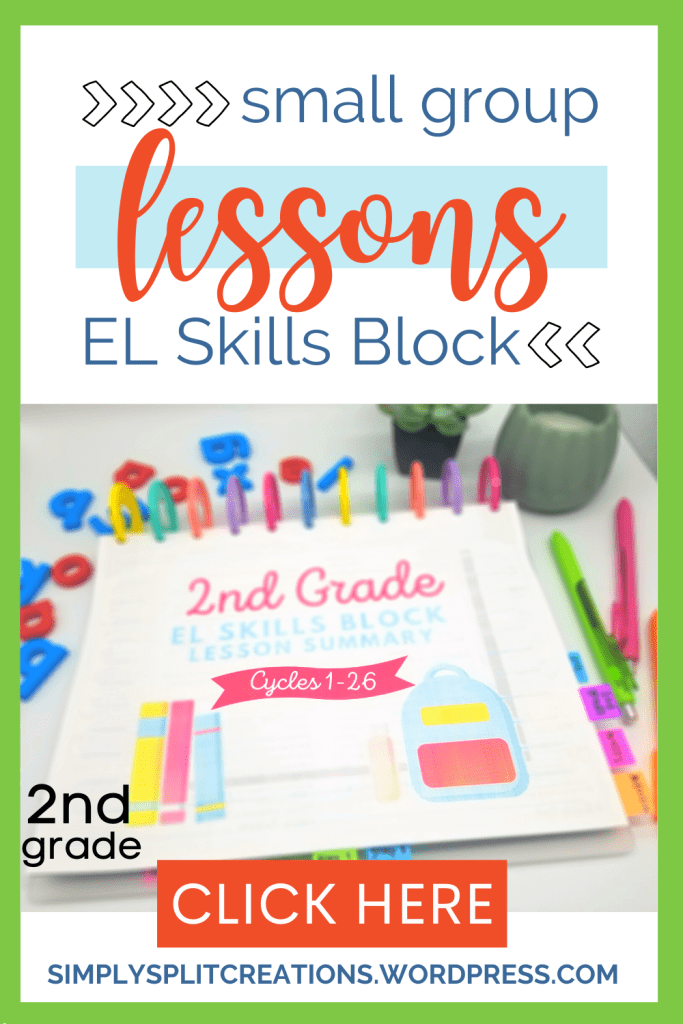
Grade-level manuals for each teacher – The next best thing is to purchase just the grade level manuals for each grade level teacher, meaning the 2nd grade teacher only gets the 2nd grade manuals. This will help the grade level be able to plan their whole group lessons more easily. Small groups lessons will be somewhat of a struggle though without having a physical copy of all the lessons you may be teaching. What I recommend doing is checking out these Skills Block lesson summary resources found in my shop. I specifically made this resource to help simplify my small group planning time and found it to be so helpful. You can buy these separately by grade level or buy the k-2 small group bundle that also includes EL’s phonics assessment along with data tracking documents. With the use of the small group lesson plans, I was able to easily find the lesson that each group needed during small group time by keeping them all in one binder. This makes it nice to not juggle between 20+ manuals. It has all the information you need in a simplified format making it easy to follow along. I have gotten to a point where I no longer plan small group lessons beforehand and I don’t prep any materials. During small groups, I can now look at the title of the activity and adapt it to work with just whiteboards. The small group lesson plans are definitely an economical way to access EL’s materials AND will save you lots of lesson planning time. Links can be found below.
Don’t have funds to purchase any manuals? – Not a problem! All of EL’s lessons can be found online. I highly recommend downloading all the manuals and materials and organizing them into google drive. This way you can access the lessons from anywhere and easily print materials without having to navigate through EL’s website constantly. Also, like mentioned above, I definitely recommend getting the small group lesson plans especially if you aren’t purchasing any manuals.
K-2 Small Group Lessons Bundle + Reading Assessment Phonics Screener
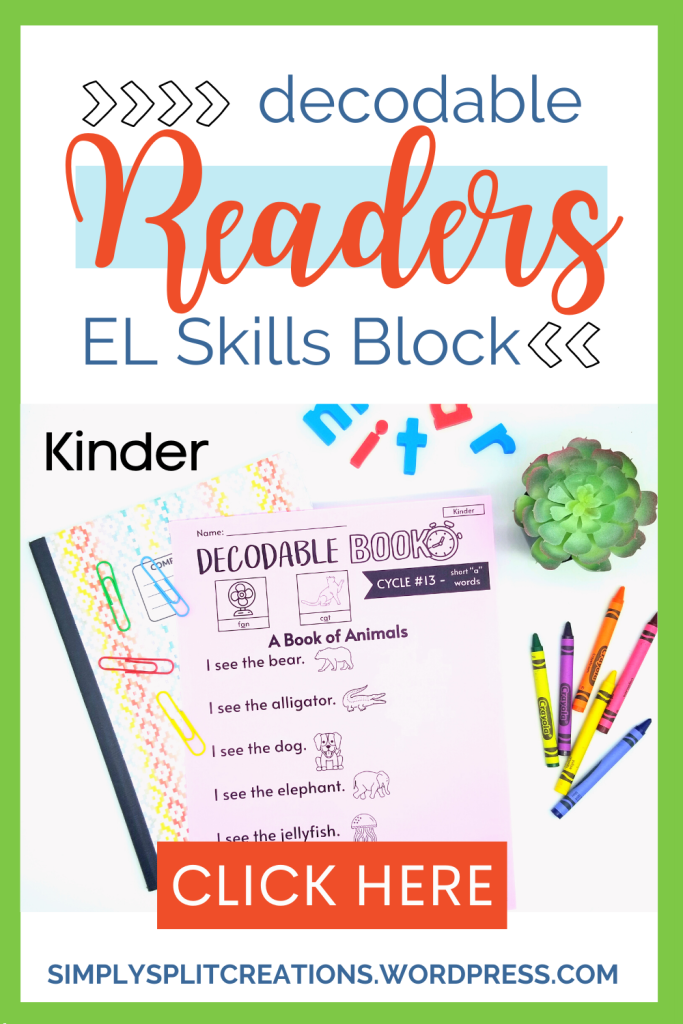
The consumable decodable books are a nice idea. It’s cool that students can write in them and take them home to read more later. However, in my experience, students don’t appreciate them or care about taking them home. Plus, they are expensive and hard to store. I recommend using the printable version that EL provides on its website. These are easy to print and can still be written on and taken home, but are much cheaper.
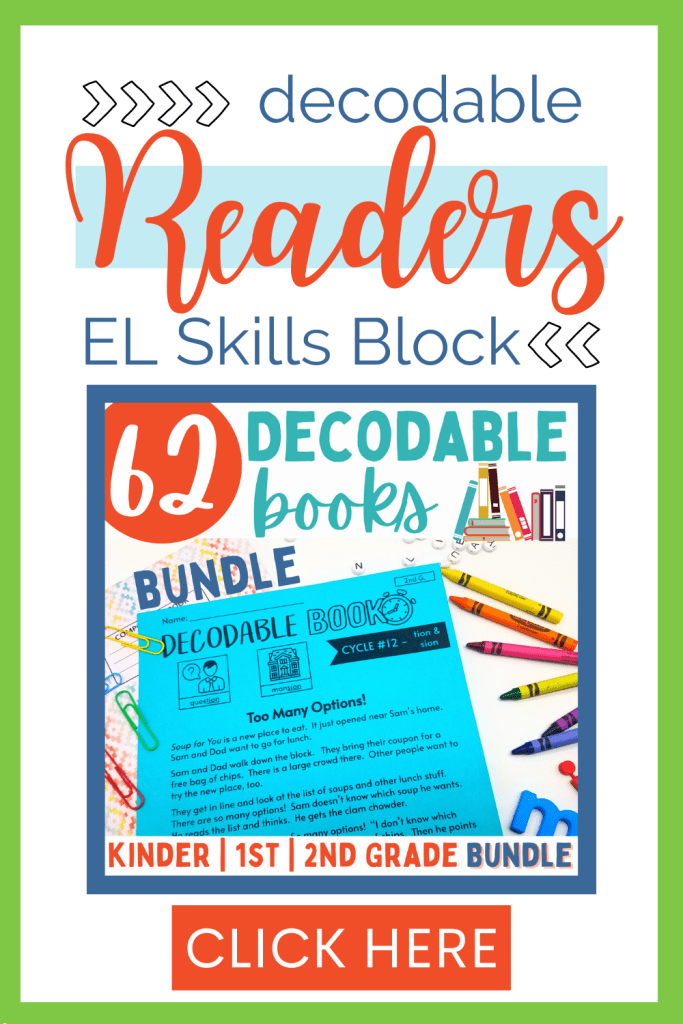
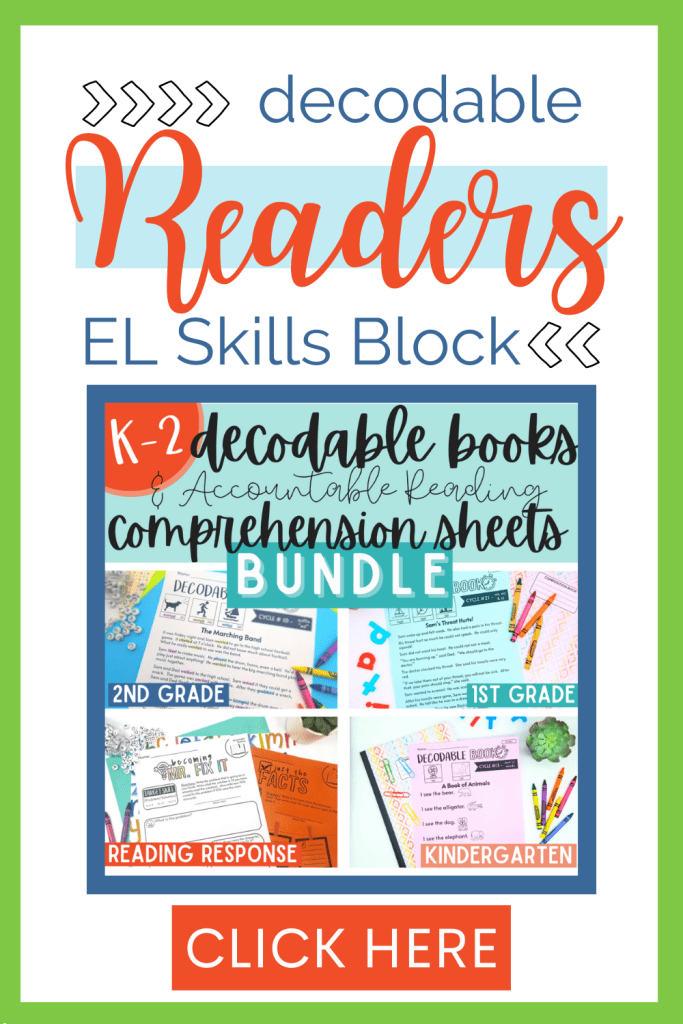
If you are finding that you are using too much paper printing the decodables from EL’s website, I have a solution for you. I re-formatted EL’s decodable books to fit onto one page to help save paper. I have also included some practice words with the phonics skill for each cycle at the beginning of the decodable. These are sold separately by grade level, plus there are some k-2 bundling options. Check them out below:
K-2 Decodables Bundle + AIR Reading Response Sheets
TIP
If your school decides to purchase the consumable books after all, the easiest way I’ve found to store the books is in clear sterilite storage boxes. The consumables fit perfectly in the sterilite storage boxes on its side (spine up). To make it easy to find the books, place the first book of each cycle vertically.
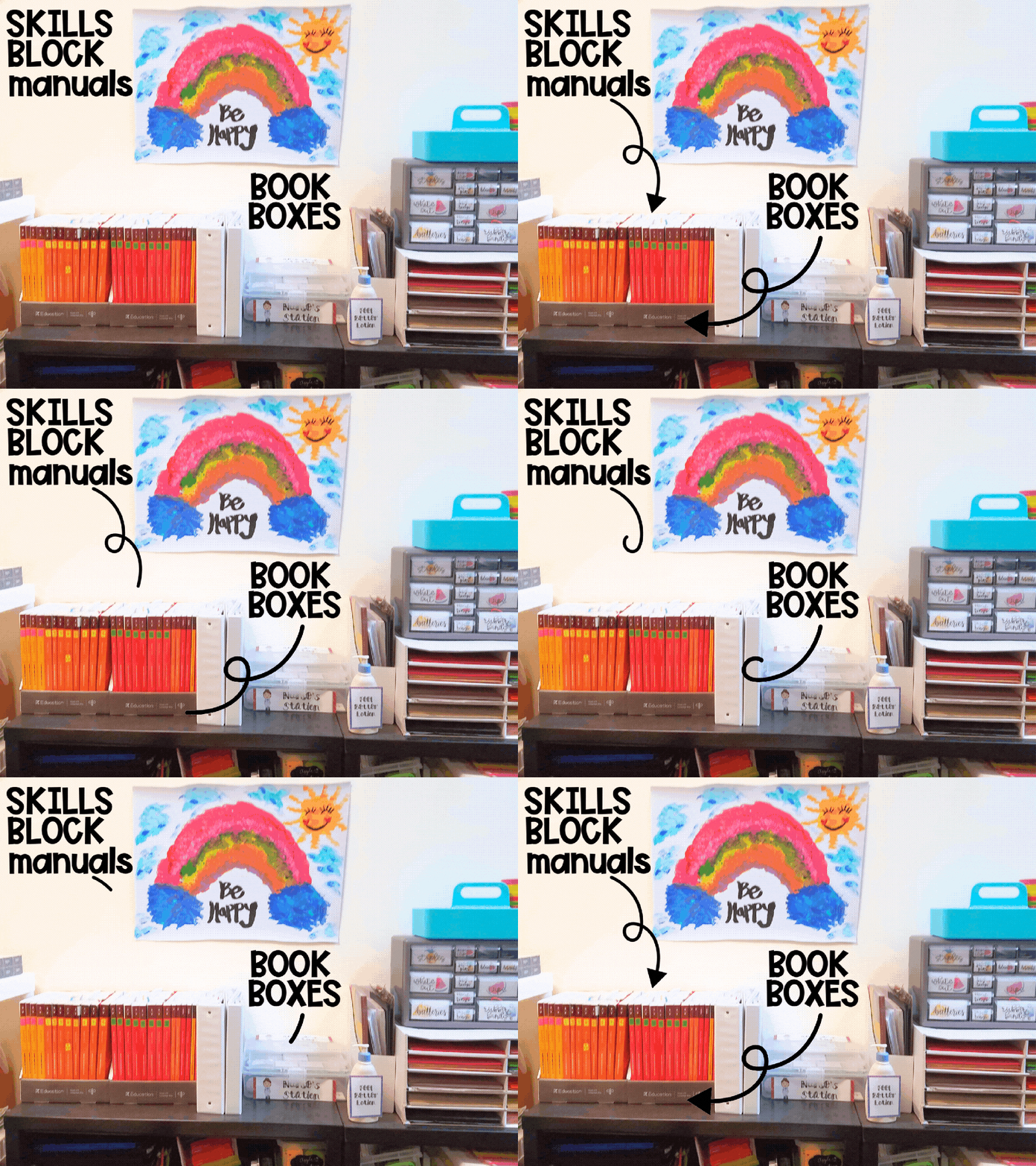
All of EL’s manuals can be very overwhelming at first. It can be tricky to figure out which manual a particular cycle or lesson is found in and it can be hard to navigate where the lessons actually are. I recommend putting stickers on the spine of each manual. I put 2 stickers on each spine. One sticker is numbered in the order the books should be used. For example, module 1 book 1 would be labeled #1, module 1 book 2 would be labeled #2, module 2 book 1 would be labeled #3 etc. This can really help you keep all the manuals straight. The other sticker I put on the spine says which cycles are included in that particular book. For example, module 1 book 1 contains cycles 1 & 2, module 1 book 2 contains cycles 3-5 etc. This is really helpful when it comes to planning small group lessons.
Next, I suggest using sticky tabs to tab each cycle and lesson in each book (also write the cycle number and lesson number on each tab). This will help you quickly find the lesson you need to teach and help you find the cycle words quickly.
FYI: If you’d like to have the cycle words all in one place or a premade cycle word list to send home to students, check out the EL cycle word lists I made. They are sold separately by grade level, plus there is a k-2 bundle. Check them out below:
Tab each lesson starting with the back of the book. This will help you line up your tabs more easily (trust me!)
TIP
Keep the boxes the manuals come in. This makes it really nice to store them on a bookshelf or table. (SEE PICTURE)
There are several manuals for each grade level. There are about 8 per grade level. There are a few cycles included within each manual. There is also a resource manual that includes the assessment and other activities (read the section below titled “What’s in the resource manual” for more information).
There is a summary of each cycle just before all the lessons within that cycle. The cycle words and high-frequency words for that cycle are listed on the first page of the cycle summary (SEE PICTURE BELOW).
All of the materials provided by EL for the lessons will be found at the end of each lesson. They can be printed from the PDF manual, copied from the hard copy manual, or downloaded individually from EL’s website. It is helpful to have all of the documents from EL’s website downloaded and uploaded to google drive or whatever file storage system you use. This helps to save at least a little bit of time in the long run.
TIP
I would not recommend printing every lesson material provided by EL. It can be a pain to prep. Most activities included in each of EL’s lessons can actually be adapted to work with students using whiteboards. If you are low on prep-time, definitely figure out which activities work well on whiteboards (without printing the materials) and which ones you actually need the printed materials for. This will help you save a lot of time.
The resource manual is where you’ll find EL’s assessment. The resource manual also includes an activity bank. The activity bank is full of games and activities you can use perhaps during small groups or as an intervention to help with a particular skill. Most of these activities require a good amount of prep.
ASSESSMENT
The most important thing to note about the assessment is that it is the KEY to reading centers. The assessment is what you need in order to form reading groups and it helps you know which cycle each group needs to work on. Students may be taught a curriculum from another grade level. For example, the assessment might show that a 2nd grader is below grade level and therefore should be taught a 1st grade lesson in small groups. I have a whole blog post all about Skills Block’s assessment, which you can read by CLICKING HERE.
I also have created a more user-friendly version of EL’s assessment that includes data tracking documents which will help you measure student growth easily. You can check that out by CLICKING HERE or clicking on the image below.
CENTERS
The first step is to complete the assessments which will help you systematically form reading groups. The most important assessments to complete in order to figure out each student’s microphase are the decoding & spelling assessments. Once you have each student’s microphase, group students within the same microphase together. Then plan your actual center activities.
The centers that EL suggests to include are below:
Fluency
Word Work
Writing
Accountable Independent Reading (AIR)
Teacher-led small group lesson
I have seen different schools approach centers differently. Some schools will make centers geared towards whatever cycle is being taught in whole-group and then use small group time to teach differentiated lessons based on each group’s microphase. However, I find this approach not to work as well because students aren’t able to get adequate practice on their individual level. I find it better to differentiate activities for each group based on the microphase and cycle each group is on. This helps meet students’ needs and students are able to work independently more easily because they are actually doing work on their own level. This can seem overwhelming to prep all the differentiated work, but I promise I have some simple suggestions to make your life easier. You can see these suggestions under the “What activities can I use in my centers that align with Skills Block” section.
EL provides an activity bank which can technically be used for centers, however, in my opinion these activities are not feasible for a few reasons:
First off, the activities require quite a bit of prep which is not feasible especially if you are differentiating for each group’s specific cycle.
Secondly, the activities are not sorted by center type (fluency, word work, writing & AIR). This makes it hard to know which center is the best to put each activity in.
Lastly, the activities are not labeled by grade level or cycle number. This requires you to match the skill with the correct cycle which is especially difficult to do for teachers new to Skills Block.
If you need some ideas for centers, keep on reading – I’ve worked hard to try and make Skills Block be a little easier for you.
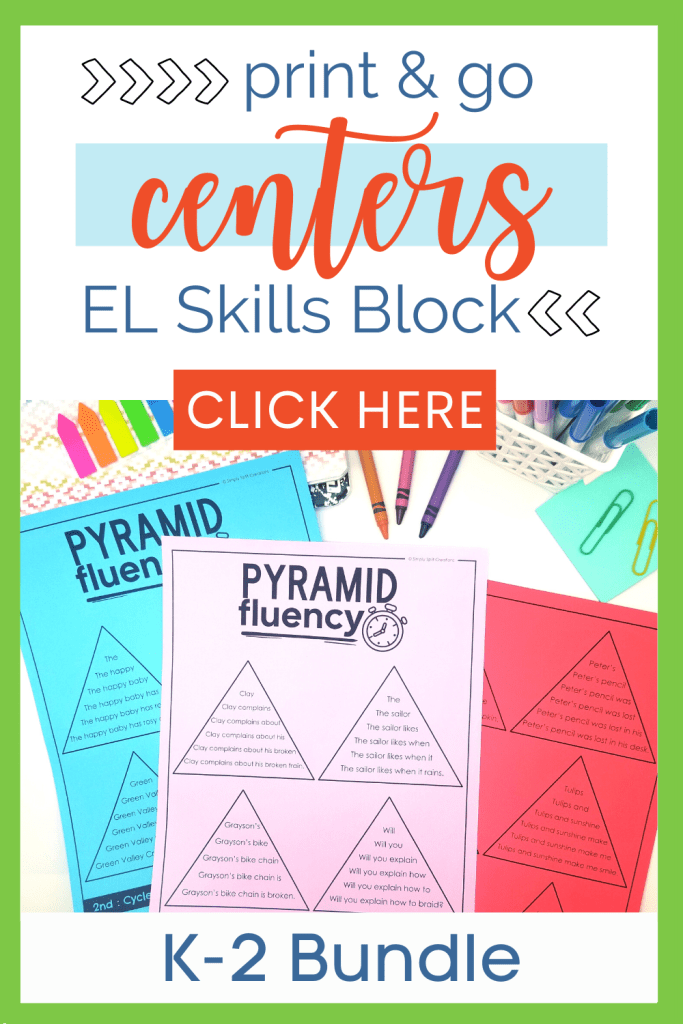
I have spent years (literally-since 2018) working on materials to make Skills Block be a bit easier for myself and other amazing teachers. My main focus has been to help make Skills Block centers easy to prep as well as effective for students so they can grow throughout the program. I have many options you can choose from that all align with Skills Block and continue to create more and more resources to help you out. The bundle I recommend the most is my LOW PREP growing bundle. This includes a bunch of print and go activities that all align with Skills Block that are perfect for centers. I have these listed by individual grade level as well as a K-2 bundle. The K-2 bundle is heavily discounted and makes it really easy to differentiate. The really cool thing is that this is a GROWING BUNDLE meaning that you’ll pay a lower price now, but gain access to new resources that will be added. I will continue to add more and more resources to this bundle that are low prep and align with Skills Block. As I add more products, the price will continue to go up, but you gain access to them as they are released without paying extra. You can check out these links below:
I have also created a buyers guide to make it easy for you to figure out which resources would best fit your needs. This buyer’s guide is constantly being updated as new resources are released. You’ll find great resources for ALL CENTERS for Skills Block. You can check out the latest version of my buyers guide by CLICKING HERE or below:
I hope this blog post has been helpful to you as you try to navigate Skills Block. If you have questions that weren’t mentioned in this post, feel free to drop them below and I’ll do my best to briefly answer them AND I may also include a more detailed response in upcoming blog posts. Make sure to follow my blog so you can be notified when new blog posts are released. You can also join my email list AND get the FREEBIE pictured below — the K-2 Scope & Sequence for EL Skills Block. Click below to gain access to this FREEBIE.