Have you heard of word blindness? We can thank Adolph Kussmaul for his 1877 study that helped us understand a bit more about how reading and writing are processed in the brain. He coined the term “word blindness” and… more importantly, he did a study that discovered “word blindness” helped us understand a secret hack that will help your students become great spellers/encoders.
A little bit about Adolph’s 1877 study:
- Two months after a 45-year-old woman suffered a stroke, she suddenly was unable to read written or printed text.
- Oddly enough, she could see text clearly, think normally, yet could not interpret written or printed language
- Even stranger, she could write and spell flawlessly, but couldn’t read her own writing.
What does this weird study teach us about encoding?
- Forming muscle memory helps us encode:
- Repeated writing helps form that muscle memory
What a crazy thing to have happen, right? Well, because writing actually becomes muscle memory, we can conclude that all it takes is lots and lots of repeated writing to nail spelling.
Take-away
Word work centers DO help our students become good encoders when implemented correctly
Sooo, there might not be science to back up the ever so popular punishment of repeatedly writing “I will not…(fill in the blank).” BUT there IS science to back up repeated writing to help improve encoding.
What might this look like in the classroom?
I want you to think about how often you incorporate repeated writing in your classroom right now. Do you have a word work center that your students go to? And if so, is it set up in the most effective way?
If you want this approach to be effective, make sure you go over the correct way to do it with your students, so be sure they follow these guidelines:
- Do not mindlessly copy words
- Say the letters out loud as you write them
- Go slow for the first 2 or 3 writings
- Test your memory – close your eyes or cover up the reference, then fix errors immediately
Here are some things for you to keep in mind when implementing repeated writing:
- Try a multisensory approach (visual, auditory, tactile, or kinesthetic)
- It may be helpful to limit your list of words – this is great for differentiating work for students
What are some activity ideas for this approach?
Multisensory Activities
⭐Visual
- Color-coded writing – write consonants in red and vowels in blue (this helps students pay attention to their word structure and visually see the difference)
- Look, say, cover, write, check
- Staircase (pyramid) writing – build the word line by line, adding one letter at a time (example: c, ca, cat, catc, catch)
⭐Auditory
- Clap the syllables in words
- Record & listen – have students record themselves spelling a word (correctly), then have them play it back as they look at the printed word
- Letter-by-letter echo: A partner says the word and its first letter; the learner echoes it, and they alternate letters back and forth until the word is complete.
- Sound-blending segmentation: Say the target word slowly, break it down into its distinct individual sounds (phonemes) aloud, and then blend them back to the full word.
⭐Tactile (touch)
- Write with a finger in shaving cream
- Write with a finger or pencil eraser in sand
- Write with a finger on sandpaper
- Trace it (something they can feel)
- Use a hot glue gun to write the spelling words – then have students trace the words with their finger (say each letter as they trace it)
⭐ Kinesthetic (movement)
- Sky writing or writing in the air
- Write big on a whiteboard – then small on paper
- Jump & spell – include big letter cards, have students unscramble the letters, then jump on the side of each letter and have the students spell the letter out loud as they jump to each letter
- Finger tapping – students can finger tap words as they spell them out loud.
NO PREP Repetitive Writing Activities
- Roll & Write – included in this FREEBIE
- Silly Writing – included in this FREEBIE
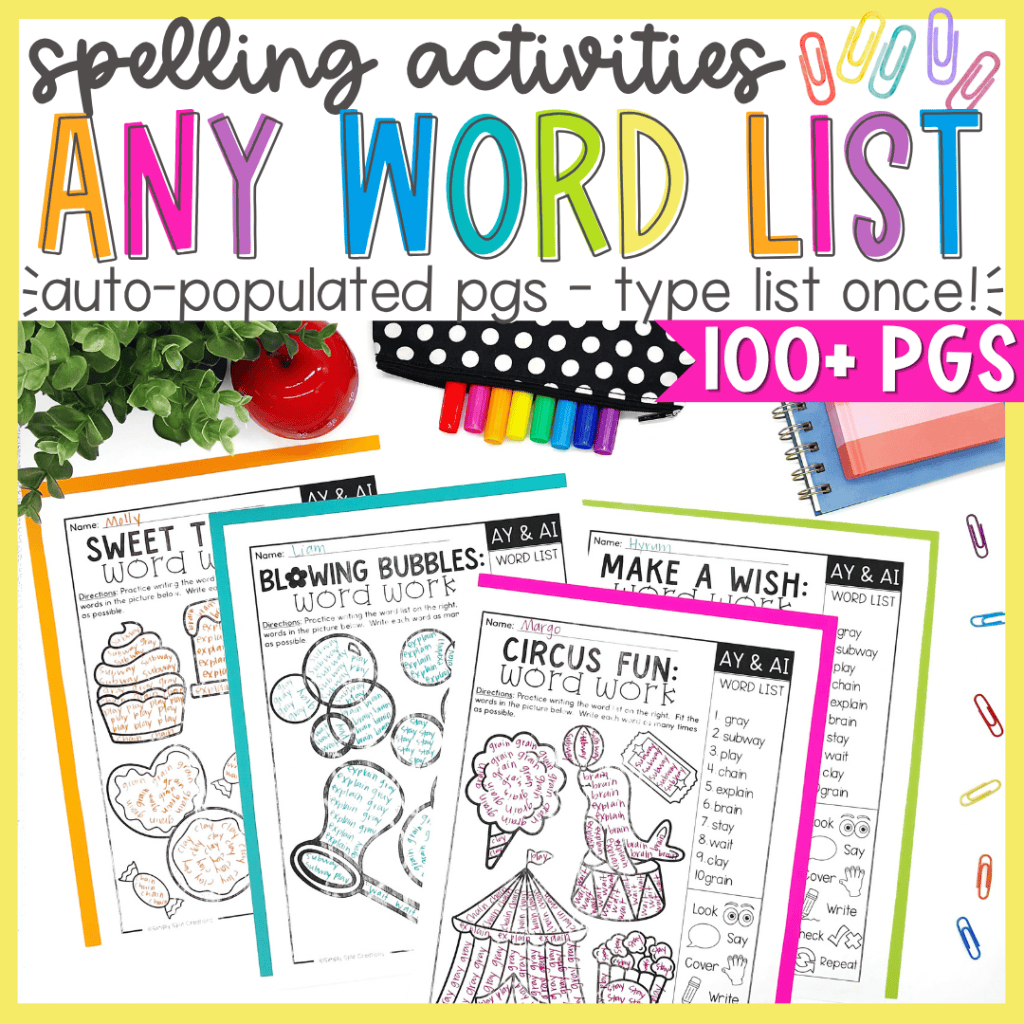
- Rainbow Write (make sure they aren’t changing the color for each letter; that would not be effective) – included in this spelling resource for any word list
- Misc. Picture Writing – included in this spelling resource for any word list
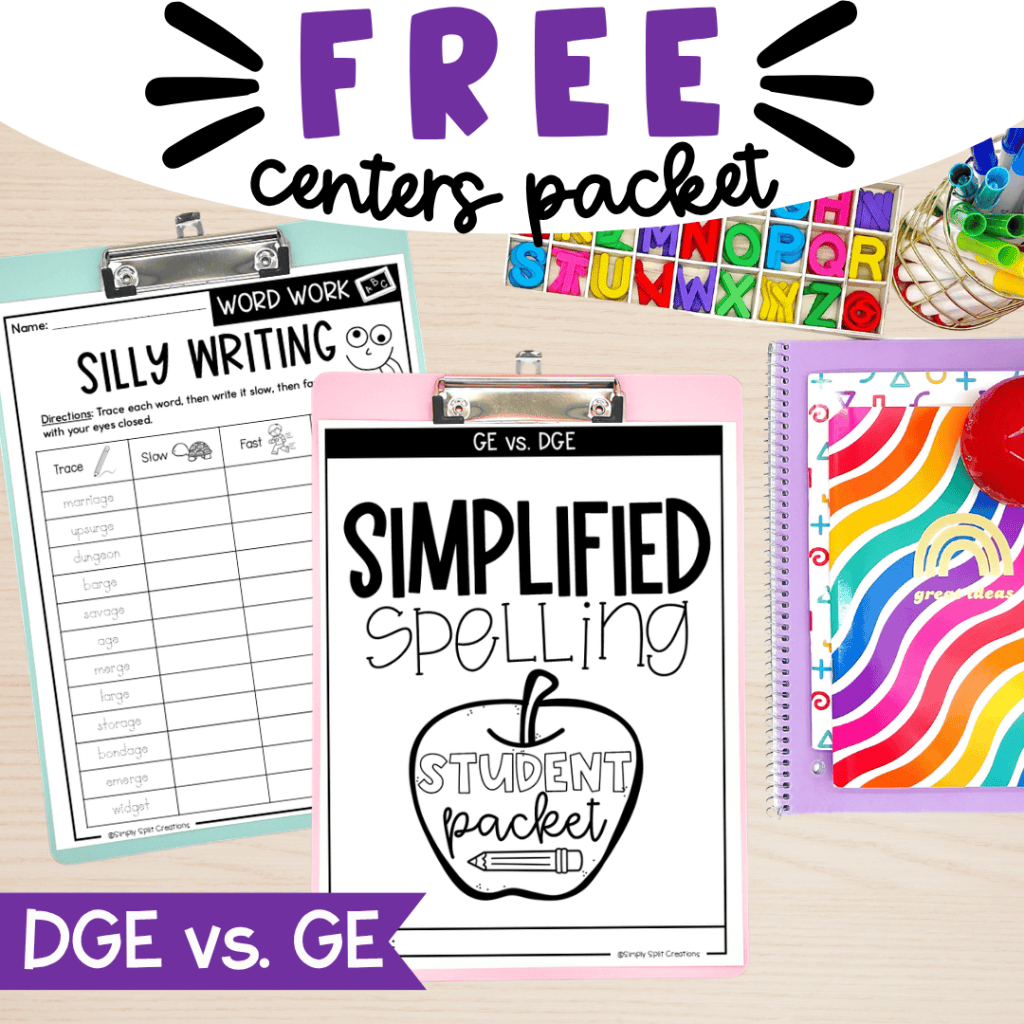
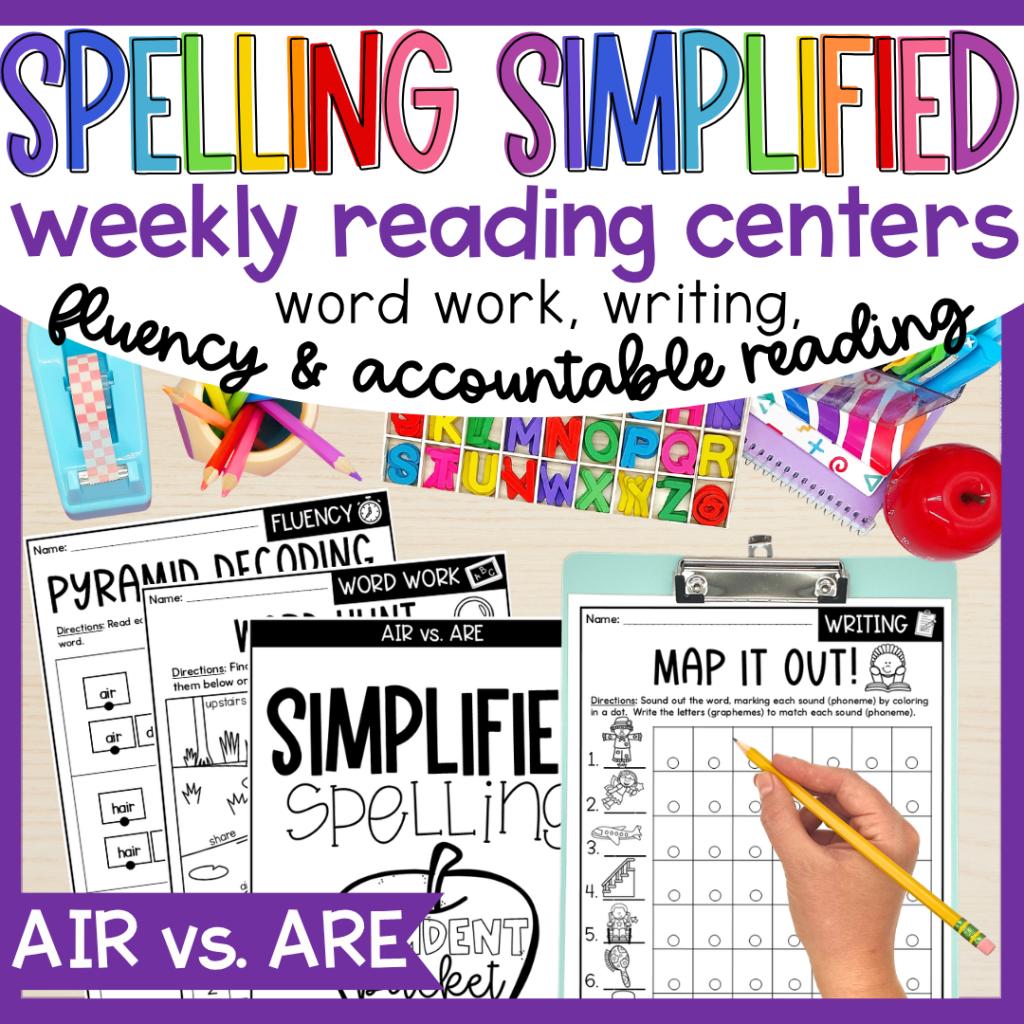
The silly writing and roll & write activities are included in my weekly center packets & simplified spelling. You can use the search bar to find the specific phonics skill you’re looking for. Click below to view.

The rainbow write and misc. Picture writing activities are found in my spelling activities for any word list.
Give these activities a try and see if they help your students retain their spelling knowledge. Let me know how these activities go.