
First Year Teachers, Organization, Teacher TIps

8 Back to School Tips

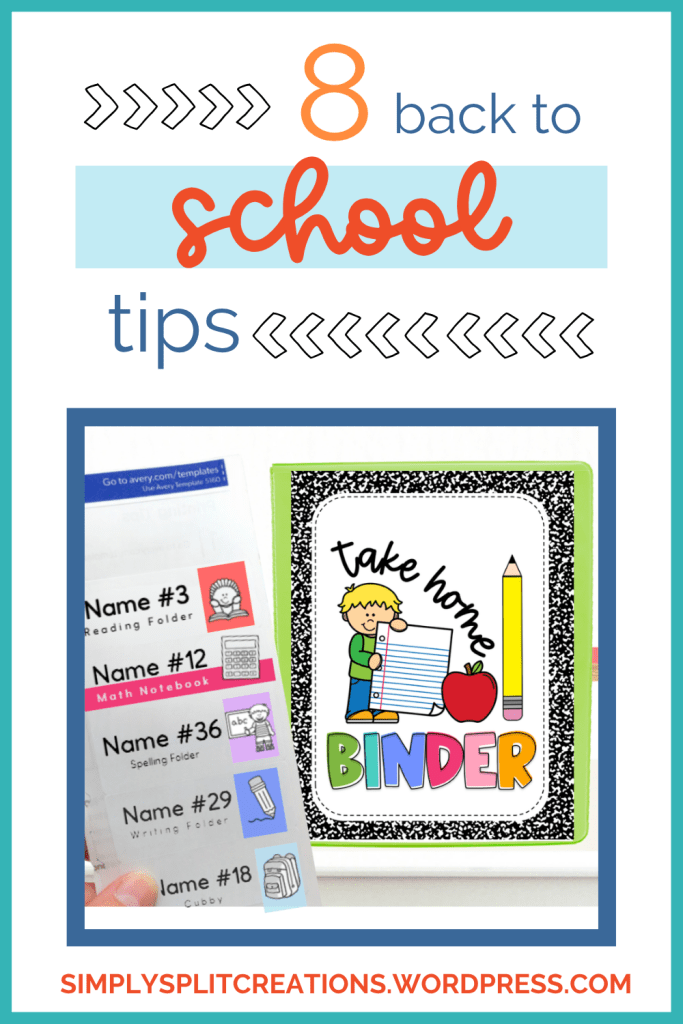
Graphic featuring '8 back to school tips' with a colorful design; includes a checklist with labeled sections for school supplies like folders and a 'take home binder' illustration.

Going back to school can be a fun and exciting thing, but also a very hard thing. Let’s be honest, we all enjoy some time off.  Now, I don’t necessarily have a solution for you if you’re dreading going back to school, but I have compiled some tips to help make back-to-school time smooth, easy, and fun for your students. 

1. Prep for back-to-school night early

If you’re a procrastinator (like me 😬), this may be a difficult task for you, but I promise you will be so relieved if you can get your back-to-school prep done early.  If I have enough energy and pep, I usually do this at the end of the school year; that way I’m already ahead when I go back to school.  It makes the summer a lot more enjoyable knowing that I already have one thing knocked off my to-do list. 

    I keep all my prepped materials in my handy dandy prepping bin, ready for me to pull back out in the fall. 

    A colorful organizational folder with labeled tabs for each month, containing bright red copies and the title 'teacher copies' along with a pencil and notebook graphic.

    2. Use Avery Labels

    Avery labels are my best friend at the beginning of the school year.  They make labeling and adding students’ names to things SOO easy.  I use them for student lunch numbers, student name tags, labeling notebooks & folders, labeling my materials “property of…,” and classroom library book genres.  Honestly, the possibilities are endless. 

      I’m not sure how it works at your school, but we usually get our class list a week or so before school starts, and then the race is on to get everything labeled and ready quickly so I might have a chance to relax for at least a day or two before school officially starts.  These student name labels make everything SO easy.  I type my class list once, and they autofill to every page!  These labels fit on Avery labels #8160, which makes applying them really easy.  I just peel and stick them to student materials.

      Grab these student name labels to make back-to-school labeling a breeze!
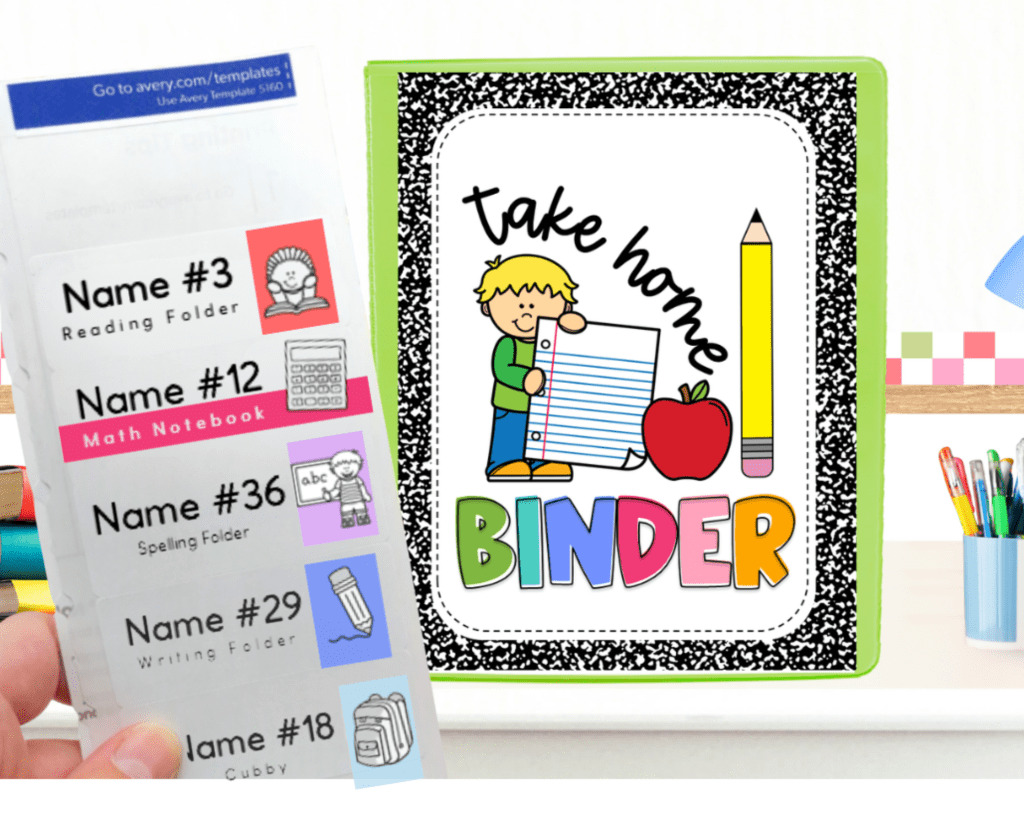
      A colorful binder labeled 'Take home BINDER' featuring a cartoon boy holding a sheet of paper, an apple, and a pencil. In the foreground, a hand is holding a label sheet with various labeled folders including 'Reading Folder' and 'Math Notebook.'
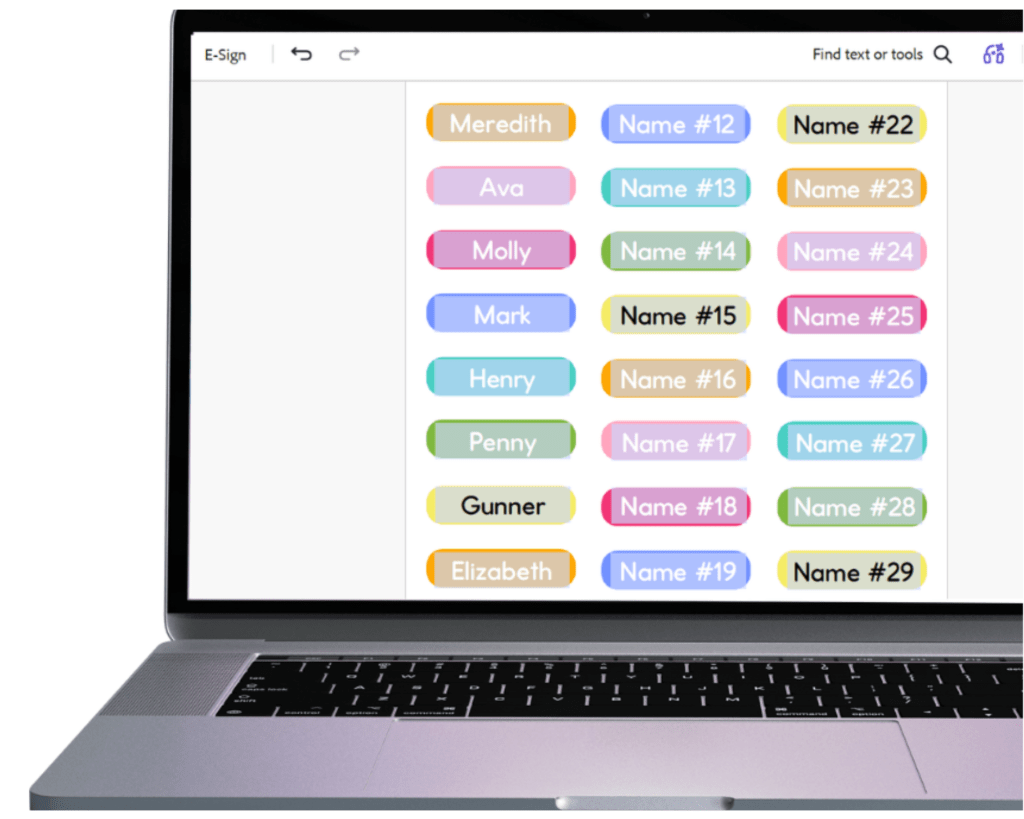
      A laptop screen displaying a list of names and placeholders labeled 'Name #' in various colors, organized in rows.

      3. Keep Extra Materials & Blank Labels

      I highly recommend keeping extra materials on hand with ready-to-go blank labels.  This makes it super easy to grab materials for new students you might get throughout the school year.  I stick the blank labels right on the materials and store them in my closet just in case.  Then I simply write the new student’s name on the label, and they are all set to go.

      A collection of colorful name tags for school with labels such as 'Homework Folder' and designs featuring apples and school icons, surrounded by stationery items like markers, a pencil case, and decorative papers.

      4. Build Your Student Checklist

      I use student checklists daily, it seems. They are great for grading, building seating charts, field trips, and so much more. I highly recommend creating a student checklist template and keeping a bunch of printed copies on hand.  It can save you so much time and be so helpful throughout the school year.

        If you’d like a template, check out my teacher essentials pack that includes student checklists, teacher to-do lists and SOO much more!
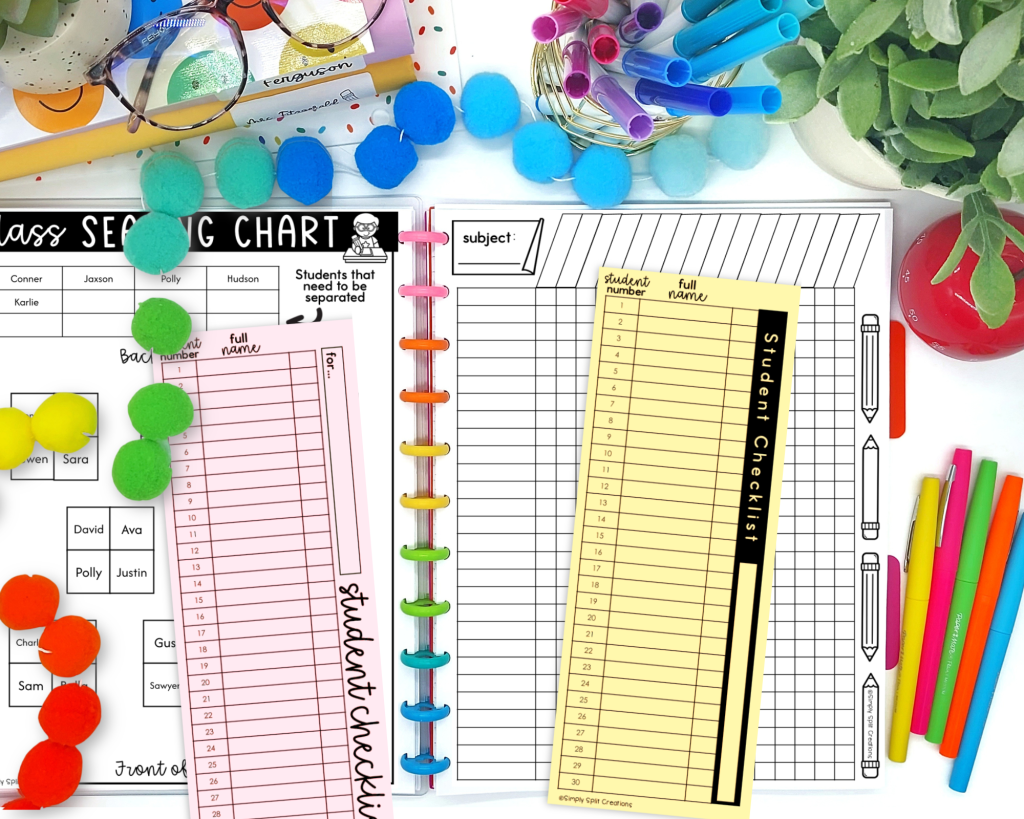
        An organizational workspace featuring a class seating chart, a student checklist, colorful pom poms, pens, and a small plant.

        5. Generic Bulletin Board Subject Titles

        I am a big advocate for utilizing bulletin board space for learning rather than cutsy things.  Plus, bulletin boards can be hard to change out seasonally because, honestly, who has time for that?  If you want simple bulletin boards to use for learning, I recommend titling your bulletin boards with different subjects and using them to display things you are learning, like anchor charts, work examples, etc. 

          My favorite way to title bulletin boards is to use banners, rather than individual letters.  Banners are easy to prep, easy to hang, and easy to reuse year after year.  I keep my premade bulletin board banners strung, folded up in baggies, so they are super easy to store as well.

          If you want to shop around for a banner style that matches your classroom theme, check out the bulletin board banner options in my shop.  Each banner set includes the following phrases in several patterns and colors: 

          • “Welcome Back!”
          • “Math”
          • “Reading”
          • “Writing”
          • “Grammar”
          • “Science”
          • “Social Studies”
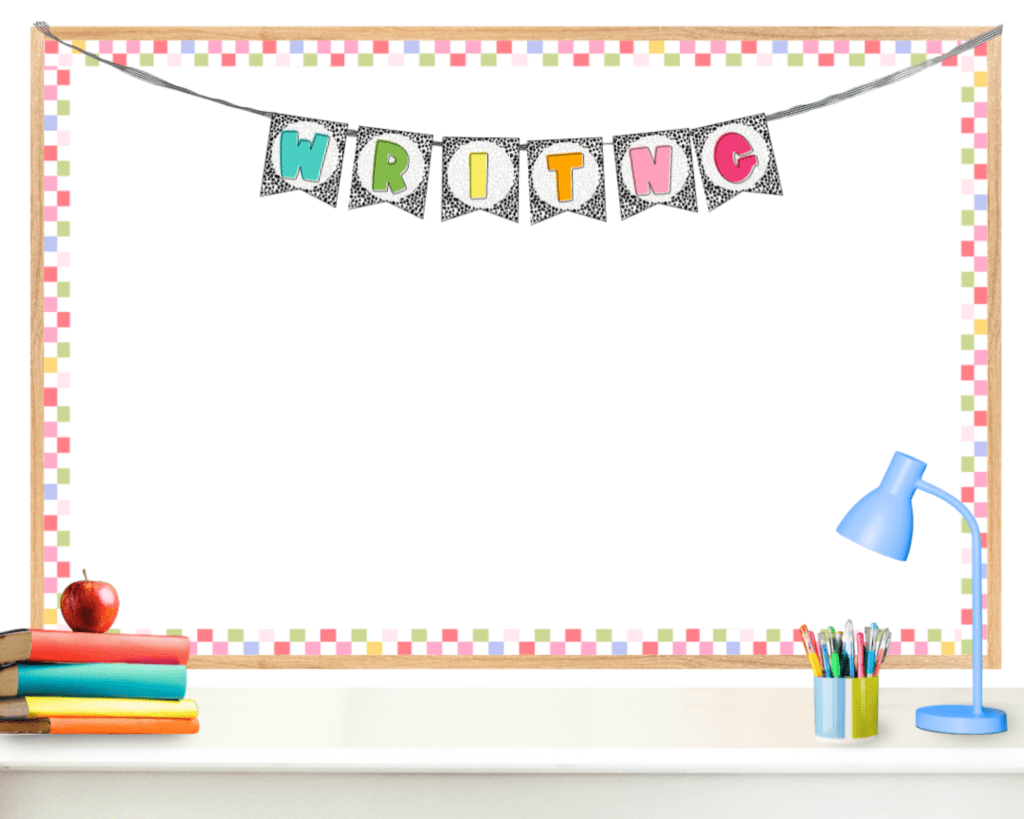
          A bright classroom scene featuring a bulletin board with the word 'WRITING' on decorative banners, surrounded by a colorful border. A desk displays a stack of books, an apple, and a cup of assorted pens beside a blue desk lamp.

          6. Write Students’ Names on their Desks in Sharpie

          Seating charts are a must, in my opinion, to keep the chaos away.  If you are like me and hate name plates that students pick at and ruin, then you may want to try this method.  You can directly write students’ names on their desk or table spot with a Sharpie.  This may seem a little scary at first, but trust me, it won’t last forever and won’t remain permanent.  The names typically fade and go away within a month or two just from student use.  

            If you need students’ names gone from their desks sooner than that, hand sanitizer does the trick.
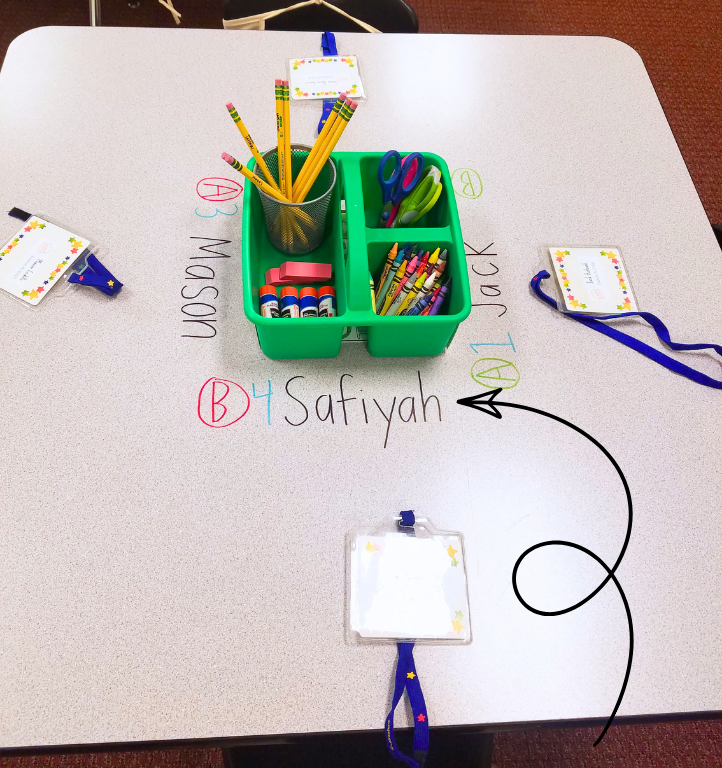
            A classroom table with writing supplies including pencils, markers, and scissors in a green container, with names labeled around the edges.

            7. Create Desk Partners

            You may have been wondering what the colored letters and numbers are for that are written next to the student’s name in the picture above.  Those are to form partners or groups really easily.  You can easily assign tasks to a specific partner or group member this way.  You can mix up partners too by saying, colored partners (reds go together, greens go together), letter partners (A’s go together, B’s go together), ect..  Other examples might be…

              • “Group member #1, get glue sticks for everyone”
              • “Number 2s may line up”
              • “Partner B will start first in the partner game”
              • “Group member #3, gather papers and turn them in to the tray”
              A green container filled with various school supplies including pencils, scissors, and glue sticks, on a table marked with names and letters associated with students.

              8. Let Students Get to Know You

              One of the best ways to build classroom community and help with classroom management is to build strong relationships with your students.  Letting students get to know the real you helps make connections with students and is a great way to start building strong relationships.  There are a lot of small things I do throughout the year to make this happen, but one simple thing I do at the beginning of the year is share a short video all about me.  

                Students love learning about your hobbies and family this way.  Check out my  “all about the teacher” video template to make it quick and easy to make and fun for your students to get to know you.
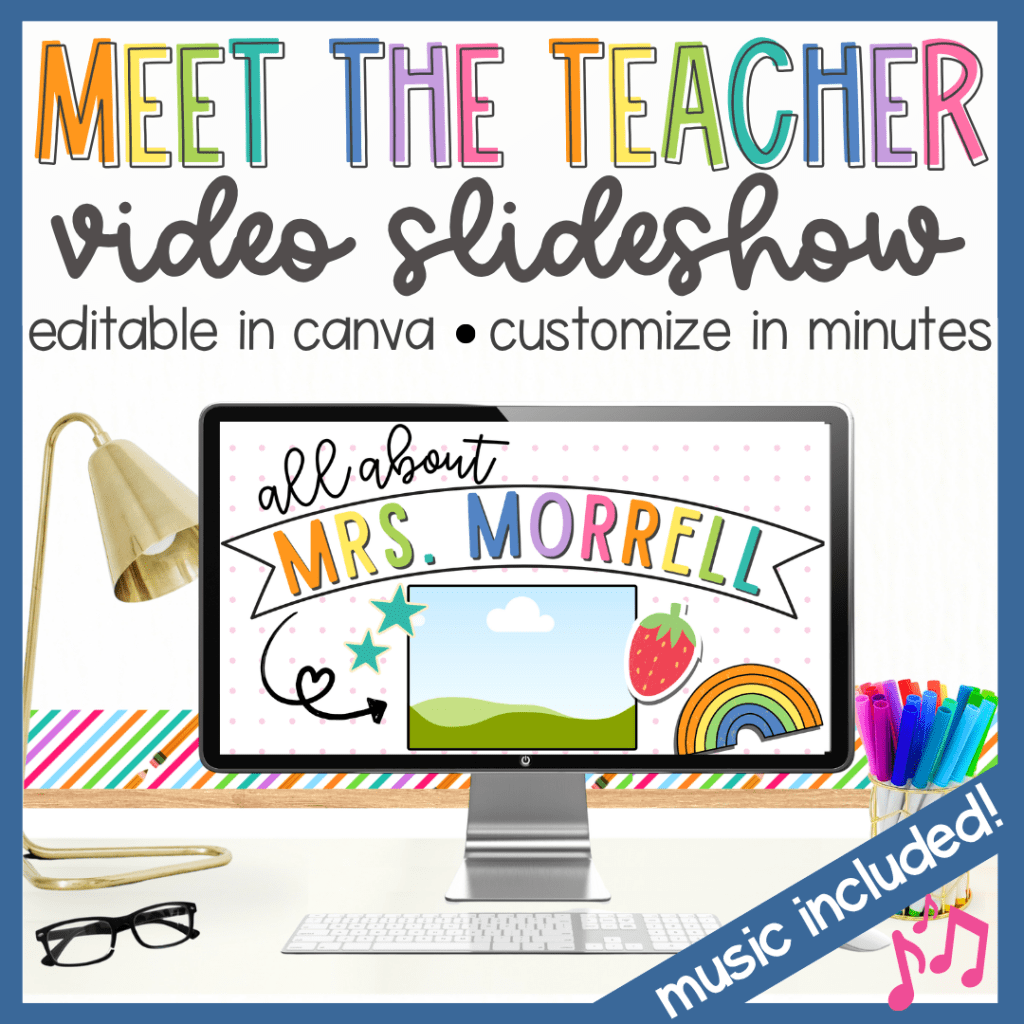
                A digital advertisement for a customizable 'Meet the Teacher' video slideshow featuring a desktop computer displaying colorful graphics about Mrs. Morrell. Includes text indicating it's editable in Canva and mentions music is included.

                Classroom Library, Organization

                How to Build a Classroom Library on a Budget

                If you are a new teacher, chances are that you’re starting from scratch, trying to build a great learning environment.  One of the most important things that every elementary teacher needs is a vast collection of books!  Building a high-quality classroom library collection can take a whole career, but you may wonder where to start.  How can teachers afford these books, especially new teachers with debt?

                Well… you’re in luck because I’m about to reveal all my tips and tricks on how to hunt down books on a budget.  Even if you’re a seasoned teacher, you can NEVER have TOO many books.  These tips are sure to help you get your hands on more books at a fraction of the price or maybe even FREE.

                Check your school first! – The classroom you’re inheriting may already be stocked full of great books.  Before spending lots of time and money on new books, be sure to see if it is necessary to purchase lots of books.

                IF the classroom you inherit is already filled with books and you are adding your own books to the school collection – I would recommend marking your books in some way so you can easily distinguish your books from the schools’ books if you switch schools or classrooms.

                If you don’t want to custom order your own personalized “property stickers” or pricey custom stamps – I have some editable stickers available in my shop that you can print on your own.  This makes it easy to print more as you need them.  No fancy editing skills are needed – just type your name and they will auto-fill for you. There are a few different options available to choose from.  Just click the link below to view all the different options.

                Garage Sales – Summer is the PERFECT time to scavenge garage sales.  Keep your eyes peeled for signs posted locally, newspaper listings, or friends or family hosting garage sales.  I would also recommend joining some sort of yard sale Facebook group for your area.  Yard sale dates and locations are often posted in these Facebook groups.  Depending on the group rules, you may also be able to post an “in search of” post letting people know you’re looking for books for your classroom (some people may even donate books to you for free after a post like this).

                FB Marketplace – Facebook Marketplace has become the next “ebay” making it convenient to shop and sell.  What I love about Facebook Marketplace is that you can shop locally.  You never know what you might find!

                FB Groups – In addition to “local yard sale” Facebook groups, I would recommend joining a “teacher buy, sale, & trade” type of Facebook group.  Teachers will often do a classroom cleanout Facebook post and sell LOTS of random teacher items.  Books are probably the #1 thing found amongst these Facebook groups listed for sale.  You can also post an “in search of” post in most of these groups so people can let you know if they have something you might be interested in.  These items sell for VERY cheap and can be shipped affordably thanks to media mail.

                Friends, family, or neighbors – This is such a simple idea, but often overlooked.  Don’t forget to talk to your friends, family, & neighbors.  They are great resources and may just need a little encouragement to purge their books at home to donate to your classroom.  It is so easy to just make a Facebook post letting all your friends know.  You would be surprised by how many people reach out to help!

                Local Library – County libraries will often host a “used book and surplus property sale” every so often.  My local library usually hosts one towards the end of summer. This is another great place to stock up on amazing books for your classroom!  Doing a quick Google search should help see if any libraries nearby are hosting a sale.

                Local Thrift Store – This is the #1 place I have found books.  Thrift stores can vary a lot and the product fluctuates a lot for obvious reasons, so I definitely recommend always checking the book section when you’re in a thrift store.  You never know what great books you will find.  

                EBay – If you are looking for a specific book, eBay is a great option because someone is bound to be selling what you’re looking for.  I love that there are often used and new options as well.  Make sure you check reviews of buyers before purchasing so there are no surprises. 

                Thriftbook.com – This is another great website where you should be able to search for items more specifically.  Many popular children’s books are included on this site and most are $5 and under depending on the condition of the book.  You can also purchase in bulk or brand-new books.  You can also search books by age level making it super easy to find books for your grade. 

                Firstbook.com (title 1 schools only) – First Book is very similar to Thrift Book, but the options are limited and often discounted more than Thrift Book. First Book is a nonprofit company which means savings go into your pockets, but it is only available for Title 1 schools.  The process is very easy to prove your school’s status.  Firstbooks will also often have sales.  First book will make new books available every so often, and popular books will go quickly. I recommend subscribing to their emails so you can know when these new book drops happen because they get picked over so quickly.


                There are so many great options for building your classroom library so I hope that one or a few of these ideas are helpful for you.  If you have any other ideas to add to this list, I’d love to hear them!  Leave a comment below so we can all benefit and discover new ways to build our classroom libraries.

                Also, if you are looking for help when it comes to organizing your classroom library, I have another blog post diving into this topic.  Click here to read this blog post all about classroom library organization.

                Teacher TIps

                5 Tips for the End of the School Year

                The end of the school year can be a really stressful time.  Many teachers become beyond “burned out” and can barely hang on, which is why I wanted to share my top 5 favorite tips for the end of the school year.

                It’s important to make sure you find ways to save both your time and sanity.  My top tip is to have your students help you with the end of the year clean up.  After the testing is all done and the standards have been taught, rather than wasting time watching a movie, enlist your students to be helpers.  I promise your students will love helping out and it will be a great way for students to get their energy out (since we all know that summer fever is very real and makes it hard on teachers).  Most of these tasks, I would recommend doing on the last 1-2 day(s) of school.

                My students always love helping to complete these tasks and they get them done quickly.

                You can download and print this list by CLICKING HERE.

                I think it’s really important to help our students feel happy and appreciated at school.  Having positive interactions at school can impact a student’s whole life and can help them always enjoy learning.  For this reason, I try to make the end of the year special by giving each student an individualized award (all positive awards).  This has become a tradition in my classroom and my students always love award day.  You may like this idea but may feel a little bit overwhelmed trying to think of different awards for each student and preparing the materials for the “awards ceremony” but don’t fret, I’ve got you covered.

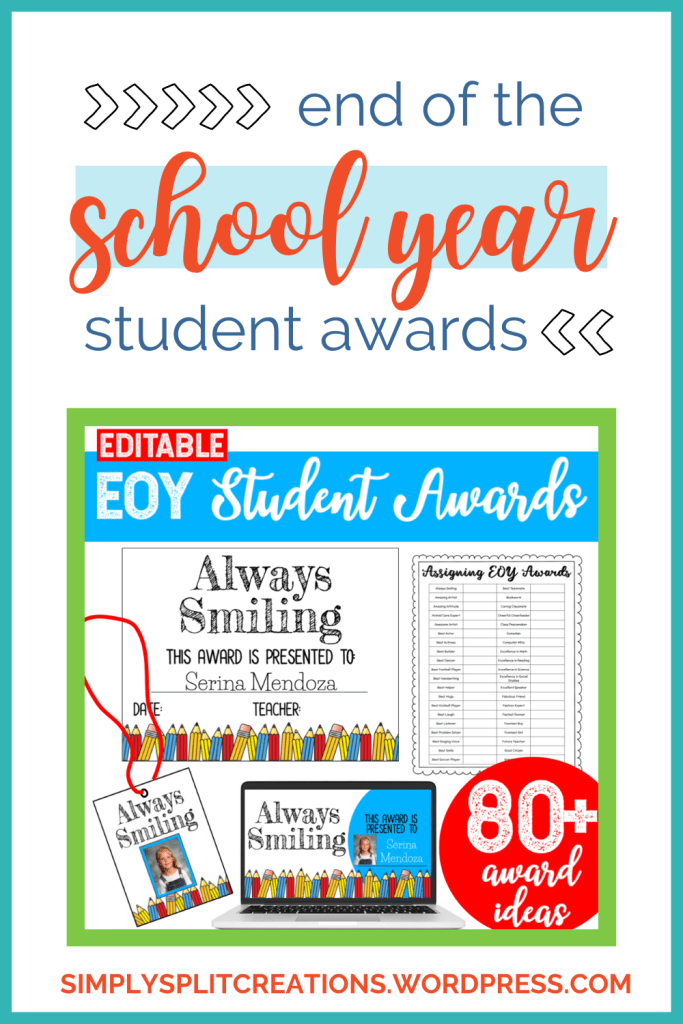
                I have created an awards ceremony pack which makes  it easy for you to have your own awards ceremony for your class  without feeling overwhelmed, especially if you’re already feeling burned out.

                Here’s what’s included in the awards ceremony pack.

                • Teacher Award List: There are 80+ award ideas included. Quickly assign an award to each student.
                • Student Certificate: This is a certificate to give to students during your award ceremony.
                • Awards Ceremony Presentation Slideshow: Make the ceremony special by using this great slideshow as you present the awards.
                • Student Medal: These are meant to be assembled with a ribbon attached to the top. Students can be awarded a medal along with their certificate during the ceremony.

                Look below to see what this award ceremony pack looks like or CLICK HERE to view the whole product description.

                Always print a few “paper mini yearbook” alternatives for students that may not have purchased a yearbook.  Students can either have a really great day and feel included or really bummed for not having their own yearbook.  Do everything you can to make all your students feel happy and included.  There are lots of great options for a printable paper mini yearbook on Teachers Pay Teachers.

                The end of the year can be such a crazy time.  My first year, I was mad at myself for forgetting to have my students sign my yearbook before releasing them for the schoolwide yearbook signing (don’t make the same mistake as me haha).  Because it can be such a crazy day, I highly recommend pre-typing a personalized yearbook message for all your students.  This can help your students feel special and will be a great memory for them for years to come.  I like to print my typed out message on sticker labels so they are easy to put in each student’s yearbook.  I have seen some teachers type a generic message and print on stickers, but I think it is so much more meaningful to have a personalized message. 

                I use Avery labels since they are super easy to make and print.  If you go to Avery’s website you can find the template for the size of labels you have and edit each label with a personalized message.  It doesn’t take very long and goes faster to type vs. writing out the message.  You can download the labels as a PDF when you’re finished and print them on your labels and you’re all set for yearbook signing.

                Many schools require student information to be passed on to the next teacher.  This may look differently for each school, but I think some of the most vital information (especially in k-2 classrooms) is how students are performing with reading.  This can help new teachers have a quick idea of how their class is when they start out and they can see if there were significant “summer slide” issues or not.  If there are, maybe they can do something to help with it next summer.  This may be stressful for teachers to deal with at the end of the year so I have a quick solution that I have started doing that has made this process super easy AND valuable for the next teacher to look at.  There’s nothing worse than being handed a bunch of tests and not knowing what they mean.

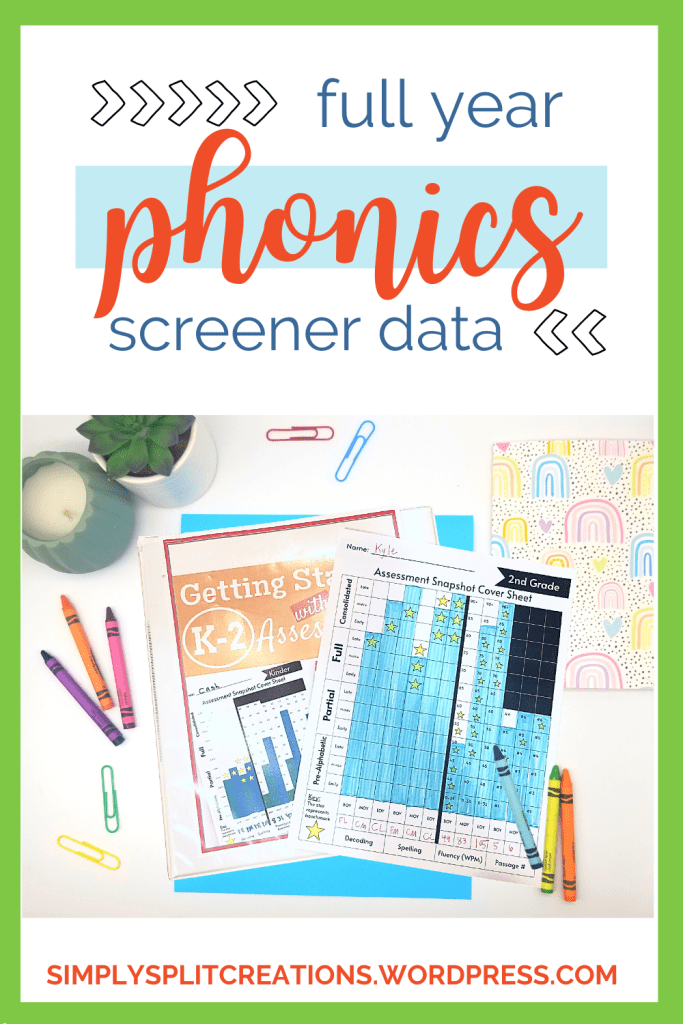
                I recommend using this one page (double sided) phonics screener summary.  It shows student growth throughout the whole school year and it is easy to tell at a glance if the student was “on grade level” during the previous school year.  This is not only valuable information to pass on to the teachers for the new year, but it’s also valuable information for you throughout the current school year.  I fill this same one page paper out throughout the whole school year for my students and it helps me analyze how each student is doing and then it’s super simple to just hand it over to the next teacher.  
                This is what the one page phonics screener looks like for 2nd grade (don’t worry this is a made up student and not their real data).  The stars mark what the benchmark is for that time of the year making it easy to see if a student is “on grade level” with just a glance.  CLICK HERE to view the product that this phonics screener is included in.

                When my students leave on that last day of school, my first instinct is to run out of the building as fast as I can and start my summer vacation. However, that’s not always the smartest thing to do for a couple reasons.  One, your admin probably wouldn’t be very happy with the status of your classroom.  Two, you are setting yourself up for a disaster to come back to next school season. I highly recommend thinking a little bit ahead so your “back to school self” will be happy and make a smooth transition back to school.  I recommend making sure your bulletin board materials are easily accessible.  I also recommend pulling out your papers for back to school night and even making copies of these materials.  The first year I did this, I was so relieved when August came and it helped me feel much more prepared for the coming school year.  I also like to make sure my labels are accessible so I am ready when I get my class list to label all the things.